Sumyfi Editorial Team • Updated 2026-09-01
Financial Goals App for Active Goal Tracking
A financial goals app should make it easier to manage live savings targets, contribution pace, and tradeoffs after the goal is already chosen. This guide is about ongoing goal tracking inside a dashboard, not beginner goal-setting advice.
At a glance
- Track active goals
- Contribution pace visibility
- Built for goal management
Helpful when you want turn financial goals into visible progress inside a connected money dashboard to feel more manageable in day-to-day use.
See category pressure and recurring bills in the same review.
The best result is a budgeting rhythm that still feels usable after the first month.
Product intent
A financial goals app matters after the planning framework is already clear
People reading a how-to article about setting financial goals usually want help defining the target, prioritizing it, and making it realistic. People looking for a financial goals app are further along. They want a product that keeps an existing goal visible inside the rest of the money routine.
That distinction is important for search and for conversion.
What to compare
The stronger goals app shows whether current behavior is actually supporting the target
A good financial goals app does more than label a savings bucket. It should show whether contributions are on pace, whether spending pressure is crowding out progress, and whether the target still feels realistic given the rest of the budget.
That is where product-intent pages become useful. They help visitors judge whether the app can keep the goal active in a real dashboard instead of leaving it as a motivational note that fades after setup.
- Can you see contribution pace clearly?
- Can you spot when spending is pushing the goal off track?
- Can goals live beside accounts, bills, and categories in one review?
Product screenshots
See the product behind the copy
Screenshots shown: Budgets, Accounts.
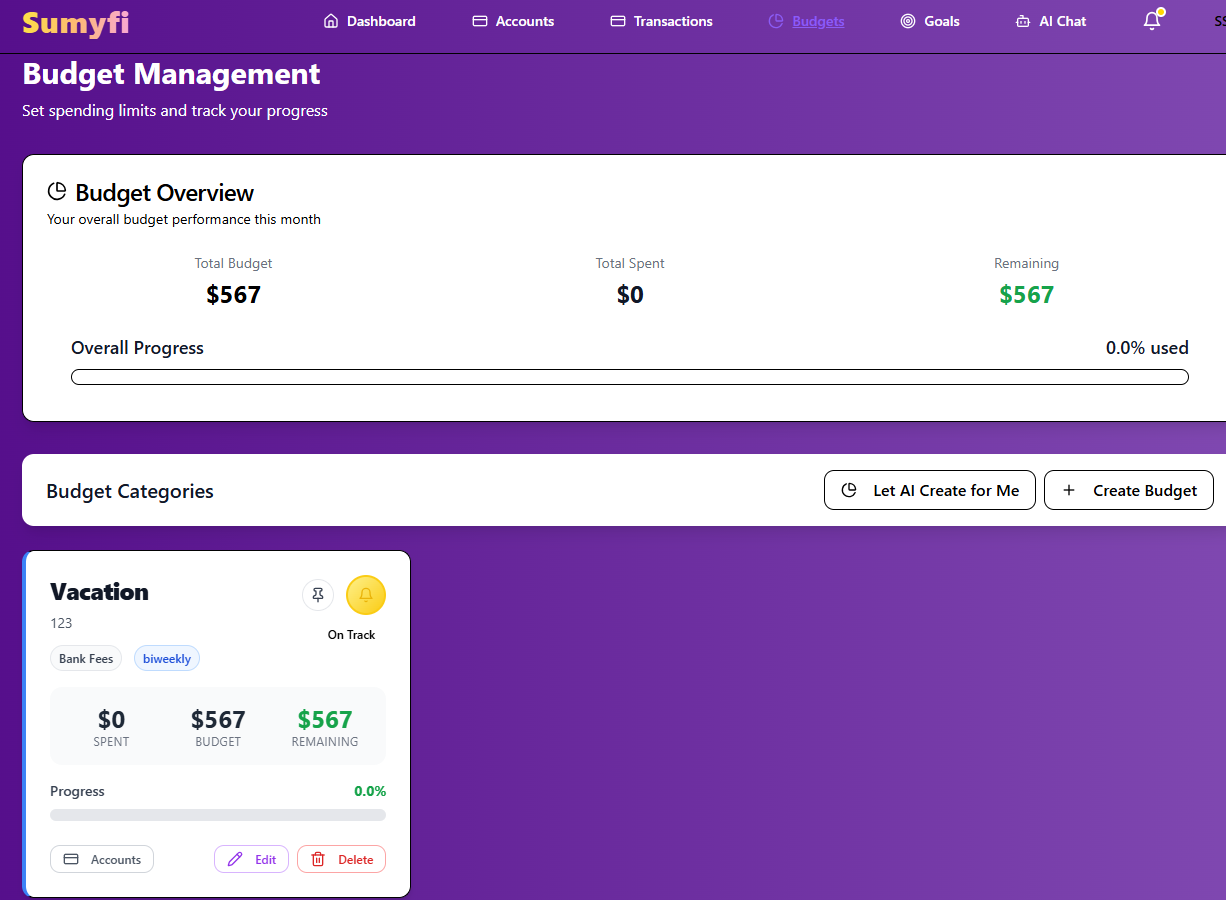
Budgets shows spending by category alongside the amounts assigned to each category.
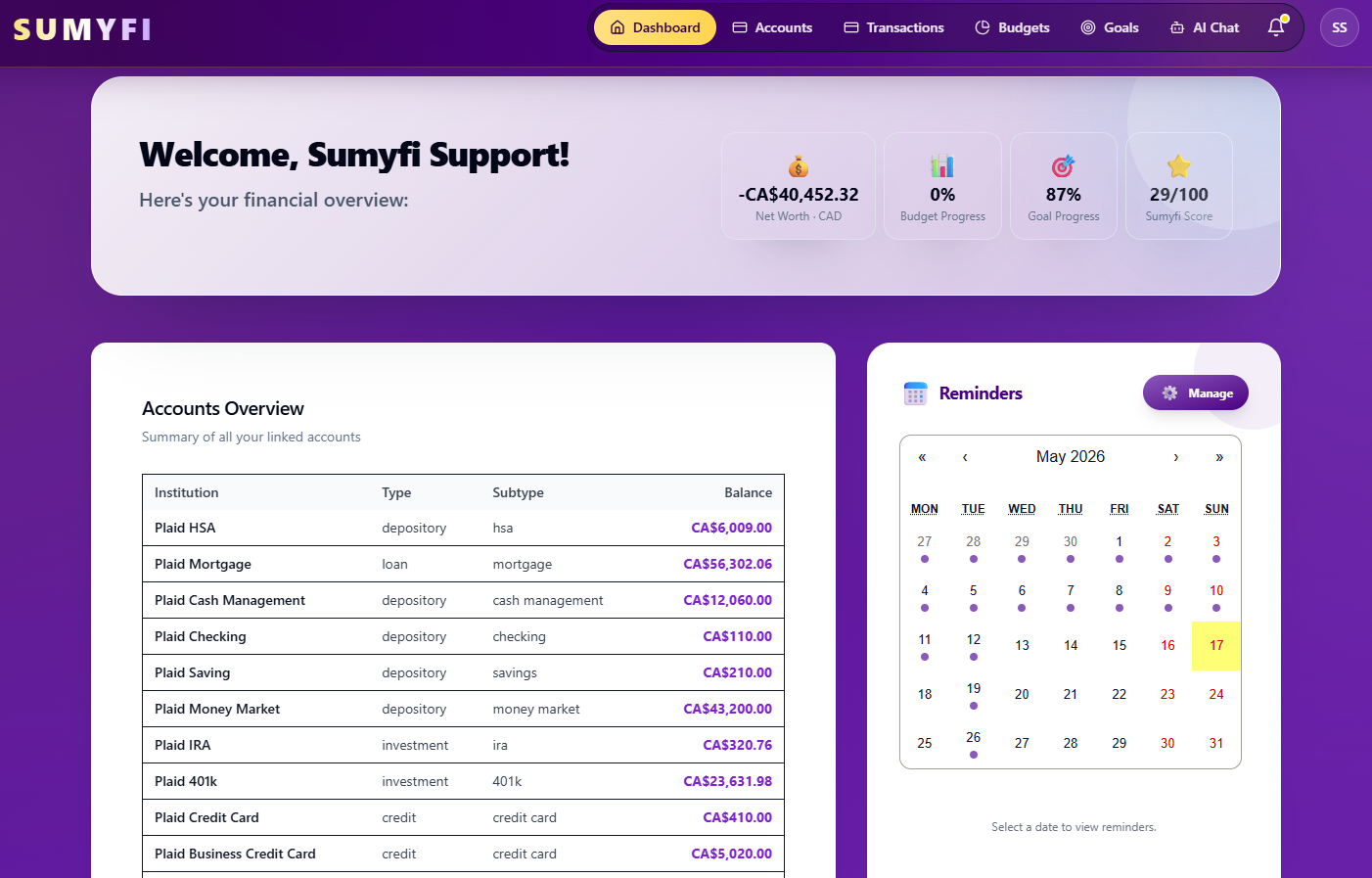
Accounts keeps connected and manual accounts in one place for budget review.
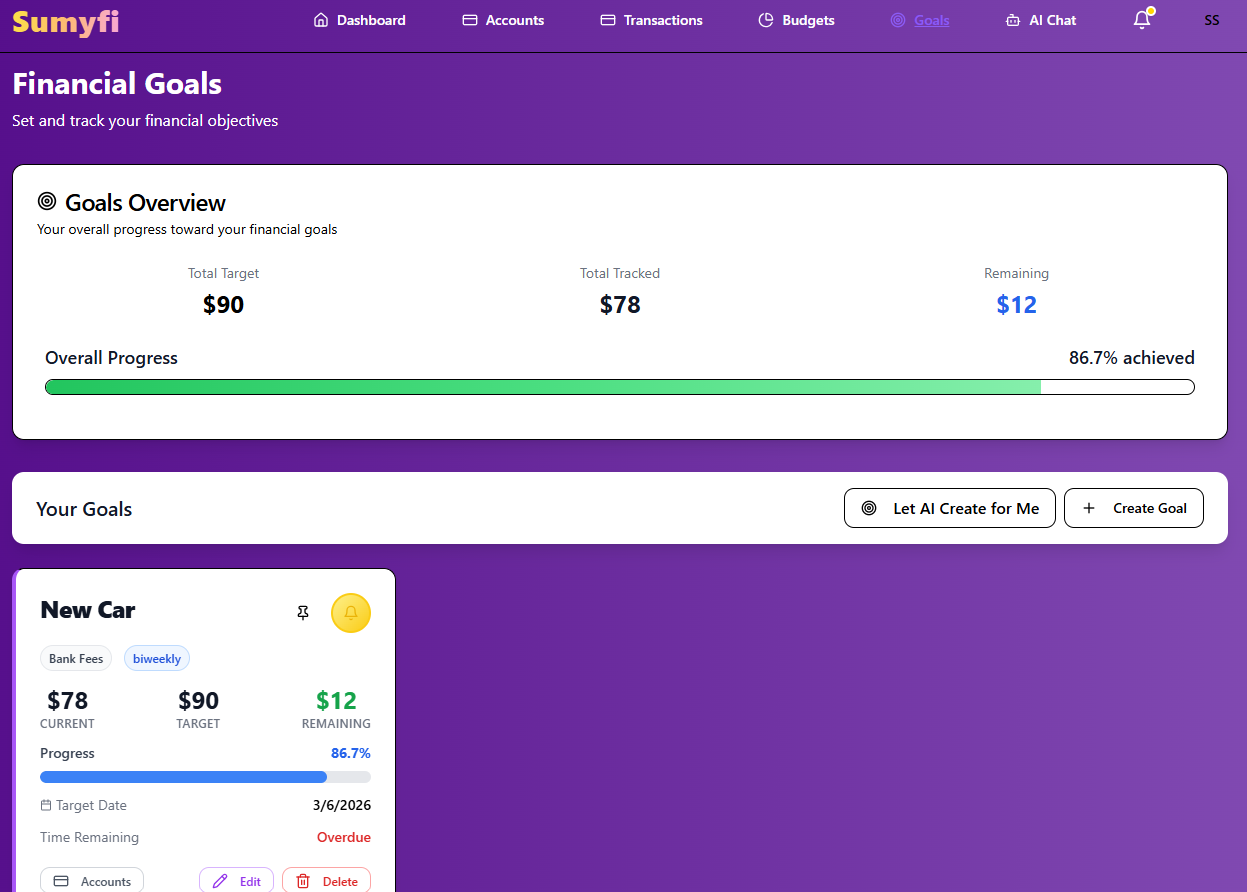
Budgets shows spending by category alongside the amounts assigned to each category.
Comparison table
How the options compare for financial goals app
Use this table to judge which budgeting workflow stays easier to revisit during ordinary weeks.
| Decision area | Sumyfi | Typical budgeting app |
|---|---|---|
| Recurring pressure | Bills and subscriptions in the budgeting review for turning financial goals into visible progress inside a connected money dashboard stay attached to the budget review instead of becoming a separate cleanup task. That matters more when turning financial goals into visible progress inside a connected money dashboard has to stay usable during ordinary weeks. | The app may show recurring expenses in the budgeting review for turning financial goals into visible progress inside a connected money dashboard, yet those charges often stay less connected to the rest of the planning picture. That shortfall shows up faster when turning financial goals into visible progress inside a connected money dashboard has to stay usable during ordinary weeks. |
| Goal tracking | The goal layer in the budgeting review for turning financial goals into visible progress inside a connected money dashboard stays tied to the same spending and budget signals that explain real tradeoffs. That matters more when turning financial goals into visible progress inside a connected money dashboard has to stay usable during ordinary weeks. | Goals may be available, though they more often live outside the main budgeting review loop. That gap is harder to ignore when the page is really about turning financial goals into visible progress inside a connected money dashboard. |
| Account context | Account balances and category decisions in the budgeting review for turning financial goals into visible progress inside a connected money dashboard stay close enough together to make the budget easier to review with confidence. That is a better fit for searches centered on turning financial goals into visible progress inside a connected money dashboard. | The budgeting surface for turning financial goals into visible progress inside a connected money dashboard can feel usable on its own, while the wider account context still takes extra navigation to reconstruct. That shortfall shows up faster when turning financial goals into visible progress inside a connected money dashboard has to stay usable during ordinary weeks. |
| Desktop and mobile continuity | the budgeting review for turning financial goals into visible progress inside a connected money dashboard holds together across desktop and mobile so someone does not have to re-orient every time they switch devices. That lines up better when the page is really about turning financial goals into visible progress inside a connected money dashboard. | Cross-device access in the budgeting review for turning financial goals into visible progress inside a connected money dashboard may exist, but the deeper review experience often feels less unified from desktop to phone. That shortfall shows up faster when turning financial goals into visible progress inside a connected money dashboard has to stay usable during ordinary weeks. |
| Best for | Best when one budgeting workflow still reflects accounts, bills, and progress toward goals. That matters more when turning financial goals into visible progress inside a connected money dashboard has to stay usable during ordinary weeks. | More workable when a narrower budgeting workflow is enough on its own. That gap is harder to ignore when the page is really about turning financial goals into visible progress inside a connected money dashboard. |
Recommended next reads
Read 5 related articles next
Related reading for the next question.
FAQs
Frequently asked questions
What makes financial goals app easier to evaluate?
The useful comparison is whether the dashboard shortens the path from visibility to a clear next step for turning financial goals into visible progress inside a connected money dashboard.
How does Sumyfi handle account security?
When connected accounts are used, the product relies on read-only aggregation flows so turning financial goals into visible progress inside a connected money dashboard can stay visible without transferring funds.
Can this workflow start with manual tracking?
Yes. You can start with a manual workflow, confirm that turning financial goals into visible progress inside a connected money dashboard fits, and automate later if the broader dashboard is already useful.
What should I compare before switching?
Compare workflow fit, recurring-bill visibility, account coverage, and how clearly the product supports turning financial goals into visible progress inside a connected money dashboard.
Keep exploring
Continue the same decision journey