Free Savings Goal Tracker for One Target at a Time
Keep spending, bills, and goals connected in one free savings goal progress tracker dashboard that still feels usable during ordinary desktop and mobile reviews.
A free savings goal tracker is most useful when you already know what you are saving for. The goal might be an emergency fund, a trip, a car repair fund, or a large purchase. The point is not to define the goal from scratch. The point is to monitor it.
That makes This guide different from a general free savings tracker. Here the focus is the goal itself: current amount, remaining gap, and contribution pace.
If you already know the target and want a clean progress view, start with a free goal tracker.
At a glance
- Track one goal clearly
- See remaining balance
- Monitor progress for free
No credit card required. Read-only bank linking supports progress toward a specific savings goal after the target is already set through trusted North American aggregation partners.
Helpful when you want track progress toward a specific savings goal after the target is already set to feel more manageable in day-to-day use.
See category pressure and recurring bills in the same review.
The best result is a budgeting rhythm that still feels usable after the first month.
Best use case
A free savings goal tracker is best when the goal is already clear
This kind of tool works well when you know the number and mainly need a simple way to review progress. You can check how much has been saved, how much is left, and whether recent contributions are enough to keep the plan moving.
That is a different job from a broader savings dashboard. The goal tracker is narrower and simpler by design.
What to review
Look at the remaining gap, not just the amount saved so far
It is easy to feel good about a growing balance while still falling behind. A better goal tracker keeps the gap visible too. That helps you decide whether to raise contributions, extend the timeline, or protect the goal from other spending.
This is also why many people pair a goal tracker with a calculator first. The calculator helps set the plan. The tracker helps monitor it.
- Current amount saved
- Remaining amount needed
- Contribution pace over time
When it is not enough
If the goal keeps drifting, you may need more context than a simple tracker can give
A free goal tracker can show the slowdown without showing the cause. If the real problem is recurring bills, uneven income, or pressure from several goals at once, a broader dashboard becomes more useful.
That is where Sumyfi can do more than a stand-alone goal tracker. It keeps goals closer to the rest of your budget, accounts, and spending review.
3-step workflow
How the budgeting routine works in practice
The strongest budgeting pages show the setup and weekly review path directly instead of narrating what matters here.
Connect accounts with read-only access
Open the dashboard first, then choose between a manual setup and secure read-only account linking while keeping the first review around progress toward a specific savings goal after the target is already set light enough to test quickly during the first setup pass.
Establish category budgets and buffer targets
Build free savings goal progress tracker category targets and a small buffer around the obligations already shaping the month so progress toward a specific savings goal after the target is already set reflects current tradeoffs instead of ideal assumptions during this month, not an ideal one.
Perform 5-minute weekly check-ins
Review category drift, upcoming bills, and savings progress from one dashboard before overspending or missed reminders harden into end-of-month problems without a full spreadsheet reset.
Product screenshots
See the product behind the copy
Screenshots shown: Budgets, Accounts.
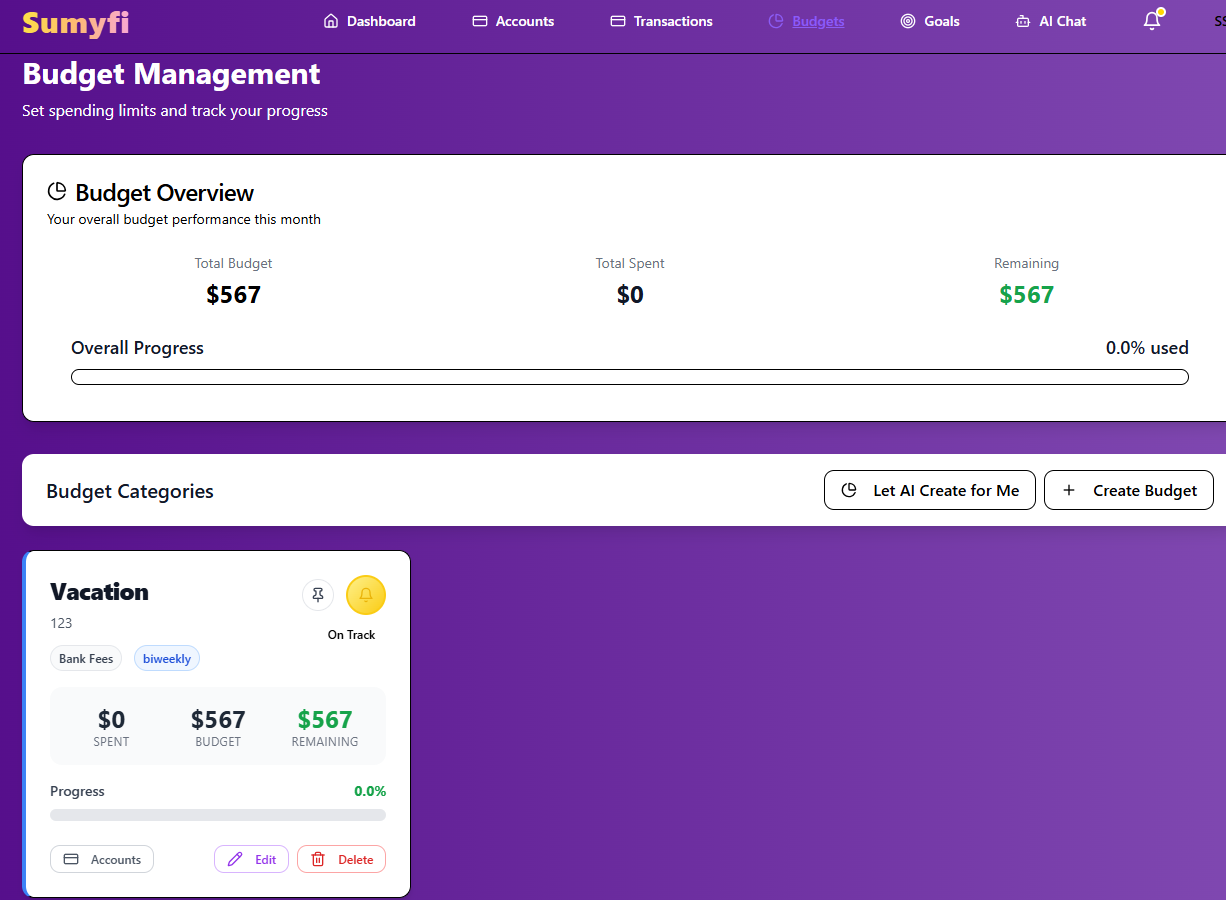
Budgets shows spending by category alongside the amounts assigned to each category.
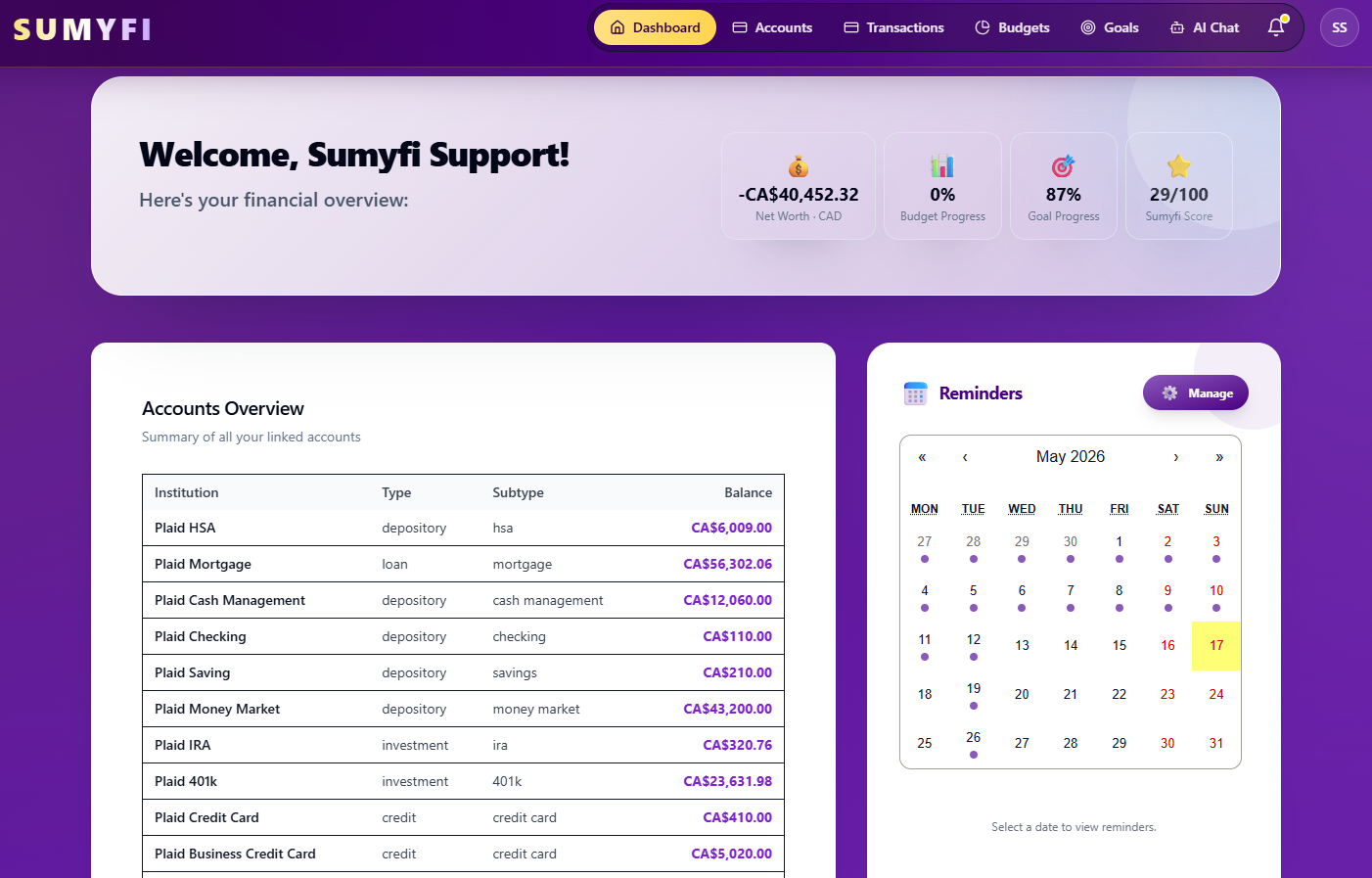
Accounts keeps connected and manual accounts in one place for budget review.
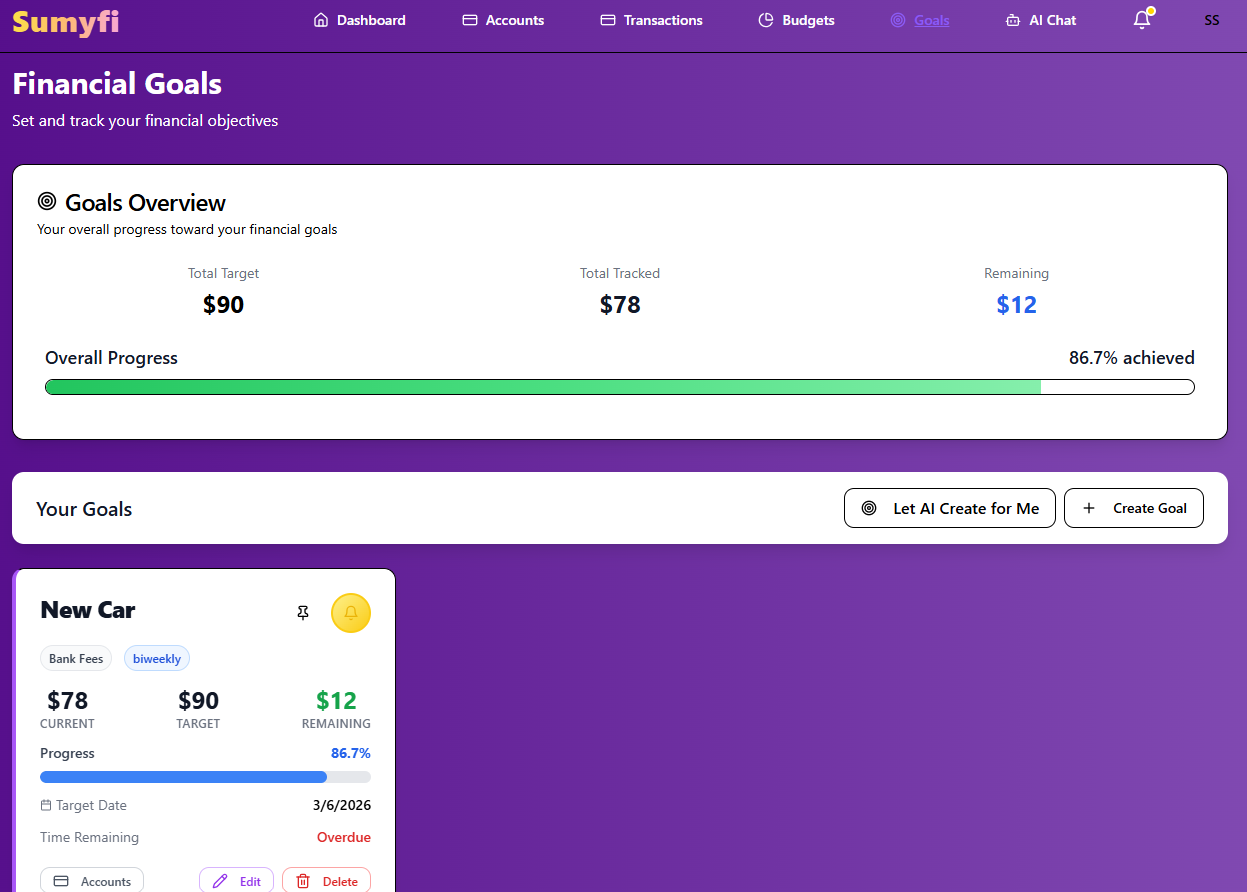
Budgets shows spending by category alongside the amounts assigned to each category.
Comparison table
How free savings goal progress tracker compares in real use
The useful comparison is whether the dashboard still helps when the month gets slightly messy.
| Decision area | Sumyfi | Other tools |
|---|---|---|
| Starting point | Free account with manual or linked tracking | Often narrower setup or heavier manual work |
| Weekly review | Balances, categories, and recurring costs stay connected | The full context is easier to lose across tools |
| Habit support | One dashboard for review and action | More interpretation is left to the user |
Free plan
What's included in the free plan
This section makes the no-card workflow concrete so progress toward a specific savings goal after the target is already set can be judged before premium details become the tie-breaker during the first pass.
- Create an account without entering a credit card.
- Keep balances, transactions, budgets, and recurring activity tied to progress toward a specific savings goal after the target is already set from one web dashboard.
- Turn on read-only account linking later once progress toward a specific savings goal after the target is already set already feels worth repeating for this workflow.
- Review pricing once the dashboard has shown enough value for live upgrade terms after progress toward a specific savings goal after the target is already set has been judged in practice for this decision.
Recommended next reads
Read 5 related articles next
Related reading for the next question.
FAQs
Frequently asked questions
Is free savings goal progress tracker free to start?
Yes. Start manually or with connected accounts, then decide later whether you want deeper premium features.
How does bank connection security work?
Supported bank linking uses a read-only connection flow through trusted providers, so the dashboard can display account data without moving money.
Can I start without linking a bank?
Yes. You can start with a manual routine, build the habit first, and connect eligible institutions later if you want more automation.
Does it help with category drift and weekly reviews?
Yes. The goal is to keep progress toward a specific savings goal after the target is already set usable during normal weeks instead of only during ideal planning sessions.