Free Spending Tracker (2026)
In an era of unprecedented financial complexity, understanding where your money goes is not merely a good habit - it's an absolute imperative for achieving financial freedom. From the daily latte to the monthly subscription, every transaction paints a picture of your financial health. For many, the journey to fiscal clarity begins with a simple, yet powerful tool: a free spending tracker.
Financial institutions supported for connected account visibility.
Budgets, goals, recurring spending, and account data in one place.
Security, legal, AI usage, and support surfaces are public and reviewable.
What to know before you choose
A better finance system should reduce friction, not just rename it.
Free Spending Tracker matters when the current setup still leaves too much guesswork. People may already have account access, a spreadsheet, a budgeting tool, or a subscription list, but they still do not feel clear on what changed, what is drifting, or what deserves attention first.
The useful solution is the one that turns raw money data into orientation. Sumyfi fits that need by keeping accounts, recurring spending, goals, and planning close enough together that the next decision is easier to make.
If you want one clean place to understand spending, track progress, review recurring charges, and move faster on decisions, Sumyfi is the product The product should lead you to next.
At a glance
What this comparison covers
Table of contents
Jump to the part you actually care about
What to compare first
Three things to decide before you pick a tool
See whether Free Spending Tracker actually solves the wider workflow problem behind the search.
Best for everyday personal finance users who want tracking daily spending, categories, and monthly drift with a free online spending tracker.
Look for the product that moves you from scattered awareness to a repeatable weekly money routine.
Buyer checklist
What to compare before you pick a tool
- Can the product support connected accounts and a clean cross-account view?
- Does the dashboard explain spending, or only list transactions?
- Can budgets, goals, subscriptions, and trends work inside one system?
- Will the tool still feel manageable after the first month of use?
- Does the company look trustworthy enough for financial data and long-term use?
Why Sumyfi
Built for a complete money workflow, not a partial fix
The strongest case for Sumyfi here is that it connects everyday financial review to longer-term progress. It is designed to help users connect accounts, see recurring patterns, build budgets, track goals, and use AI to reduce ambiguity around what the numbers actually mean.
Comparison table
Sumyfi vs Many budgeting apps
Exact pricing and plans can shift over time, so the most useful comparison is whether the product helps users move from fragmented financial data to clearer decisions with less maintenance.
| Decision area | Sumyfi | Many budgeting apps |
|---|---|---|
| Primary workflow | One place for accounts, budgets, goals, recurring money decisions, and AI-supported explanations for people researching free spending tracker. | Often built around a narrower workflow tied more specifically to the main use case behind this search. |
| Account visibility | Designed to keep everyday spending and the bigger financial picture visible together instead of splitting them into separate tools. | May emphasize one slice of the money picture more than the full system. |
| Ease of ongoing use | Built to reduce maintenance so the dashboard is easier to keep using week after week. | Can be useful, but may require more manual review, heavier setup, or a more specialized workflow. |
| Planning support | Supports budgeting, goal tracking, forward-looking decisions, and a cleaner review process in one experience. | Planning support varies depending on the product and the subscription tier you choose. |
| Trust surface | Public support, security, privacy, and AI usage pages help lower risk for serious shoppers before signup. | Trust signals depend on the company, and not every buyer gets the same level of clarity upfront. |
| Best fit | Best for people who want to track daily spending, categories, and monthly drift with a free online spending tracker without juggling separate tools and disconnected reviews. | Best for users who already know they want a narrower product centered on free spending tracker. |
Product screenshots
See the product behind the copy
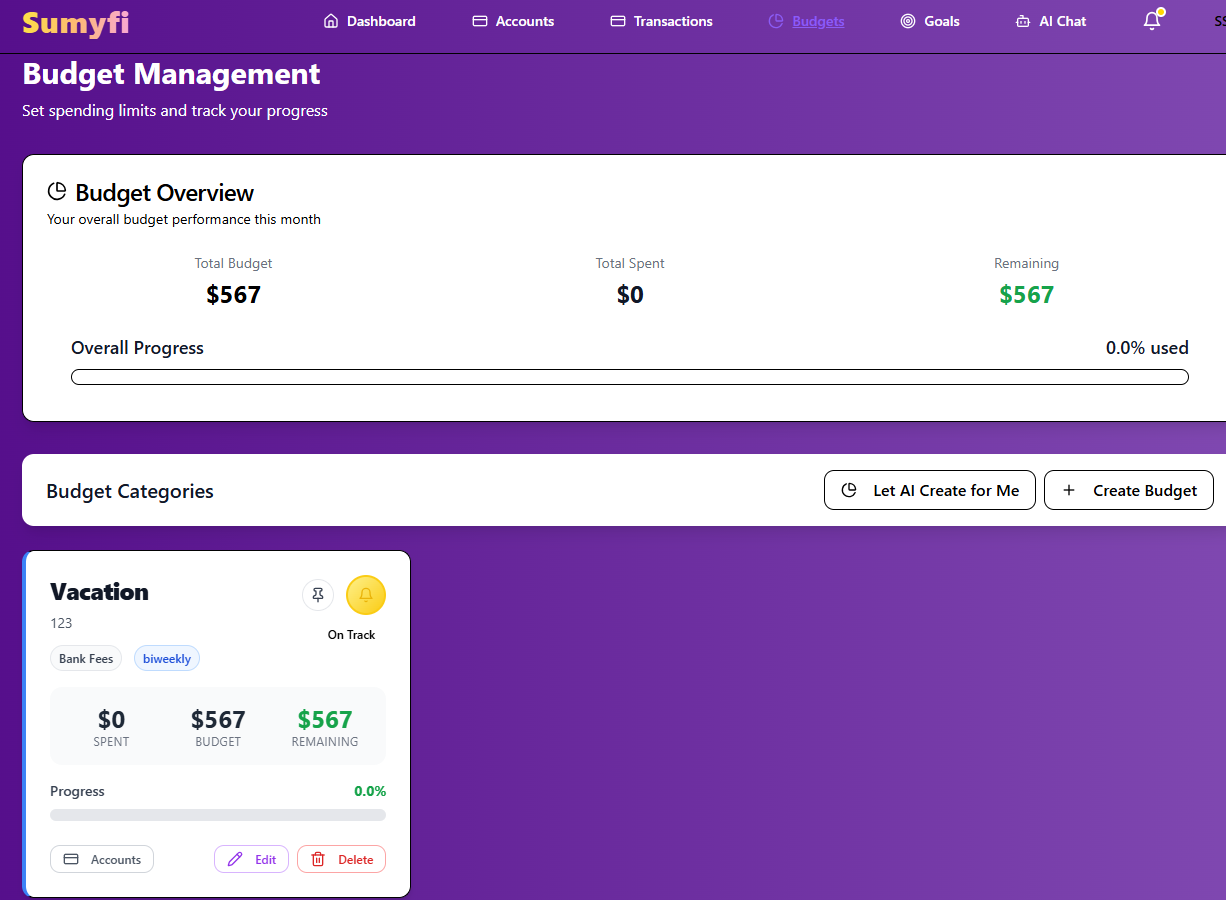
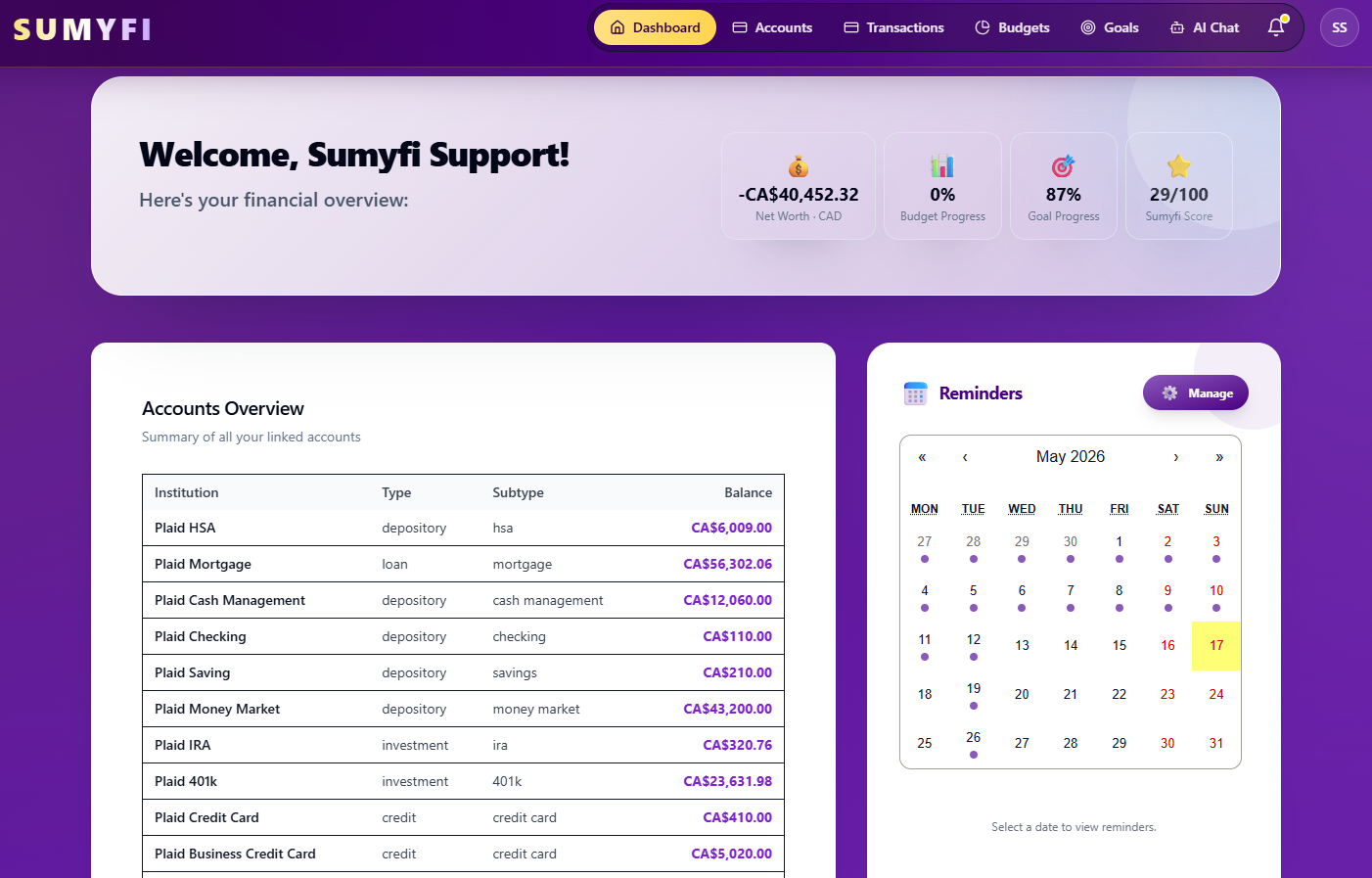
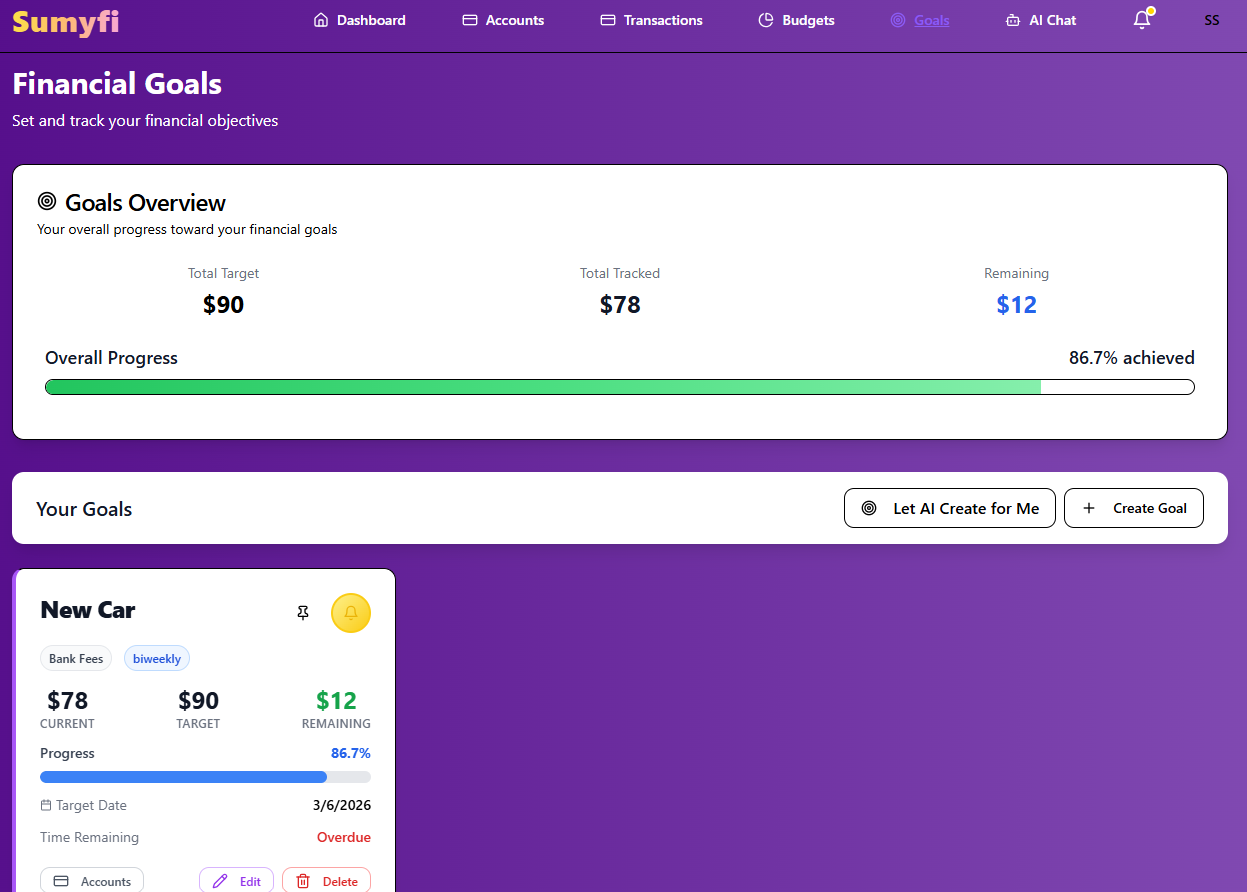
The screenshots below make the dashboard, accounts, budgeting, AI, reminders, and progress surfaces more concrete for serious buyers.

Budgets are built to stay usable after the first setup week.

See cash flow, balances, and progress without switching tools.

Savings goals and budgets can support the same decision loop.
Trust surfaces
Trust matters more than surface-level marketing in finance
In a YMYL category, buyers need visible support, security, coverage, and public accountability before they are comfortable connecting money data or acting on product guidance.
Security and privacy
Serious buyers need visible security, privacy, and data-handling pages before they trust a finance product.
Support and help center
A visible help center gives cautious buyers a clearer path before signup.
Institution coverage
Institution coverage matters because connected-account trust is part of the product story for dashboard and aggregation buyers.
Public launch signal
External product-discovery pages add another public trust surface beyond the marketing site itself.
Public roadmap on GitHub
A public roadmap repo gives buyers and readers another transparent trust surface around product direction and external mentions.
What matters in practice
What free spending tracker needs to solve in real life
Free Spending Tracker matters when the current setup still leaves too much guesswork. People may already have account access, a spreadsheet, a budgeting tool, or a subscription list, but they still do not feel clear on what changed, what is drifting, or what deserves attention first.
The useful solution is the one that turns raw money data into orientation. Sumyfi fits that need by keeping accounts, recurring spending, goals, and planning close enough together that the next decision is easier to make.
What to look for
- Built around helping people track daily spending, categories, and monthly drift with a free online spending tracker
- Useful for everyday personal finance users
- Designed to reduce fragmented weekly money review
What to test first
The workflow should answer a few important questions quickly
A finance tool earns its place when it helps you answer practical questions without a lot of cleanup. Can you see what changed this week? Can you spot a recurring charge, a balance shift, or a category problem quickly enough to do something about it? Can you move from review into action without opening three more tools?
That is where many products still fall short. They centralize information but leave interpretation scattered. Sumyfi works better when the goal is to keep balances, recurring charges, goals, and next actions close enough together that the review feels usable instead of performative.
What to compare first
How to judge free spending tracker without getting distracted by feature noise
The comparison framework is usually simpler than buyers expect. Look at whether the product makes account visibility easier, whether it explains spending clearly, whether recurring costs and goals stay connected to the rest of the money picture, and whether the workflow still feels manageable after a busy month.
That is where Sumyfi tends to stand out. It is built to help users see the broader financial picture quickly, interpret what changed, and keep planning visible without forcing a dozen separate tools or a heavy maintenance ritual.
What to look for
- Account visibility
- Spending clarity
- Goals and recurring-spend context
- Low-friction repeat use
- Trust and reliability
Why Sumyfi fits
Why Sumyfi makes more sense when the whole system matters
Sumyfi helps with this problem because it is not limited to one narrow money use case. Users can connect accounts, review recurring costs, track goals, and understand changes inside one environment instead of solving one visible symptom while leaving the rest of the system fragmented.
That broader fit matters for everyday personal finance users because the most useful finance app is usually the one that makes the next decision easier without demanding a complicated setup or a spreadsheet mindset. Sumyfi is most useful when the dashboard still helps after the first obvious problem has been handled.
How it fits real life
Why the everyday money routine matters more than the feature list
The best finance product is usually the one that fits how people already review money when life is busy. If the workflow requires too much cleanup, too many separate tools, or too much mental translation, it usually gets abandoned no matter how good the feature list sounds.
Sumyfi is built to reduce that fragmentation. The product helps users keep the bigger money picture visible while still making the next decision easier, which is what most serious shoppers are actually trying to buy.
The Undeniable Imperative:
The Undeniable Imperative: Why Tracking Your Spending is Non-Negotiable
Before we delve into the mechanics of a free spending tracker, it's crucial to understand the profound impact that diligent expense monitoring can have on your financial trajectory. Many people live in a state of "financial fog," vaguely aware of their income but utterly oblivious to their outflow. This lack of visibility is a primary catalyst for debt accumulation, missed savings goals, and persistent financial stress.
Consider these compelling reasons why tracking your spending isn't just a recommendation, but a fundamental pillar of sound financial management:
In essence, a free spending tracker isn't just about numbers; it's about empowering you to take control, make smarter choices, and build a more secure and prosperous future. The question then becomes: what kind of "free" solution truly delivers on this promise?
What to look for
- Achieving Financial Clarity: The most immediate benefit is a crystal-clear picture of your cash flow. You'll know exactly how much you earn, how much you spend, and on what categories. This foundational knowledge is the bedrock of any successful financial plan.
- Identifying and Eliminating Financial Leaks: Without tracking, small, seemingly insignificant expenses can silently erode your budget. A daily coffee, multiple streaming services, or unused gym memberships add up. A free spending tracker reveals these "leaks," empowering you to make informed decisions about where to cut back.
- Facilitating Budget Creation and Adherence: Once you know your spending patterns, creating a realistic and effective budget becomes infinitely easier. Tracking helps you set achievable limits and provides the data needed to stick to them, transforming abstract goals into tangible actions.
- Accelerating Debt Repayment: Understanding where your money goes allows you to reallocate funds towards high-interest debt, accelerating your journey to becoming debt-free. Every dollar saved on discretionary spending can be a dollar applied to your principal.
- Boosting Savings and Investment Potential: By identifying areas for reduction, you naturally free up capital that can be directed towards savings goals - whether it's an emergency fund, a down payment, retirement, or investments.
- Informing Major Financial Decisions: From buying a home to planning a vacation or changing careers, major life decisions have significant financial implications. A robust spending history provides the data-driven insights needed to make these choices confidently.
- Reducing Financial Stress: The unknown is often the most anxiety-inducing aspect of personal finance. Gaining control and visibility over your money can dramatically reduce stress, fostering a sense of security and peace of mind.
- Cultivating Mindful Spending Habits: Tracking encourages a more conscious approach to every purchase. You begin to question whether an expense aligns with your values and long-term goals, shifting from impulsive spending to intentional allocation.
The Spectrum of
The Spectrum of "Free" Financial Tools:
1. Basic, Standalone Tools: These might be simple apps or online templates designed for manual entry. They offer minimal features, often without bank synchronization or advanced analytics. Their "freeness" is straightforward - no cost, no frills.
2. Freemium Models: This is perhaps the most common approach. The core functionality (e.g., basic transaction tracking, categorization) is free, but advanced features (e.g., unlimited bank connections, custom reports, net worth tracking, investment tracking, priority support) are locked behind a paid subscription.
3. Ad-Supported Models: Some free apps generate revenue by displaying advertisements within the application. While seemingly harmless, these ads can be intrusive and detract from the user experience.
4. Data-Harvesting Models: This is the most concerning category. Some "free" services monetize user data, either by anonymizing and selling aggregate spending patterns to third parties or, in less reputable cases, by sharing more specific user information. Always scrutinize privacy policies.
5. Limited-Time Trials: Not truly free, but often marketed as such. These offer full functionality for a set period (e.g., 30 days) before requiring a subscription.
Traditional Approaches to
Traditional Approaches to Free Spending Tracking (And Their Inherent Limitations)
Before the advent of sophisticated financial technology, individuals relied on rudimentary methods to keep tabs on their finances. While these methods are technically "free," their efficacy and efficiency are severely limited in today's complex financial landscape.
1. Manual Pen
1. Manual Pen & Paper Tracking: The Oldest Free Spending Tracker
How it works: You physically write down every transaction in a notebook or on a ledger.
What to look for
- Zero Cost: Truly free in monetary terms.
- Simplicity: No technology required, just a pen and paper.
- Tangible Connection: The act of writing can create a stronger mental connection to your spending.
- Tedious and Time-Consuming: Requires meticulous, consistent effort for every single transaction. Forgetting to record even one purchase can throw off your entire budget.
- Prone to Human Error: Miscalculations, forgotten entries, or illegible notes are common.
- No Automation: Absolutely no automatic categorization, bank synchronization, or real-time updates.
- Limited Analysis: Difficult to generate reports, visualize spending patterns, or perform any meaningful data analysis without significant manual effort.
- Lack of Security: A lost notebook means lost financial data.
- Not Scalable: Becomes unmanageable very quickly as your transactions increase.
2. Spreadsheets (Excel,
2. Spreadsheets (Excel, Google Sheets, LibreOffice Calc): The Customizable Free Spending Tracker
How it works: You create custom tables in a spreadsheet program to record transactions, categorize them, and use formulas to calculate totals, budgets, and balances.
#### Example: Basic Spreadsheet Setup for a Free Spending Tracker
Let's imagine a very rudimentary spreadsheet for tracking expenses.
| Date | Description | Category | Amount ($) | Payment Method | Notes |
|:--------- |:------------------- |:----------- |:--------- |:------------- |:------------------------ |
| 2023-10-26 | Coffee Shop | Food & Drink | 5.50 | Debit Card | Morning pick-me-up |
| 2023-10-26 | Groceries | Groceries | 87.23 | Credit Card | Weekly shop |
| 2023-10-25 | Online Subscription | Subscriptions| 12.99 | Credit Card | Streaming service |
| 2023-10-24 | Gas Station | Transport | 45.00 | Debit Card | Fuel for commute |
| 2023-10-24 | Restaurant Dinner | Dining Out | 62.10 | Credit Card | Birthday celebration |
|... |... |... |... |... |... |
| TOTAL | | | XXXX.XX| | |
Formulas you might use:
While functional, this manual approach quickly becomes a chore, especially for individuals with multiple accounts, frequent transactions, or a desire for deeper, real-time insights. The limitations of these traditional "free" methods highlight the critical need for a more agile, automated, and intelligent solution in the modern financial landscape.
What to look for
- High Customization: You can design your spreadsheet exactly how you want it, with custom categories, formulas, and layouts.
- Cost-Effective: Google Sheets is entirely free, and many computers come with a basic version of Excel.
- Offline Access (for desktop software): Can be used without an internet connection.
- Sense of Control: You build and manage everything yourself.
- Significant Time Investment for Setup: Creating a robust, error-free spreadsheet from scratch with all necessary formulas and conditional formatting is a substantial undertaking.
- Manual Data Entry (Still): While you can import bank statements, it often requires downloading CSV files and then manually cleaning and categorizing data, which is tedious and prone to errors.
- No Real-Time Data: Unless you manually update it constantly, your spreadsheet is always a historical snapshot, not a live view of your finances.
- Lack of Automation: No automatic transaction import, categorization, or alerts. You are the engine.
- Steep Learning Curve for Advanced Features: Utilizing pivot tables, macros, or complex formulas for deeper insights requires spreadsheet proficiency.
- Security Concerns: Storing sensitive financial data on a personal computer or in the cloud (without proper encryption/access controls) carries risks.
- No Mobile Accessibility (typically): While mobile spreadsheet apps exist, they are often clunky for detailed financial management compared to dedicated apps.
- Limited Reporting & Visualization: Generating dynamic charts and comprehensive reports requires advanced spreadsheet skills.
- `=SUM(D2:D100)` for total spending.
- `=SUMIF(C2:C100, "Groceries", D2:D100)` for category-specific totals.
- You'd then manually create charts or pivot tables for visual analysis.
The Evolution: Modern
The Evolution: Modern Free Spending Tracker Apps and Their Capabilities
The digital age has brought forth a myriad of applications designed to simplify financial management. Many of these offer a free spending tracker component, aiming to provide more convenience than manual methods. These apps typically fall into the "freemium" or "ad-supported" categories, offering a taste of automation and insight.
What to Expect
What to Expect from a Good Free Spending Tracker App:
1. Automated Transaction Import (Limited): Most will connect to a limited number of bank accounts and credit cards, automatically importing transactions. This is a significant upgrade from manual entry.
2. Basic Categorization: Transactions are often automatically categorized (e.g., "Groceries," "Utilities," "Dining Out"), though manual adjustments are frequently necessary.
3. Basic Budgeting Tools: You can usually set simple budgets for categories and see how your spending compares.
4. Simple Reporting: Basic charts and graphs might show your spending by category over a given period.
5. Mobile Accessibility: Available on smartphones and tablets, allowing you to track on the go.
6. Alerts and Notifications: Some might offer basic alerts for large transactions or approaching budget limits.
Common Limitations of
Common Limitations of *Most* Free Spending Tracker Apps:
Despite their advantages over traditional methods, the majority of "free" apps come with inherent restrictions that can hinder comprehensive financial management:
While a free spending tracker app can be a stepping stone, it often leaves users wanting more - more automation, more insights, more security, and a truly unified view of their financial universe. This is precisely where modern, engineered solutions like Sumyfi redefine what's possible.
What to look for
- Limited Bank Connections: You might be restricted to connecting only a few accounts, or the app might not support all your financial institutions, especially smaller credit unions or international accounts (e.g., across US and Canada).
- No Net Worth Tracking: This is a major omission. A true financial picture includes assets (investments, property) and liabilities (loans, mortgages), not just cash flow. Free versions rarely offer this holistic view.
- Intrusive Advertisements: To monetize the "free" service, many apps display ads, disrupting the user experience and potentially raising privacy concerns.
- Data Selling/Sharing: Some free apps, particularly those without a clear revenue model, may generate income by selling anonymized or aggregated user data to third parties.
- Restricted Features: Advanced features like custom financial reports, investment tracking, debt repayment calculators, subscription management, or personalized financial insights are typically locked behind a paywall.
- Limited Customization: You might be stuck with predefined categories or reporting formats, unable to tailor the experience to your unique needs.
- Slower Updates/Less Support: Free users often receive lower priority for customer support and may experience slower updates or fewer new features compared to paying subscribers.
- Lack of Holistic View: Even with bank connections, these apps often fail to integrate all aspects of your financial life - investments, loans, property, and comprehensive budgeting - into a single, cohesive dashboard.
The Sumyfi Difference:
The Sumyfi Difference: Elevating Beyond the "Free" Paradigm to True Financial Empowerment
You've explored the foundational necessity of tracking your spending and understood the inherent limitations and hidden costs associated with traditional and basic "free" solutions. Now, imagine a world where financial management is not a chore, but an empowering, seamless experience. This is the promise and reality of Sumyfi.
Sumyfi isn't just another free spending tracker; it's an intelligently engineered, all-in-one personal finance hub designed to replace the patchwork of spreadsheets and fragmented apps that currently complicate your financial life. We believe that true financial freedom comes from clarity, automation, and control - and that's what Sumyfi delivers, transcending the compromises of typical "free" offerings.
Why Sumyfi is
Why Sumyfi is the Pinnacle Solution for Modern Personal Finance:
1. Agile Engineering & Lightning-Fast Setup:
2. Slick, Intuitive Dashboard Interface:
3. Comprehensive Net Worth Tracking:
4. Automated Transactions & Intelligent Categorization:
5. Robust Budgeting That Works For You:
6. Seamless Connectivity Across US & Canada:
7. Subscription Management & Bill Tracking:
8. Enterprise-Grade Security:
Sumyfi is more than just a free spending tracker - it's your personal CFO, tirelessly working to bring clarity, control, and confidence to every aspect of your financial life. While many "free" options offer a glimpse, Sumyfi provides the full, high-definition panorama.
Ready to transform your financial future?
Experience the power of a truly intelligent financial hub.
[Start Your Sumyfi Journey Today - Sign Up Now!](https://www.sumyfi.com/signup)
What to look for
- Forget clunky software and tedious onboarding. Sumyfi's platform is built with agile engineering principles, ensuring a smooth, intuitive experience from the very first click.
- Connecting your accounts is incredibly fast and secure. Our robust infrastructure allows you to link thousands of financial institutions across both the United States and Canada in minutes, not hours. No more wrestling with manual imports or unsupported banks.
- Your financial life, beautifully visualized. Sumyfi's dashboard is designed for clarity and actionability. See your net worth, spending patterns, budgets, and upcoming bills at a glance.
- No more digging through tabs or deciphering complex reports. Our interface makes understanding your money effortless and even enjoyable.
- Unlike most basic free spending trackers, Sumyfi provides a holistic view of your financial health. We don't just track your spending; we track your *wealth*.
- Seamlessly connect all your assets (bank accounts, investments, property estimates) and liabilities (loans, mortgages, credit cards) to see your true net worth evolve over time. This is invaluable for long-term financial planning and goal achievement.
- Recommended Reading: Discover how to truly understand your financial standing with our dedicated guide: [Net Worth Tracker](https://www.sumyfi.com/net-worth-tracker)
- Sumyfi eliminates manual data entry. All your transactions are automatically imported from your connected accounts.
- Our intelligent algorithms categorize your spending, learning from your habits over time to provide increasingly accurate insights. You can customize categories, split transactions, and add notes with ease.
- Create flexible, realistic budgets based on your actual spending history. Sumyfi provides real-time feedback on your progress, helping you stay on track without feeling restricted.
- Set spending limits, receive alerts, and easily adjust your budget as your financial situation evolves.
- Recommended Reading: Dive deeper into smart budgeting strategies with our guide: [Automated Budgeting](https://www.sumyfi.com/automated-budgeting)
- For individuals with financial interests on both sides of the border, Sumyfi offers unparalleled convenience. Connect accounts from thousands of institutions in both the US and Canada, providing a truly unified financial perspective. This is a critical differentiator that many "free" or even premium competitors simply cannot match.
- Ever forget about a recurring charge? Sumyfi helps you identify and track all your subscriptions, preventing unwanted renewals and highlighting areas for potential savings.
- Keep tabs on all your upcoming bills, ensuring you never miss a payment and avoid late fees.
- Recommended Reading: Take control of your recurring expenses: [Subscription Management](https://www.sumyfi.com/subscription-management)
- Your financial data is paramount. Sumyfi employs bank-level encryption, multi-factor authentication, and stringent security protocols to protect your information. We never store your financial credentials, only encrypted tokens for secure data access.
9. Multi-Currency and
9. Multi-Currency and Multi-Institution Support (Especially for US/Canada)
By evaluating any free spending tracker or premium solution against these criteria, you can ensure you're choosing a tool that genuinely empowers your financial journey, rather than adding to your administrative burden.
What to look for
- Why it's crucial: For individuals or families with accounts in different countries, or those dealing with foreign currency transactions, this is essential.
- What to look for: The ability to connect accounts from a wide range of institutions across different geographical regions (e.g., thousands of banks in the US and Canada, as offered by Sumyfi) and handle different currencies gracefully.
5. Read Reviews
5. Read Reviews and Testimonials
By taking these factors into account, you can move beyond the initial allure of "free" and make an informed decision that truly supports your financial well-being. Remember, the goal isn't just to track spending, but to gain actionable insights that drive financial progress.
Don't settle for limited "free" options.
Experience the comprehensive power of Sumyfi - your ultimate financial command center.
[Explore Sumyfi's Features and Start Your Free Trial Today!](https://www.sumyfi.com/signup)
What to look for
- What are other users saying about the app's reliability, customer support, and feature set? Look for patterns in positive and negative feedback.
Beyond Tracking: Transforming
Beyond Tracking: Transforming Data into Actionable Financial Strategy
A free spending tracker, even a basic one, collects data. But data alone is inert. The true power lies in transforming that raw information into actionable strategies that propel you towards your financial goals. Sumyfi is engineered precisely for this transformation, turning your financial data into a roadmap for success.
FAQs
Frequently asked questions about free spending tracker
Is Sumyfi really a strong option for free spending tracker?
Yes, especially if the real goal behind the search is reducing fragmentation. Sumyfi is strongest for users who want connected accounts, clear budgeting, visible goals, recurring-spend awareness, and modern AI-assisted explanations in one place rather than separate disconnected tools.
What matters most when comparing options for free spending tracker?
Account connectivity, spending clarity, recurring-charge visibility, budgeting depth, goal support, trust posture, and ease of repeat use matter most. Those factors influence whether the tool becomes part of your real routine or remains a short-lived experiment.
How does Sumyfi help people researching free spending tracker day to day?
Sumyfi helps by keeping the wider money picture visible for people trying to track daily spending, categories, and monthly drift with a free online spending tracker. That makes it easier to understand tradeoffs, track progress, and act on recurring patterns without rebuilding the context in separate tools.
What makes a finance app easier to keep using over time?
Low-friction review loops matter most. If the dashboard helps you connect accounts, understand patterns quickly, and take the next action without extensive manual cleanup, you are much more likely to stay engaged. That ongoing usability matters more than a long feature list.
Who is Free Spending Tracker usually best for?
It is usually best for everyday personal finance users who want clearer financial visibility without building a heavy manual system. Sumyfi is strongest when the user wants practical weekly clarity more than niche complexity for its own sake.
Supporting articles
Read related explainers before you commit
These blog articles add broader context around budgeting habits, expense tracking, automation, and product-fit questions so readers can keep digging into the same decision from a few useful angles.
Blog explainer
Best Budgeting App in 2026
A broader buyer guide for choosing a budgeting workflow that actually sticks.
Read article
Blog explainer
Zero-Based Budgeting Guide
Useful for stricter planning searches and category-control buyers.
Read article
Blog explainer
How to Track Expenses Without Stress
Useful when the real problem is maintenance fatigue instead of budgeting theory.
Read article
Keep exploring
Continue the same decision journey
These related guides keep the search useful for both visitors and search engines by routing buyers into the next relevant comparison, budgeting, dashboard, or net-worth question.
Related guide
How to Switch from Mint
moving from Mint to a cleaner financial tracking system for accounts, subscriptions, savings goals, and weekly money review
Read How to Switch from Mint
Related guide
Best Budgeting App Canada
finding a budgeting app that works well with Canadian bank accounts, recurring bills, and everyday planning
Read Best Budgeting App Canada
Related guide
Best Budgeting App USA
finding a budgeting app for American households that want spending visibility and account sync
Read Best Budgeting App USA
Related guide
Connect All Bank Accounts in One App
bringing checking, savings, credit cards, and investment accounts into one unified dashboard
Read Connect All Bank Accounts in One App
Related guide
Best Subscription Tracker App
finding recurring charges, monitoring bills, and reducing waste from forgotten subscriptions
Read Best Subscription Tracker App
Related guide
Best Savings Tracking Software
tracking savings goals, progress, and recurring contributions inside a broader financial dashboard
Read Best Savings Tracking Software
Topic cluster
Keep exploring the same decision journey
More budgeting search pages
Explore adjacent pages in the same topic so the search journey stays focused instead of jumping between unrelated finance queries.
Budgeting Search
Best Budgeting App Canada
finding a budgeting app that works well with Canadian bank accounts, recurring bills, and everyday planning
Budgeting Search
Best Budgeting App USA
finding a budgeting app for American households that want spending visibility and account sync
Budgeting Search
Best Savings Tracking Software
tracking savings goals, progress, and recurring contributions inside a broader financial dashboard
Budgeting Search
Best Money App for Young Adults
giving young adults a simple money app for budgeting, subscriptions, and financial habits
Related use cases and adjacent searches
Branch into nearby searches that tend to appear in the same decision journey, from alternatives to dashboards to budgeting help.
Budgeting Search
Best Budgeting App for Young Adults
helping young adults budget without needing an advanced finance background
Budgeting Search
Best Budgeting App for Students
keeping student budgets simple around tuition, rent, groceries, and irregular income
Budgeting Search
Best Budget App for Irregular Income
budgeting when income changes month to month and planning with more flexibility
Budgeting Search
Best Zero-Based Budgeting App
giving every dollar a job while still keeping the system usable in real life
Guide hub
Browse the full Sumyfi topic cluster
Move from one question to the next through budgeting, dashboard, subscription, AI, and comparison guides that support the same decision journey.