Sumyfi Editorial Team • Updated 2026-09-01
Investment and Net Worth Dashboard for Whole-System Wealth Visibility
Use one dashboard for combining investing visibility with broader household money tracking so balances, recurring activity, and next actions stay easier to review.
Buyers here usually want more than account balances and market charts. They want to see how investing progress fits beside liabilities, cash reserves, recurring costs, and the broader direction of their finances without stitching that view together manually.
That means the right dashboard should make it easier to understand tradeoffs. It should show how portfolio progress interacts with the rest of the balance-sheet story and why the full picture matters more than an isolated investment screen.
If you want an investment dashboard that helps you understand portfolio progress inside the full net-worth picture, Sumyfi is the better fit
At a glance
- Investing plus total net worth
- Portfolio context inside the full system
- Long-term progress tied to real financial behavior
Built for buyers who want investing visibility tied to the rest of the financial picture.
A standalone investing dashboard often leaves users reconciling debt, cash flow, and goals elsewhere.
The strongest dashboard helps users interpret long-term progress against present-day decisions.
Portfolio plus life
Why investment dashboards become more useful when they stop pretending the portfolio lives alone
People looking for an investment and net worth dashboard often want to see more than account balances and market movement. They want to understand how investing progress fits into debt reduction, cash reserves, recurring costs, and the larger direction of their finances. That broader view is what turns an investing dashboard into a real decision tool.
A standalone portfolio screen can be useful, but it often leaves users reconciling too much context on their own. The best product should make it easier to see how investments interact with liabilities, cash flow, and long-term goals so the full balance-sheet picture is easier to understand in one sitting.
Sumyfi fits This guide because it keeps investing visibility tied to the rest of the system. Users can understand portfolio movement as one driver inside a bigger financial story rather than as an isolated scorecard.
Why this dashboard is stickier
The stronger dashboard is the one that keeps long-term progress connected to present-day decisions
Users stay engaged with dashboards that help them interpret tradeoffs. They want to know whether investing progress is being reinforced or undermined by other financial behavior, and they want that answer without opening a chain of separate tools. The best investment-plus-net-worth dashboard should make those relationships easier to see immediately.
That is why broader dashboard design matters more than many finance roundups admit. A product that keeps investing, liabilities, recurring spending, and goals in view at the same time creates more behavioral value than one that excels only at portfolio presentation.
Sumyfi aligns with that broader expectation. It helps people connect long-term market progress to the ordinary money habits that sustain or weaken it, which makes the dashboard more useful over time.
Buyer checklist
What investment-dashboard buyers should compare before they settle
- Does the dashboard connect investing visibility to debt, cash flow, and total net worth instead of isolating the portfolio?
- Can the product help explain long-term tradeoffs, not only show balances and performance?
- Will the dashboard still feel useful when market movement is quiet and context matters more than excitement?
- Does the app reduce the number of separate tools needed to review the full balance-sheet picture?
- Is the platform trustworthy enough for a long-term wealth and investing workflow?
Why Sumyfi
Built for users who want investing progress interpreted inside the full household balance sheet
The strongest case for Sumyfi on This guide is that investments do not live in a separate universe from debt, cash flow, and goals. Users can connect portfolio visibility to the full money picture, which makes the dashboard more useful over time.
Product screenshots
See the product behind the copy
Screenshots shown: Dashboard, Accounts, Goals.
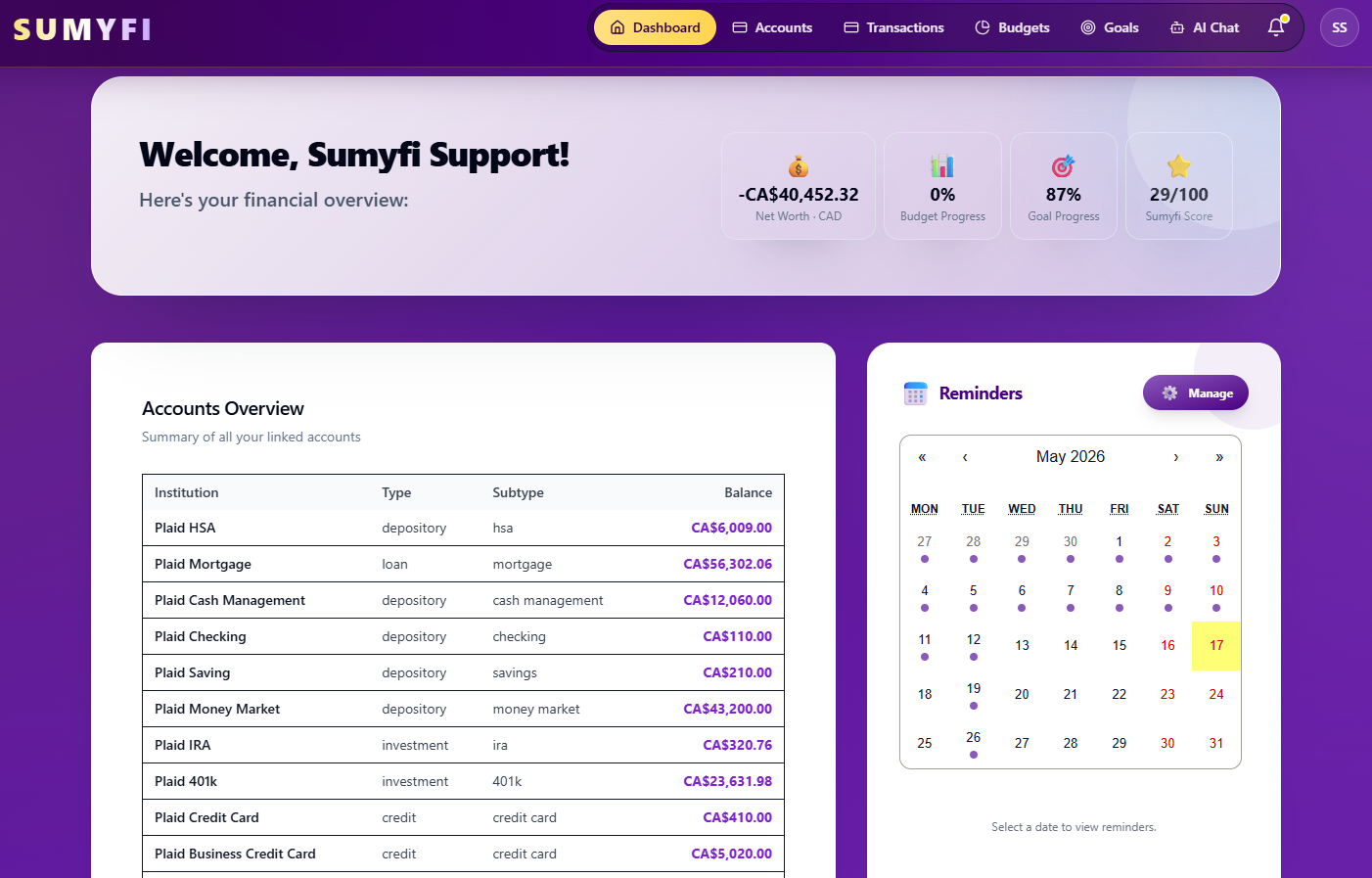
Dashboard shows balances, assets, and debts in one overview.
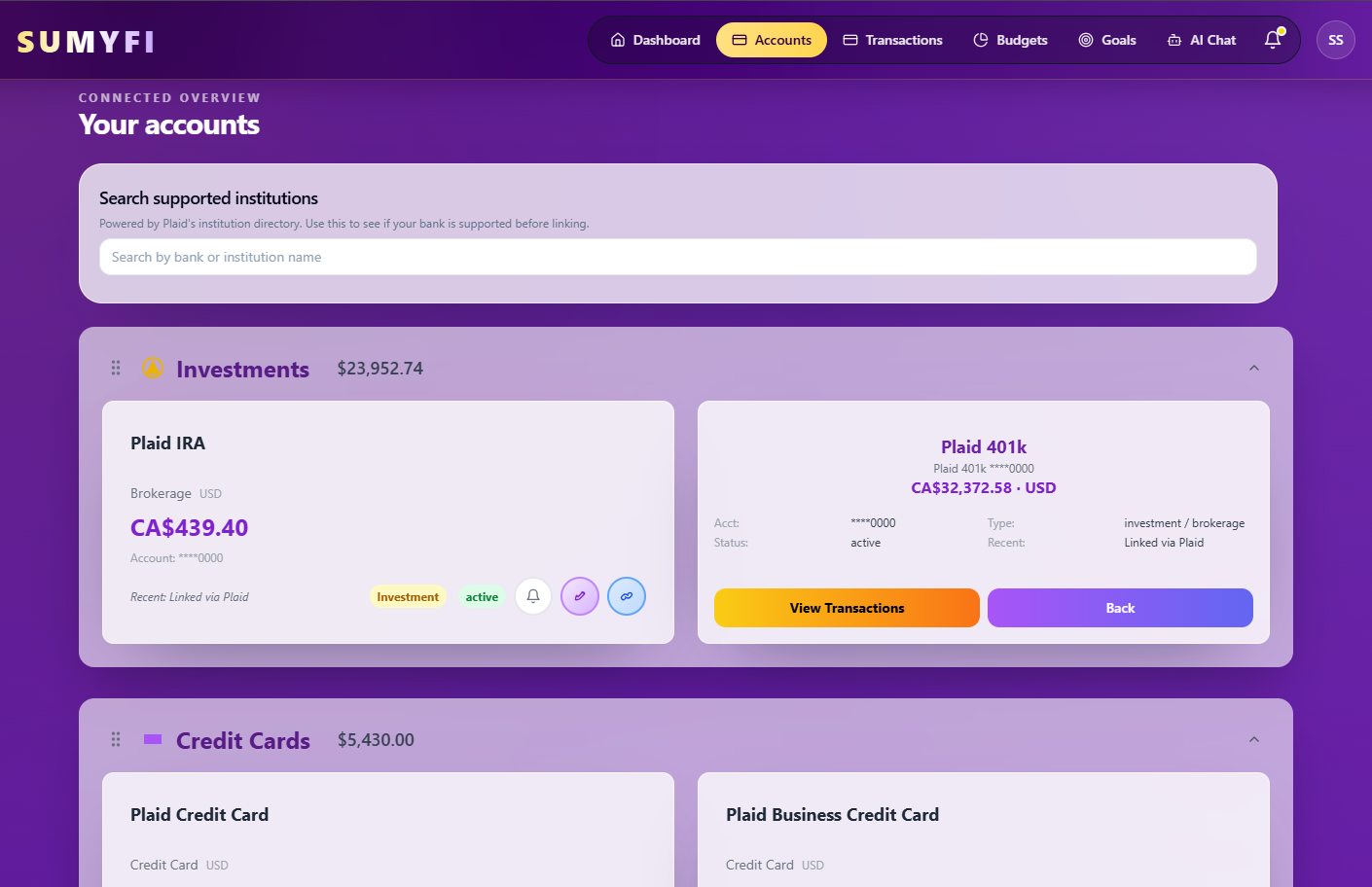
Accounts shows assets, debts, and balances in one account view.
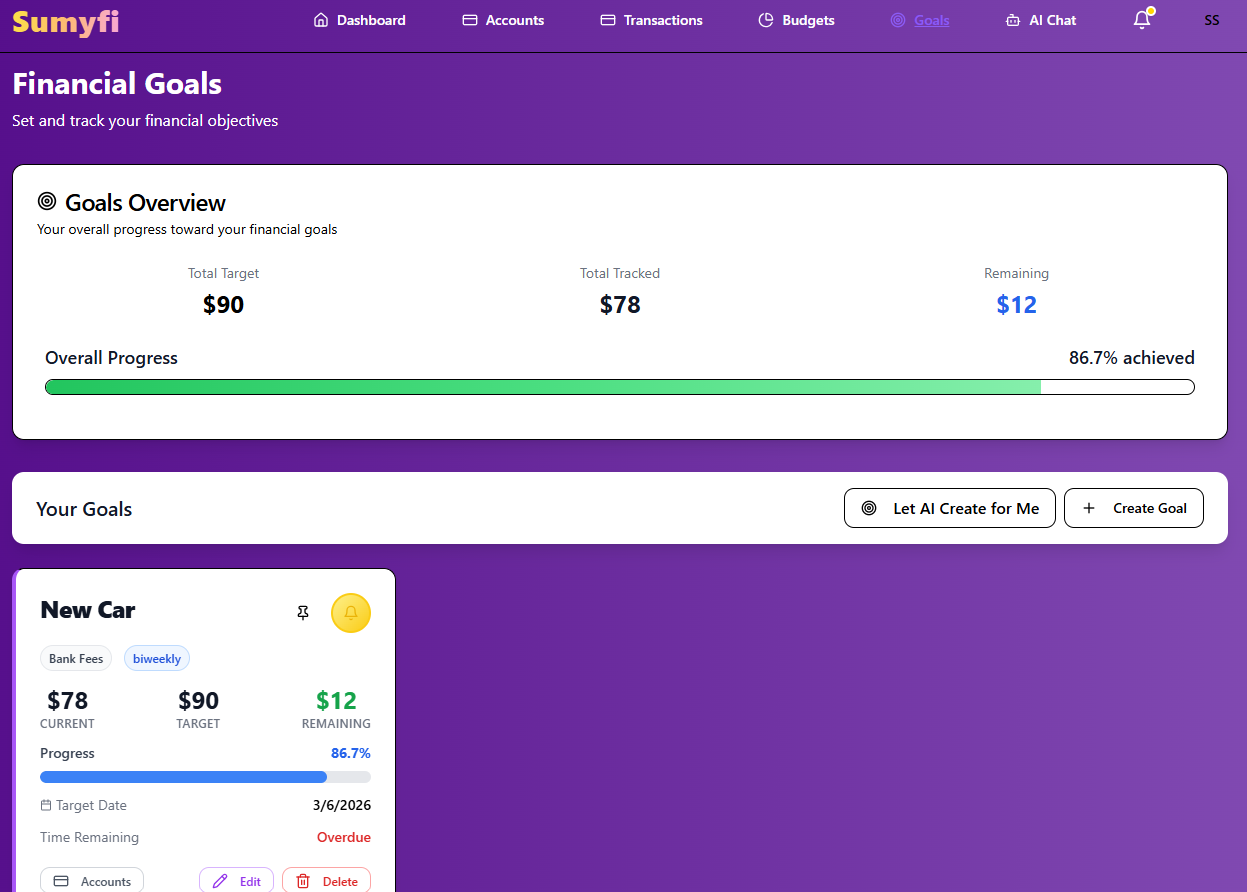
Goals shows progress targets alongside the broader balance picture.
Comparison table
How the options compare for investment + net worth dashboard
Compare how each option handles assets, liabilities, and the wider balance-sheet context behind combining investing visibility with broader household money tracking.
| Decision area | Sumyfi | Typical net worth tool |
|---|---|---|
| Net worth context | The the net-worth number stays tied to balances, transactions, and goals so someone can see what is driving the change. That matters more when combining investing visibility with broader household money tracking has to stay usable during ordinary weeks. | Typical net worth tool often shows the net worth tracking number clearly, but the causes behind movement can feel more detached. That shortfall shows up faster when combining investing visibility with broader household money tracking has to stay usable during ordinary weeks. |
| Assets and liabilities | The net worth tracking view keeps assets, liabilities, and cash balances inside the same progress check. That is a better fit for searches centered on combining investing visibility with broader household money tracking. | Assets and debts may be tracked, but the surrounding financial context in the net-worth review for combining investing visibility with broader household money tracking tools is often thinner. That gap is harder to ignore when the page is really about combining investing visibility with broader household money tracking. |
| Progress interpretation | The net-worth view for combining investing visibility with broader household money tracking keeps daily money behavior close enough to long-term progress that the number is easier to explain. That is a better fit for searches centered on combining investing visibility with broader household money tracking. | The dashboard may show movement clearly in the net-worth review for combining investing visibility with broader household money tracking, though turning that movement into a practical next step still takes more work. That gap is harder to ignore when the page is really about combining investing visibility with broader household money tracking. |
| Recurring pressure | the dashboard keeps monthly spending drag visible so long-range progress feels more honest and more actionable. That matters more when combining investing visibility with broader household money tracking has to stay usable during ordinary weeks. | Long-term net worth tracking progress is shown, but recurring monthly drag can be less central to the experience. That shortfall shows up faster when combining investing visibility with broader household money tracking has to stay usable during ordinary weeks. |
| Desktop and mobile continuity | The same net worth tracking progress view can be checked quickly on mobile or reviewed in depth on desktop. That is a better fit for searches centered on combining investing visibility with broader household money tracking. | The the net-worth view may work across devices, though the richer explanation often feels thinner on either desktop or mobile. That mismatch becomes clearer on searches centered on combining investing visibility with broader household money tracking. |
| Best for | Best when the net-worth view needs to explain progress through the rest of the financial dashboard. That is a better fit for searches centered on combining investing visibility with broader household money tracking. | More workable when a scoreboard view is enough and the supporting context can stay elsewhere. That mismatch becomes clearer on searches centered on combining investing visibility with broader household money tracking. |
Recommended next reads
Read 5 related articles next
Related reading for the next question.
FAQs
Frequently asked questions
What makes investment + net worth dashboard easier to evaluate?
A better evaluation asks whether combining investing visibility with broader household money tracking becomes easier to run during an ordinary month, not just a product demo.
How does Sumyfi handle account security?
The security model is built around displaying account data securely while combining investing visibility with broader household money tracking stays separate from institution settings and fund transfers.
Can this workflow start with manual tracking?
Yes. A manual starting point is helpful when you want to test combining investing visibility with broader household money tracking before connecting accounts.
What should I compare before switching?
Compare what happens after setup: which product keeps combining investing visibility with broader household money tracking easier to understand and act from during an ordinary month.
Keep exploring
Continue the same decision journey