Use one clear workflow for a more modern Canadian alternative to older desktop-style money software with practical comparisons, concrete product details, and fewer disconnected money tools.
For decades, Quicken held a near-monopoly on personal finance management software, a familiar fixture on many Canadian desktops. Yet, as the digital age accelerates and financial landscapes evolve, a growing number of savvy Canadians are actively seeking a more agile, intuitive, and comprehensively integrated Quicken alternative Canada can truly rely on. The era of clunky desktop installations, limited bank connectivity, and disjointed financial views is rapidly giving way to a new paradigm of personal finance - one that demands real-time insights, seamless automation, and a holistic financial panorama.
Far more than just a replacement, Sumyfi represents a significant leap forward, offering a sophisticated, all-in-one platform that effortlessly tracks net worth, automates transactions, and connects with thousands of financial institutions across both Canada and the US. If you're a Canadian user feeling constrained by Quicken's limitations, or simply seeking a superior way to manage your finances, your search for the premier Quicken alternative Canada has finally led you to the future.
Why Canadians Are Actively Seeking a Quicken Alternative
Quicken, despite its historical prominence, has struggled to adapt to the velocity and complexity of modern personal finance. For Canadian users specifically, the challenges have often been amplified, leading to a palpable demand for a more robust and regionally attuned solution. The reasons for this migration are multifaceted and compelling:
The Legacy Software Burden: A Disconnect with Modern Expectations
Quicken's architecture, rooted in a desktop-first approach, often feels antiquated in a world dominated by cloud-native, mobile-first applications. Users expect instant access, seamless synchronization, and an intuitive interface that just works, without the need for manual updates or complex installations.
Persistent Canadian Bank Connectivity Issues
One of the most significant pain points for Canadian Quicken users has been inconsistent and often unreliable connectivity with Canadian financial institutions. Dropouts, failed downloads, and limited support for specific banks or account types have made comprehensive financial tracking a frustrating ordeal. A truly effective Quicken alternative Canada needs to prioritize robust and reliable Canadian bank integration.
Feature Parity and Regional Relevance
While Quicken offers a broad suite of features, many are designed with a US-centric financial system in mind. Canadian users often find themselves navigating features that aren't fully optimized for their tax laws, investment vehicles (like TFSAs or RRSPs), or unique financial products, leading to a less than ideal user experience.
The Shift to Subscription Models and Pricing Concerns
Quicken's transition to a mandatory subscription model, coupled with its often premium pricing, has prompted many users to re-evaluate its value proposition. Canadians are increasingly looking for transparent, competitive pricing for services that deliver superior functionality and a genuinely modern experience.
Clunky Interface and Steep Learning Curve
Despite years of updates, Quicken's user interface can still feel cluttered, dated, and unintuitive for new users. The learning curve can be steep, requiring significant time investment to master its intricacies, a stark contrast to the sleek, user-friendly designs prevalent in today's leading applications.
Limited Automation and Manual Overheads
In an age where AI and machine learning are automating vast swathes of our digital lives, Quicken often requires more manual intervention than users desire. Categorizing transactions, reconciling accounts, and generating reports can still be time-consuming, defeating the purpose of a "personal finance manager."
These critical shortcomings have paved the way for innovative platforms like Sumyfi to emerge as the definitive Quicken alternative Canada has been seeking, offering a fresh, powerful, and truly modern approach to financial mastery.
What Defines a Superior Quicken Alternative for Canadians?
When evaluating a Quicken alternative Canada, discerning users should look for a platform that not only addresses Quicken's deficiencies but also introduces a new standard of excellence in personal finance management. The ideal solution must be:
Unrivalled Canadian Bank and Institution Connectivity
This is non-negotiable. The platform must offer broad, stable, and secure connections to all major Canadian banks, credit unions, and investment firms, alongside robust US connectivity for those with cross-border financial lives. This ensures a truly holistic view of one's finances without manual data entry or frustrating disconnections.
Comprehensive, Real-Time Net Worth Tracking
Beyond just budgeting, a modern solution must provide an accurate, up-to-the-minute snapshot of your entire financial picture - assets, liabilities, investments, and debts - all dynamically updated. This empowers users to understand their true financial trajectory.
Intelligent Transaction Automation and Categorization
Manual data entry and categorization are relics of the past. The best alternatives leverage AI and machine learning to automatically import, categorize, and even tag transactions, significantly reducing administrative burden and providing instant insights.
Intuitive Budgeting and Spending Analysis
Budgeting should be empowering, not restrictive. A superior platform offers flexible budgeting tools, granular spending insights, and customizable reports that make it easier to understand where their money goes and how to optimize their financial habits.
Investment Tracking and Portfolio Overview
For many Canadians, investments are a significant part of their financial picture. The ability to link investment accounts (RRSPs, TFSAs, non-registered accounts, brokerages) and view a consolidated portfolio performance is essential.
Modern User Interface and Experience (UI/UX)
Slick design, ease of navigation, and a clear, actionable dashboard are paramount. The platform should be a pleasure to use, not a chore.
Robust Security and Data Privacy
Given the sensitive nature of financial data, enterprise-grade security protocols, encryption, and clear data privacy policies are absolutely critical.
Mobile Accessibility
A companion mobile app that mirrors the functionality and ease of use of the web platform is no longer a luxury but a necessity for on-the-go financial management.
- Future-Proof Technology
The platform should be built on a modern, scalable architecture that can continuously evolve, integrate new financial technologies, and adapt to changing user needs and regulatory landscapes.
Sumyfi not only meets these demanding criteria but consistently exceeds them, establishing itself as the premier Quicken alternative Canada has been waiting for.
Sumyfi: The Definitive Quicken Alternative Canada Has Been Waiting For
Sumyfi is more than just a financial management tool; it's a meticulously engineered personal finance ecosystem designed for the modern Canadian. It addresses every significant limitation of legacy software like Quicken while introducing a suite of powerful, intuitive features that truly transform how you interact with your money. Sumyfi is built on agile engineering principles, ensuring a lightning-fast setup, seamless performance, and a slick, crystal-clear dashboard interface that makes financial management genuinely empowering.
At the heart of Sumyfi's superiority as a Quicken alternative Canada is its robust and expansive connectivity. We understand that reliable bank linking is the bedrock of effective financial management. Sumyfi connects seamlessly with *thousands* of financial institutions across both Canada and the United States, including:
No more manual data entry, no more frustrating disconnections, just a complete and accurate picture, always up-to-date.
Effortless Transaction Automation: Reclaiming Your Time
One of Quicken's most time-consuming aspects was often the manual categorization and reconciliation of transactions. Sumyfi revolutionizes this with intelligent automation:
This level of automation means you spend less time on tedious data entry and more time understanding and optimizing your financial decisions.
Crystal-Clear Net Worth Tracking: See Your Wealth Grow in Real-Time
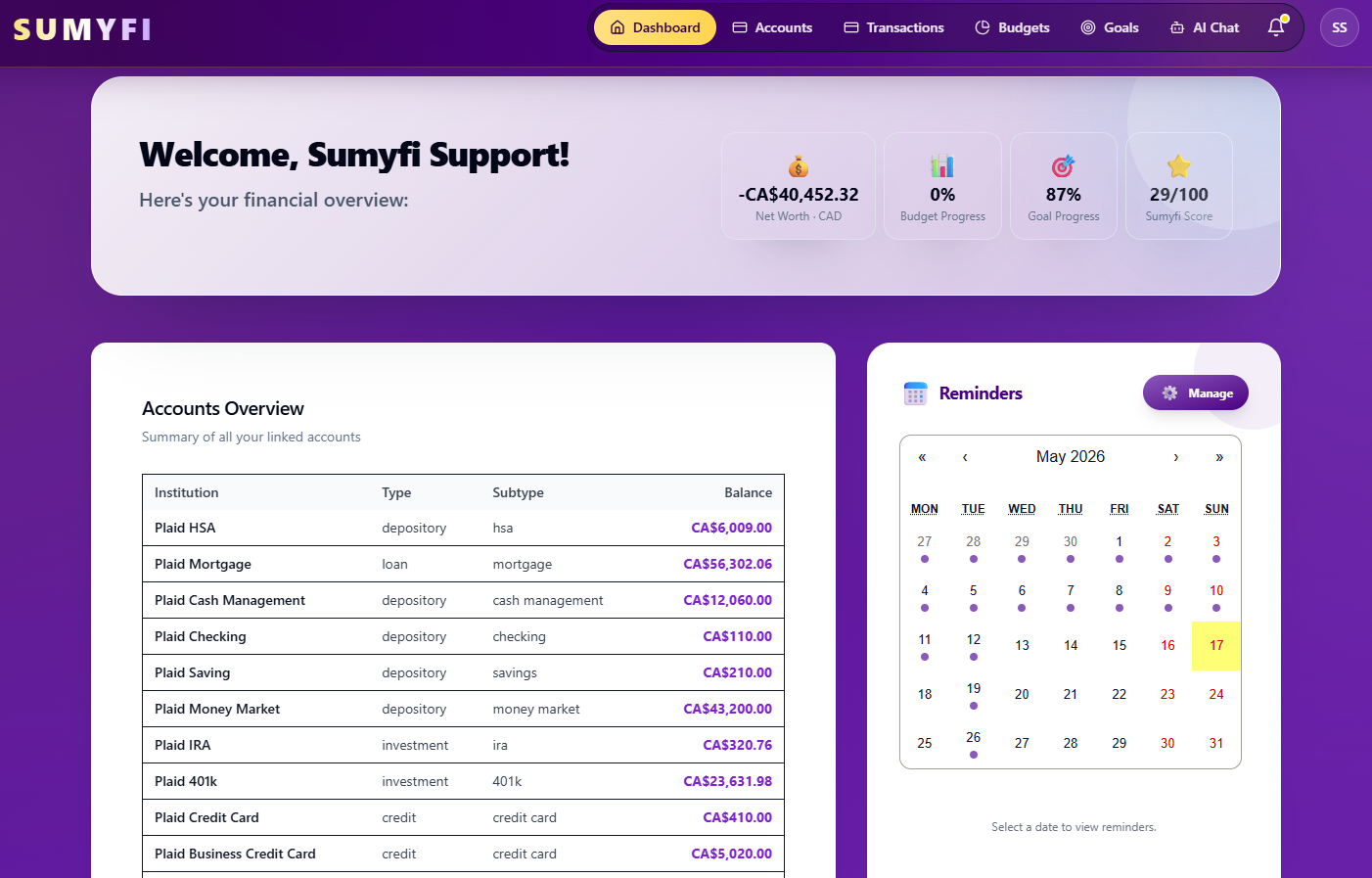
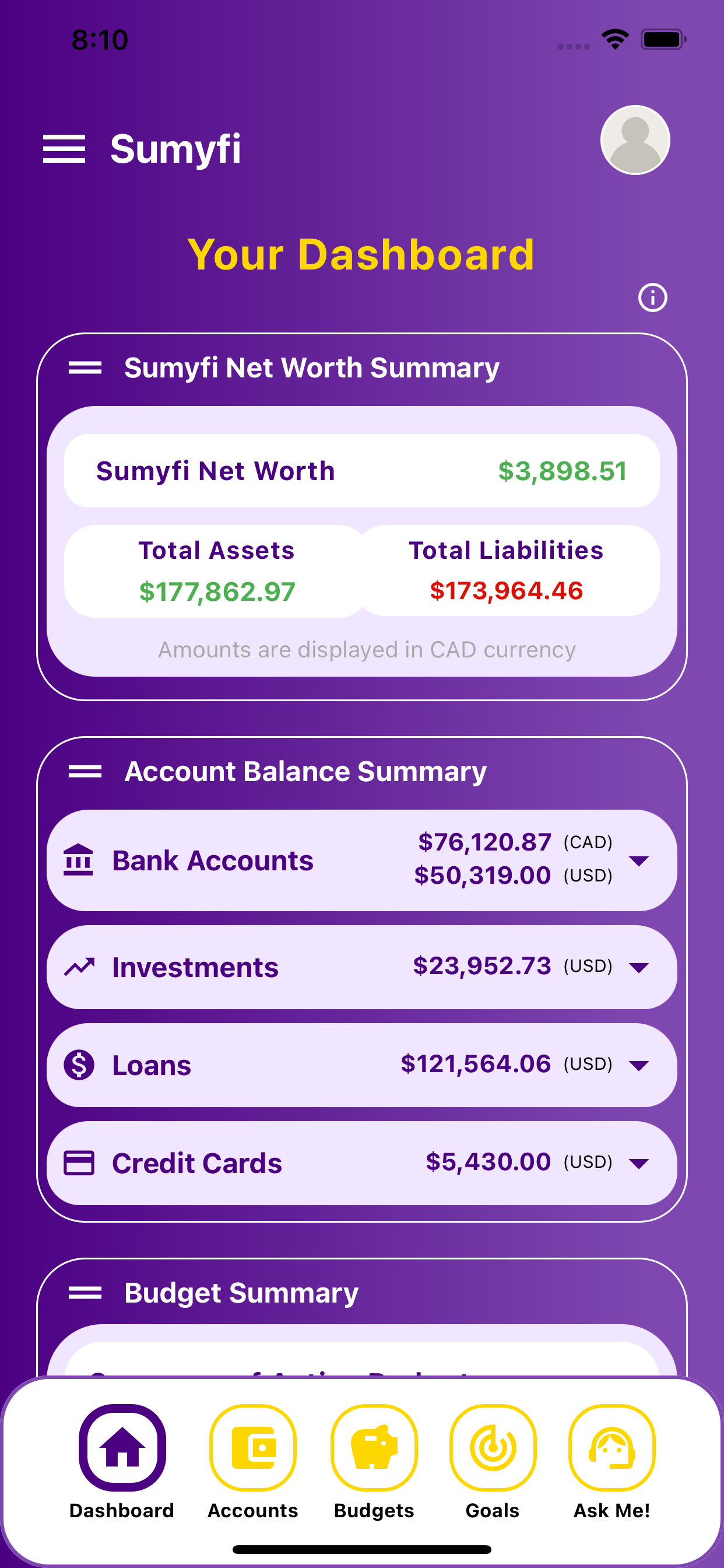
Understanding your net worth is fundamental to long-term financial planning. Sumyfi provides a dynamic, real-time net worth tracker that aggregates all your assets (bank balances, investments, real estate estimates) and liabilities (mortgages, loans, credit card debt) into a single, easily digestible figure.
This powerful feature offers an empowering perspective on your financial journey, far surpassing the static reports of older software.
Intelligent Budgeting & Spending Insights: Beyond Basic Tracking
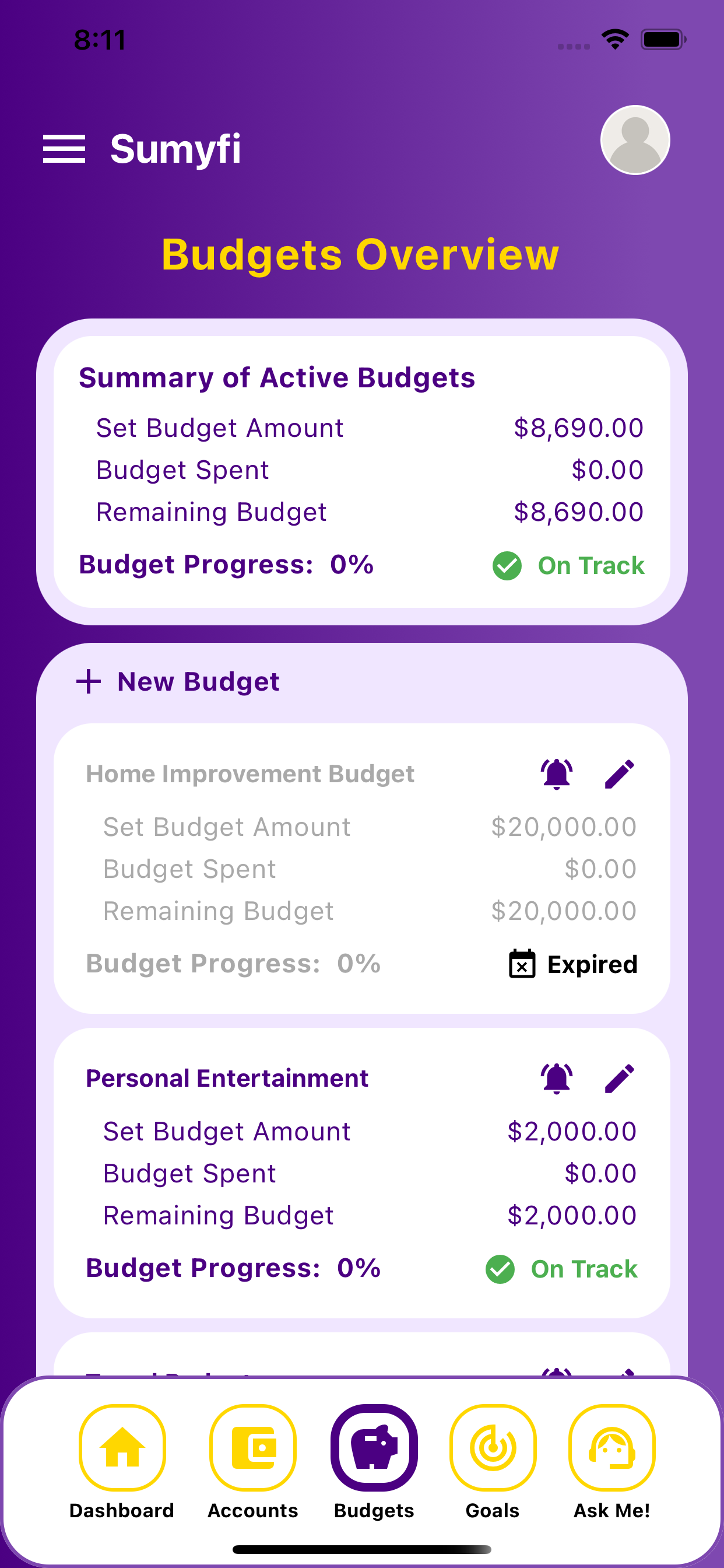
Sumyfi transforms budgeting from a restrictive chore into an empowering strategy. Our intuitive tools help you not just track spending, but understand it and optimize it.
With Sumyfi, budgeting becomes an insightful dialogue with your money, rather than a rigid set of rules.
Subscription & Bill Management: Never Miss a Payment, Uncover Hidden Costs
In the age of recurring payments, managing subscriptions and bills can be a headache. Sumyfi simplifies this by:
This feature alone can save Canadians hundreds of dollars a year by preventing forgotten renewals and missed payments.
Investment Portfolio Overview: A Unified View of Your Wealth
For Canadians building wealth, a comprehensive view of investments is crucial. Sumyfi seamlessly integrates with your investment accounts, providing:
This holistic perspective empowers smarter investment decisions, a key differentiator from many Quicken alternative Canada options that lack robust investment integration.
Intuitive User Experience: Slick, Clean, and Empowering
Sumyfi's design philosophy prioritizes clarity, ease of use, and aesthetic appeal. Our slick dashboard offers:
The result is a financial management experience that is not only powerful but genuinely enjoyable.
Robust Security Measures: Your Data, Protected
Your financial privacy and security are our top priority, giving you peace of mind as you manage your money.
Mobile-First Design: Your Finances, Anywhere
Sumyfi is designed to be fully responsive, offering a seamless experience whether you're on your desktop, tablet, or smartphone. Our dedicated mobile interface ensures you have access to all key features on the go, making it the perfect Quicken alternative Canada for busy individuals.
Major Canadian Banks: RBC, TD, Scotiabank, BMO, CIBC, National Bank, Desjardins, EQ Bank, Simplii Financial, PC Financial, and many more.
Credit Unions: Extensive coverage across provincial credit union systems.
Investment Brokerages: Questrade, Wealthsimple, Interactive Brokers, and others.
Automatic Transaction Import
New transactions are imported continuously from all linked accounts.
Smart Categorization
Our advanced algorithms learn your spending habits, automatically categorizing transactions with high accuracy. You can customize rules and split transactions with ease.
Tagging and Notes
Add custom tags and notes to transactions for deeper analysis and effortless searchability, perfect for business expenses, tax preparation, or specific savings goals.
Holistic View
See how your net worth fluctuates daily, weekly, or monthly.
Goal Tracking
Set net worth goals and visualize your progress.
Asset Allocation
Understand the composition of your wealth across different asset classes.
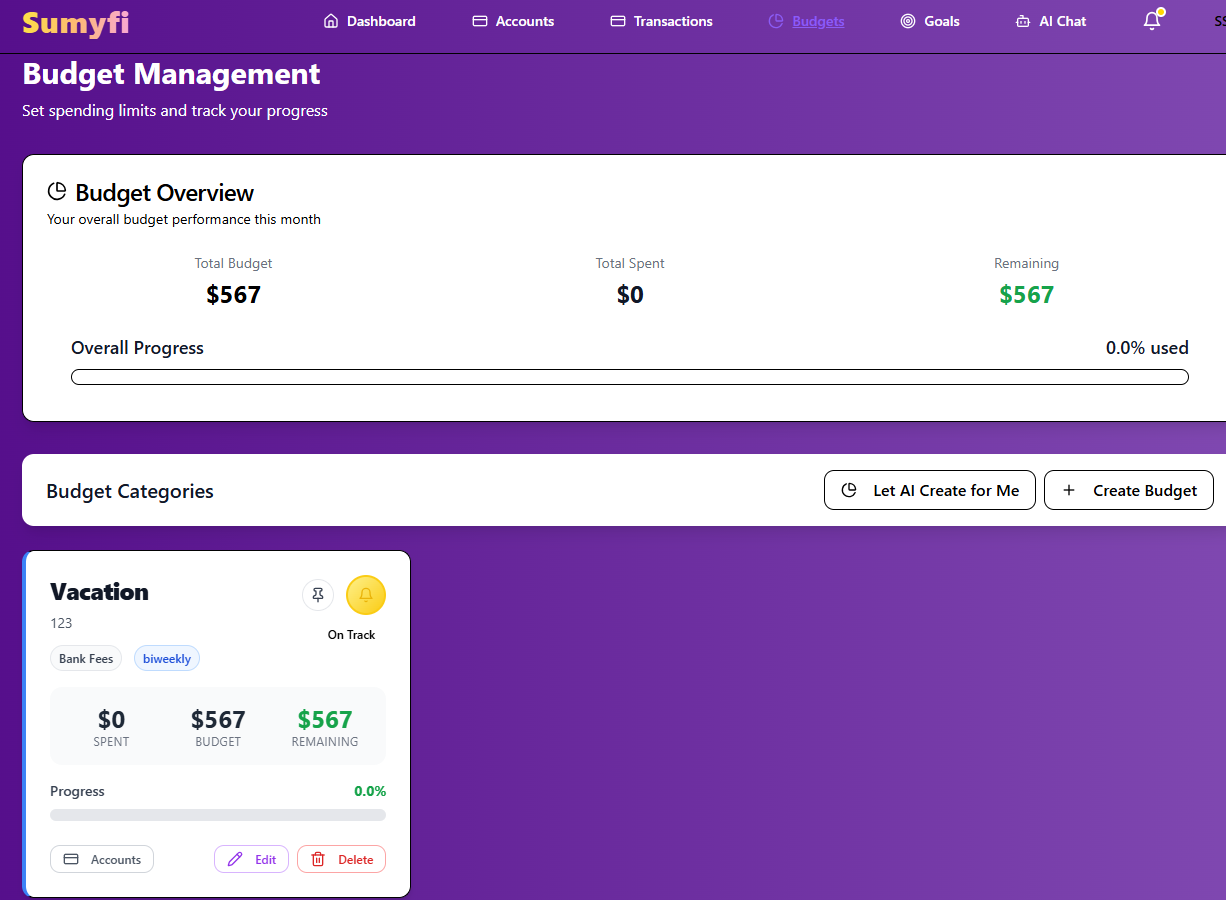
Flexible Budget Creation
Create monthly, bi-weekly, or custom budgets tailored to your income and spending patterns.
Visual Spending Trends
Dynamic charts and graphs reveal where your money is going, identifying areas for potential savings.
Customizable Categories
Personalize your spending categories to align with your unique financial priorities.
Forecasts and Projections
Gain insights into future cash flow based on your current habits and recurring expenses.
Upcoming Bill Reminders
Get alerts for due dates, helping you avoid late fees and manage cash flow.
Subscription Overview
See all your active subscriptions in one place, making it easy to identify and cancel unwanted services.
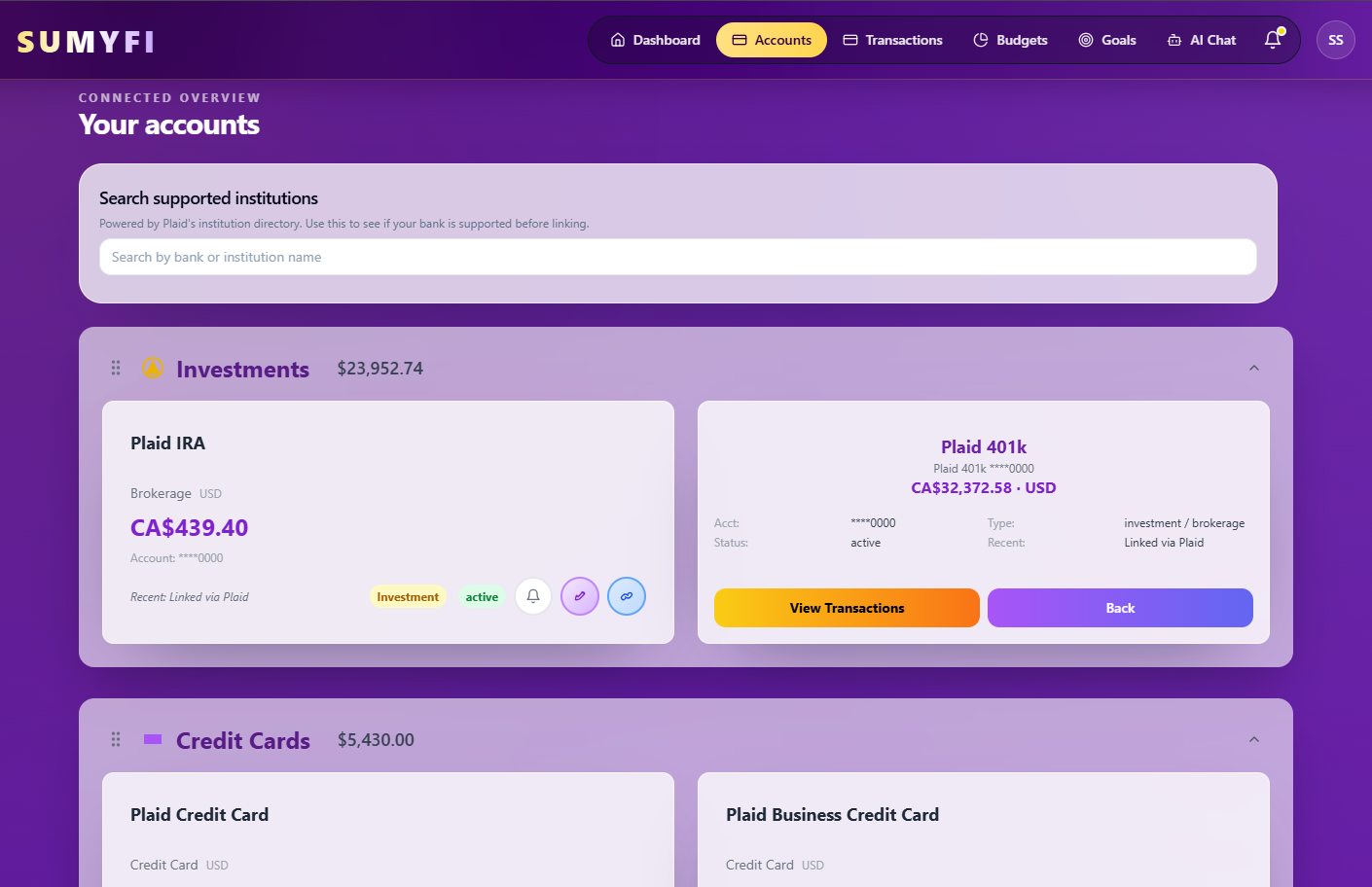
Consolidated Portfolio
View all your RRSPs, TFSAs, RESPs, non-registered accounts, and even cryptocurrency holdings in one dashboard.
Performance Tracking
Monitor the performance of your entire portfolio or individual holdings.
Asset Allocation Insights
Understand how your investments are diversified.
At-a-Glance Overview
Immediately grasp your financial health upon login.
Effortless Navigation
Find what you need quickly without wading through complex menus.
Customizable Views
Tailor the dashboard to highlight the metrics most important to you.
Sumyfi vs. Other "Alternatives": Why Sumyfi Stands Apart
While the market offers several personal finance tools, few truly measure up to Sumyfi's comprehensive, Canada-centric, and modern approach as a Quicken alternative Canada. Let's briefly examine some common comparisons:
The Sunset of Mint: Sumyfi as the Natural Evolution
For many years, Mint was a popular free alternative. However, its recent discontinuation has left a significant void, particularly for Canadians who valued its free tier and basic aggregation. Sumyfi emerges as the natural, vastly superior successor, offering not just aggregation but deeply integrated management, robust Canadian connectivity, and a sophisticated feature set that Mint never achieved. Where Mint offered a glimpse, Sumyfi offers a complete, empowering financial operating system.
Monarch Money: A US-Centric Premium Option
Monarch Money has gained traction as a premium budgeting app, primarily in the US. While it offers a clean interface and strong features, its focus remains largely American. For Canadians, bank connectivity can be less comprehensive, and its pricing model, while transparent, is often quoted in USD, potentially adding exchange rate considerations. Sumyfi is built with both Canadian and US financial ecosystems in mind, ensuring superior local relevance and connectivity for Canadians.
YNAB (You Need A Budget): A Niche Budgeting Methodology
YNAB is renowned for its "zero-based budgeting" philosophy, which is highly effective for users committed to its specific methodology. It excels at helping users assign every dollar a job. However, YNAB is primarily a budgeting tool; its net worth tracking, investment integration, and overall financial hub capabilities are not as broad or deeply integrated as Sumyfi's. For those seeking an all-encompassing financial dashboard beyond just budgeting, Sumyfi offers a more holistic solution as a Quicken alternative Canada.
Rocket Money (formerly Truebill): Focused on Subscriptions and Bill Negotiation
Rocket Money shines in its ability to identify and help cancel subscriptions and negotiate bills. It's an excellent tool for specific financial optimization tasks. However, it doesn't offer the comprehensive net worth tracking, detailed investment portfolio overview, or deep budgeting insights that Sumyfi provides. It's a useful utility, but not a full-fledged personal finance hub like Sumyfi.
Manual Spreadsheets: The Time Sink of Yesteryear
For some, the allure of "free" spreadsheets persists. However, the immense time commitment for manual data entry, categorization, reconciliation, and formula maintenance quickly outweighs any perceived cost savings. Spreadsheets are prone to human error, lack real-time updates, and cannot offer the automated insights or secure connectivity of a modern platform. Sumyfi completely replaces the need for manual spreadsheets, freeing up countless hours and providing infinitely more accurate and actionable data.
Sumyfi distinguishes itself by being purpose-built for the modern user who demands a truly all-in-one, intelligent, and region-agnostic (yet Canada-optimized) solution. It's the most comprehensive and forward-thinking Quicken alternative Canada has available today.
The Sumyfi Advantage: Why it's the Smart Choice for Canadians
Choosing Sumyfi means opting for a financial future defined by clarity, control, and confidence. Here's why Sumyfi stands out as the ultimate Quicken alternative Canada:
Sumyfi is not just an upgrade; it's a complete reimagining of personal finance management. It's the intelligent partner that helps you understand your financial past, master your present, and confidently plan for your future.
Holistic Financial Panorama: Get a single, unified view of every aspect of your financial life, from daily spending to long-term investments, across all your Canadian and US accounts.
Unrivalled Automation: Say goodbye to manual data entry. Sumyfi automates transaction imports, categorization, and net worth updates, saving you invaluable time.
Empowering Insights
Move beyond just tracking. Sumyfi provides intelligent spending analysis, budgeting insights, and net worth trends that empower you to make smarter financial decisions.
Future-Proof Technology
Built on a modern, agile platform, Sumyfi is continuously evolving, incorporating the latest financial technologies and user feedback to ensure you always have the best tools at your fingertips.
Designed for Canadians
While globally capable, Sumyfi's robust Canadian bank connectivity and understanding of Canadian financial products make it uniquely suited for users north of the border.
Slick & Intuitive User Experience
Financial management doesn't have to be a chore. Sumyfi's elegant design and user-friendly interface make it a pleasure to use, fostering consistent engagement.
Secure & Private
Your financial data is protected with bank-level encryption and strict privacy protocols, ensuring your peace of mind.
Getting Started with Sumyfi: Your Journey to Financial Empowerment
Transitioning to Sumyfi from Quicken or any other system is designed to be incredibly simple and lightning-fast. Our intuitive onboarding process will have you connected and gaining insights in minutes.
- Connect Your Accounts: Securely link your Canadian and US bank accounts, credit cards, investment portfolios, loans, and mortgages. Our robust connectivity ensures a smooth process.
- Watch the Magic Unfold: Sumyfi will automatically import your transaction history, categorize your spending, and begin building your comprehensive financial dashboard.
- Explore & Optimize: Dive into your net worth trends, analyze your spending, set up budgets, and discover opportunities to save and grow your wealth.
Our dedicated support team is also available to assist you every step of the way, ensuring a seamless transition and a powerful start to your Sumyfi experience.
[Start Your Free Trial of Sumyfi Today!](https://www.sumyfi.com/signup)
Conclusion: Embrace the Modern Financial Solution with Sumyfi
The limitations of legacy software, particularly for Canadian users, have created a clear demand for a more sophisticated, agile, and regionally attuned solution. Sumyfi unequivocally answers this call, delivering an all-in-one personal finance hub that redefines what's possible in money management.
It replaces the manual drudgery of spreadsheets and the frustrations of outdated software with a seamless, insightful, and secure platform that puts you firmly in control of your financial destiny.
Stop merely managing your money and start mastering it.
Your journey to financial clarity and control begins now.
[Join the Sumyfi Community - Sign Up Today!](https://www.sumyfi.com/signup)