Use one clear workflow for reducing avoidable spending by making recurring charges and habits visible with practical comparisons, concrete product details, and fewer disconnected money tools.
Whether it's forgotten subscriptions, impulse purchases, or simply a lack of awareness regarding where our hard-earned money truly goes, the sensation of "wasting money" is a universally recognized pain point. The good news? The digital age that sometimes fuels this waste also offers its most potent antidote: a sophisticated financial management app. But not just any app - you need a truly intelligent, all-encompassing solution designed from the ground up to empower you. This article will explore the profound impact of leveraging the right app to stop wasting money, culminating in an introduction to Sumyfi, the ultimate modern hub engineered to transform your financial landscape.
The Silent Drain: Understanding Why We Waste Money
Before diving into the technological remedies, it's crucial to acknowledge the multifaceted reasons behind financial waste. It's rarely a deliberate act but rather a confluence of habit, convenience, and cognitive biases.
The Psychology of Financial Leakage
- Subscription Overload: The "set it and forget it" model of recurring subscriptions (streaming services, software, gym memberships) often leads to paying for services we no longer use or need. Each small monthly charge, individually negligible, aggregates into a significant annual drain.
- Impulse Buying: The dopamine hit from immediate gratification, particularly prevalent in online shopping, can lead to purchases driven by emotion rather than necessity or long-term value.
- Lifestyle Creep: As income increases, so too often does discretionary spending, without a commensurate increase in savings or investment. What once felt like a luxury slowly becomes a perceived necessity.
- Lack of Visibility: Without a clear, real-time overview of income versus expenditure, it's easy to lose track of spending patterns. Money simply "disappears" without a discernible destination.
- Emotional Spending: Stress, boredom, or sadness can trigger spending as a coping mechanism, often on items that provide fleeting comfort but no lasting value.
- Neglecting Small Expenses: The daily coffee, the frequent takeout, micro-transactions - these seemingly insignificant expenditures compound rapidly, often unnoticed, until the end of the month reveals a surprising deficit.
- Late Fees and Overdrafts: Disorganization in bill payments can result in avoidable penalties, further eroding financial stability.
These challenges highlight a fundamental truth: managing money effectively in the modern world requires more than just willpower. It demands a robust system, an objective third party that can cut through the noise and provide clarity. This is precisely where a powerful app to stop wasting money becomes indispensable.
What Defines an Effective App to Stop Wasting Money?
Not all financial apps are created equal. To truly empower users to cease financial leakage and cultivate robust financial health, an app must possess a comprehensive suite of features, coupled with an intuitive user experience. Here are the core functionalities to look for:
Seamless Transaction Tracking & Categorization
The bedrock of financial awareness. An effective app must:
Robust Budgeting Tools
Budgeting is not about deprivation; it's about intentional spending. A superior app will offer:
Comprehensive Net Worth Tracking
Beyond just spending, understanding your overall financial health is paramount.
Connect to All Accounts: Securely link to checking, savings, credit cards, investments, and even loan accounts across thousands of financial institutions in both the US and Canada.
Automate Transaction Imports: Eliminate manual data entry, which is tedious and prone to error.
Financial Goal Setting & Progress Monitoring
An app should inspire future planning, not just track past spending.
Reporting & Analytics
Data is powerful, but only if it's digestible.
Robust Security & Data Privacy
Given the sensitive nature of financial data, security is non-negotiable.
Superior User Experience (UX)
A powerful app is useless if it's frustrating to navigate.
When seeking an app to stop wasting money, these criteria serve as a benchmark for true efficacy. Now, let's explore the platform that not only meets but exceeds these expectations.
Customizable Goals: Allow users to set specific financial goals (e.g., saving for a down payment, retirement, debt payoff).
Progress Visualization: Show how current spending and saving habits impact goal achievement.
Intelligent Categorization
Automatically categorize transactions (e.g., groceries, utilities, entertainment) but also allow for easy customization and rule creation for recurring items. This reveals exactly where every dollar goes.
Flexible Budgeting Models
Support various approaches like zero-based budgeting, 50/30/20 rule, or custom categories.
Real-time Budget Monitoring
Show progress against budgets instantly, alerting users before they overspend in a category.
Roll-over Capabilities
Allow unused budget funds to roll over to the next month, or overspent categories to be adjusted.
Visual Dashboards
Present budget performance clearly with graphs and charts, making it easy to grasp complex data at a glance.
Historical Trends
Track net worth over time to visualize financial growth and progress towards long-term goals.
Automated Updates
Continuously update values as account balances change, providing an accurate, dynamic snapshot.
Actionable Insights
Suggest adjustments to spending or saving to accelerate progress towards goals.
Customizable Reports
Generate reports on spending trends, income sources, net worth changes, and more.
Visual Data Presentation
Utilize clear charts, graphs, and summaries to make complex financial data understandable.
Insights & Recommendations
Offer personalized insights based on spending patterns, identifying areas for potential savings.
Intuitive Interface
Clean, modern, and easy to understand dashboard and navigation.
Fast Performance
Quick loading times and responsive interactions.
Cross-Platform Availability
Accessible via web and mobile (iOS/Android) for convenience.
Sumyfi: The Ultimate Modern App to Stop Wasting Money
Why Sumyfi Stands Apart: Agile Engineering Meets Intuitive Design
Sumyfi was built on the principle that managing your money should be empowering, not overwhelming. It addresses the common frustrations with legacy financial tools and manual spreadsheets by offering a solution that is:
[Start Your Free Trial with Sumyfi Today!](https://www.sumyfi.com/signup)
Lightning-Fast Setup
Forget tedious manual data entry. Sumyfi's streamlined onboarding process gets you connected to your financial institutions and tracking your money in minutes. Its agile engineering ensures a smooth, responsive experience from the very first click.
A True All-in-One Hub
Sumyfi consolidates every facet of your financial life into a single, cohesive platform. It's the definitive replacement for disparate spreadsheets, multiple apps, and fragmented financial views. From daily transactions to long-term net worth, everything is unified.
Seamless Connectivity
Sumyfi boasts robust connections with thousands of financial institutions across both the United States and Canada. This broad reach ensures that virtually all your accounts - checking, savings, credit cards, investments, loans - can be securely linked and automatically updated.
Automated Transaction Intelligence
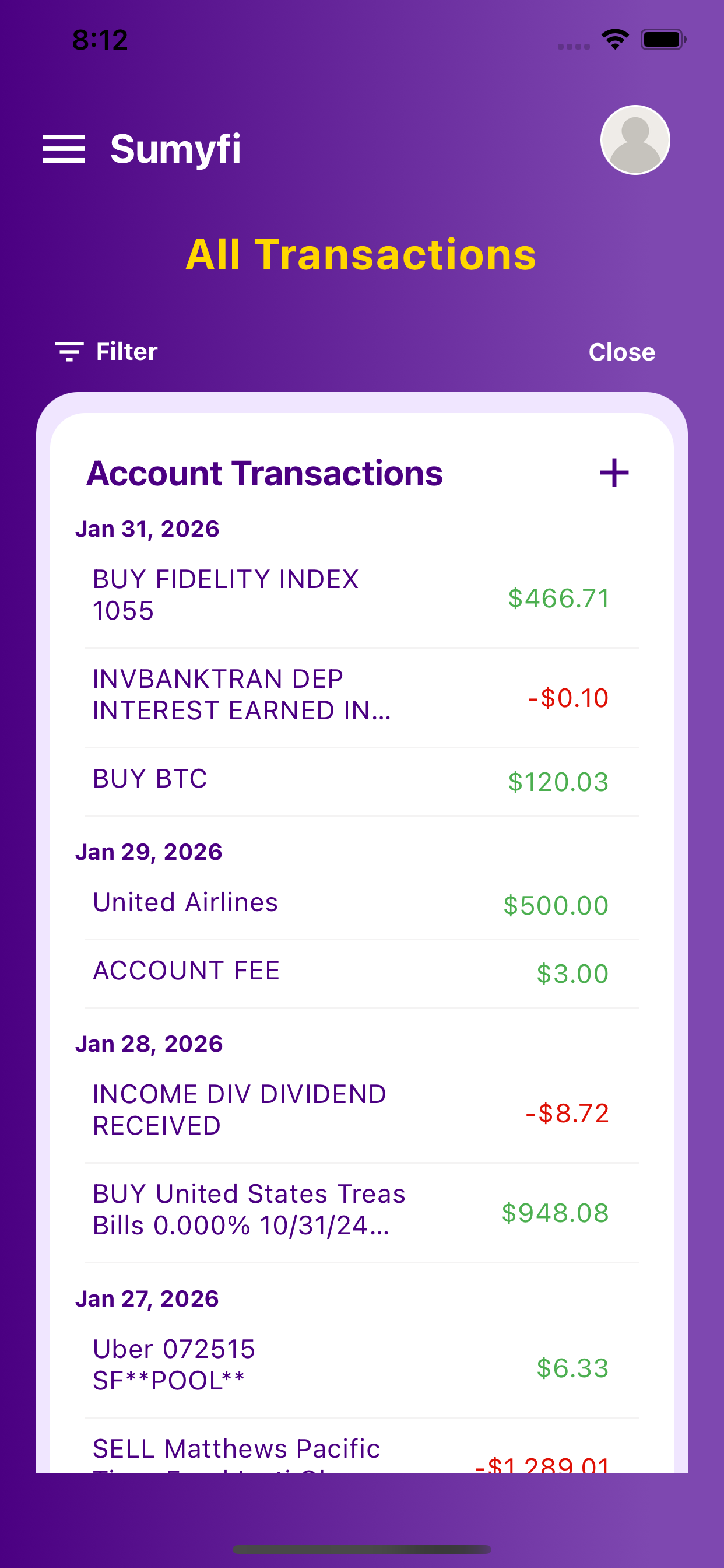
Sumyfi doesn't just import transactions; it understands them. Its intelligent automation categorizes your spending with remarkable accuracy, learning your habits over time. You can create custom rules to ensure complete precision, transforming raw data into actionable insights.
Slick Dashboard Interface
The Sumyfi dashboard is a masterclass in clarity and user experience. Designed for intuitive navigation, it presents your financial data in an empowering, visually engaging manner. Complex financial information is distilled into easy-to-understand charts, graphs, and summaries, giving you an immediate, crystal-clear overview of your financial health.
Future-Proof Technology
Built with modern architecture, Sumyfi is continuously evolving, incorporating the latest advancements in financial technology and user experience to ensure it remains the leading edge solution for years to come.
How Sumyfi Specifically Helps You Stop Wasting Money
Let's delve into the practical ways Sumyfi acts as your indispensable app to stop wasting money, directly tackling the common financial leaks identified earlier.
Unmasking Hidden Financial Leaks with Precision Tracking
The first step to stopping waste is knowing where it occurs. Sumyfi excels here:
*Example:* Sarah noticed a "Miscellaneous" category growing unexpectedly large. Upon drilling down in Sumyfi, she discovered several small, forgotten app subscriptions and a premium delivery service she rarely used. With a few clicks, she could see the cumulative impact of these small drains.
- Conquering Subscription Overload and Recurring Bills
This is where many individuals unknowingly bleed money. Sumyfi turns the tide:
*Example:* Mark was paying for three different streaming services, a gym membership he hadn't used in months, and a software subscription for a project he'd finished. Sumyfi's subscription manager laid it all out, prompting him to cancel two streaming services and the gym, saving him over $60 a month instantly.
- Empowering Intentional Spending Through Intelligent Budgeting
Sumyfi transforms budgeting from a chore into an empowering strategy:
*Example:* Emily used Sumyfi to budget her "Fun Money." Halfway through the month, she saw she was already at 80% of her budget. This prompted her to choose a free park visit with friends instead of an expensive concert, aligning her spending with her budget goals.
- Driving Financial Goals with Clear Net Worth Tracking
While not directly stopping waste, net worth tracking provides the overarching motivation to be financially prudent.
*Example:* David was diligently saving for a house. Sumyfi's net worth tracker allowed him to see his progress month by month. This visual reinforcement made him think twice about unnecessary purchases, knowing each saved dollar contributed directly to his down payment goal.
- Data-Driven Decisions with Powerful Analytics
Sumyfi's reporting capabilities are designed to give you profound insights:
Stop guessing and start knowing. Sumyfi provides the data you need to make intelligent financial choices.
[Explore Sumyfi's Features and Dashboard Today!](https://www.sumyfi.com/features)
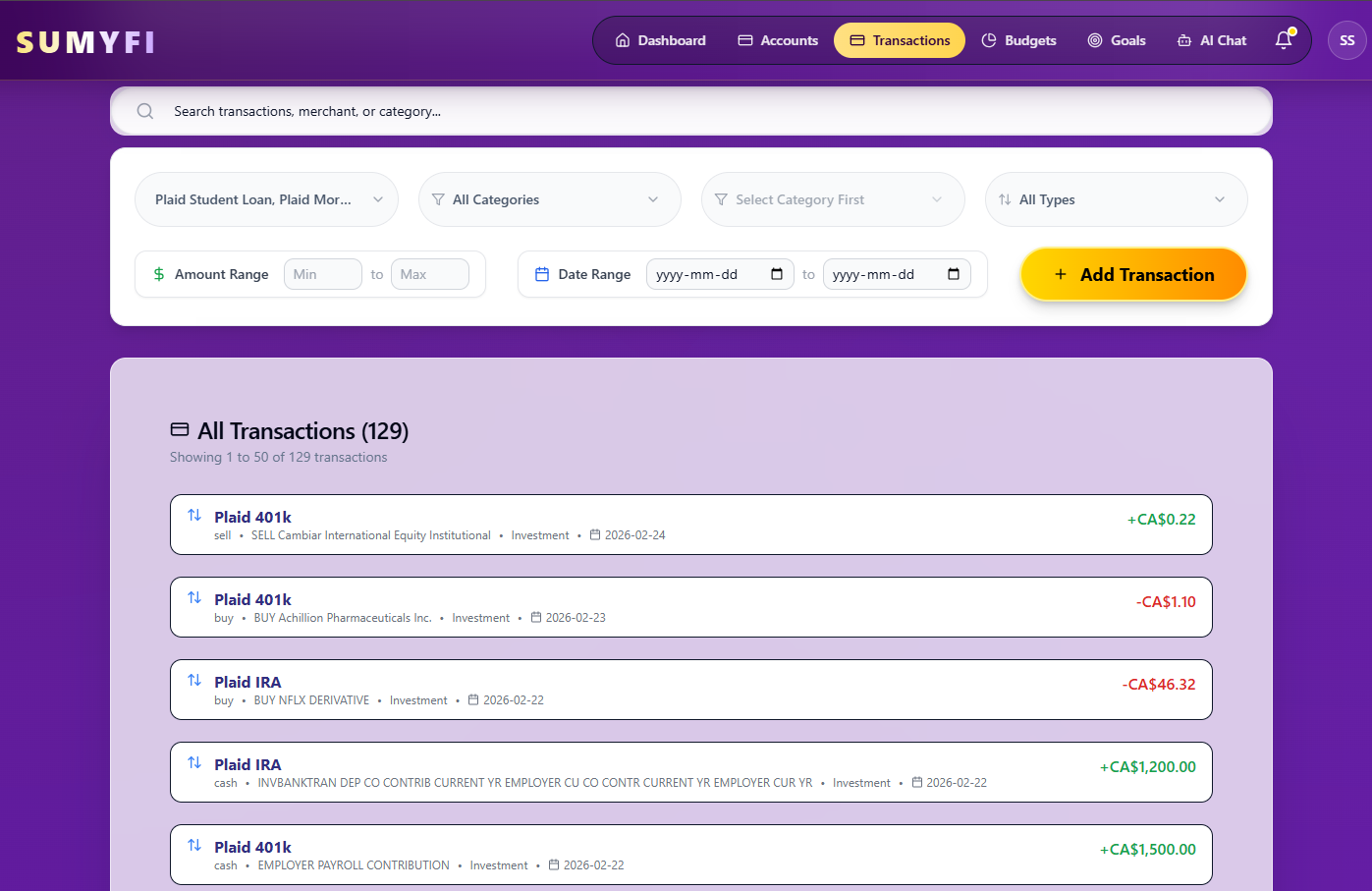
Automated Categorization: Imagine logging in and seeing all your spending automatically categorized. Sumyfi intelligently assigns transactions to categories like "Dining Out," "Entertainment," "Transportation," or "Subscriptions." This immediate visibility highlights exactly where your money is flowing.
Custom Rules for Granularity: Did you buy groceries at two different stores? Sumyfi allows you to create custom rules, ensuring consistency and precision. For instance, you can tag all Starbucks transactions as "Coffee Indulgence" to track that specific habit.
Identifying Spending Anomalies: With a clear transaction history and categorization, unusual or excessive spending patterns become glaringly obvious. That extra online shopping spree or the forgotten recurring charge will no longer hide in plain sight.
Dedicated Subscription Manager: Sumyfi actively identifies all your recurring subscriptions across connected accounts. It doesn't just list them; it presents them in a dedicated, easy-to-review section.
Cost Analysis: See the total monthly and annual cost of all your subscriptions at a glance. This often shocking sum provides the motivation needed to prune unnecessary services.
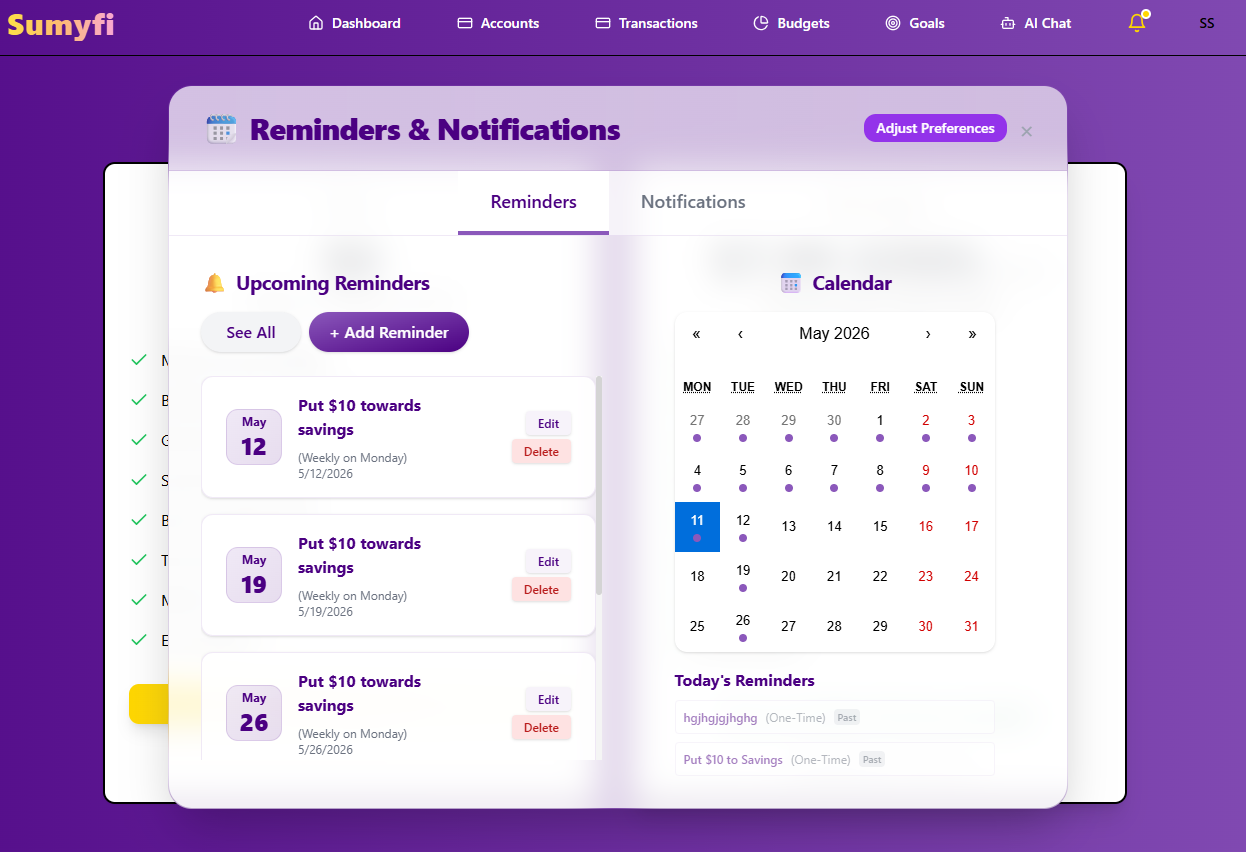
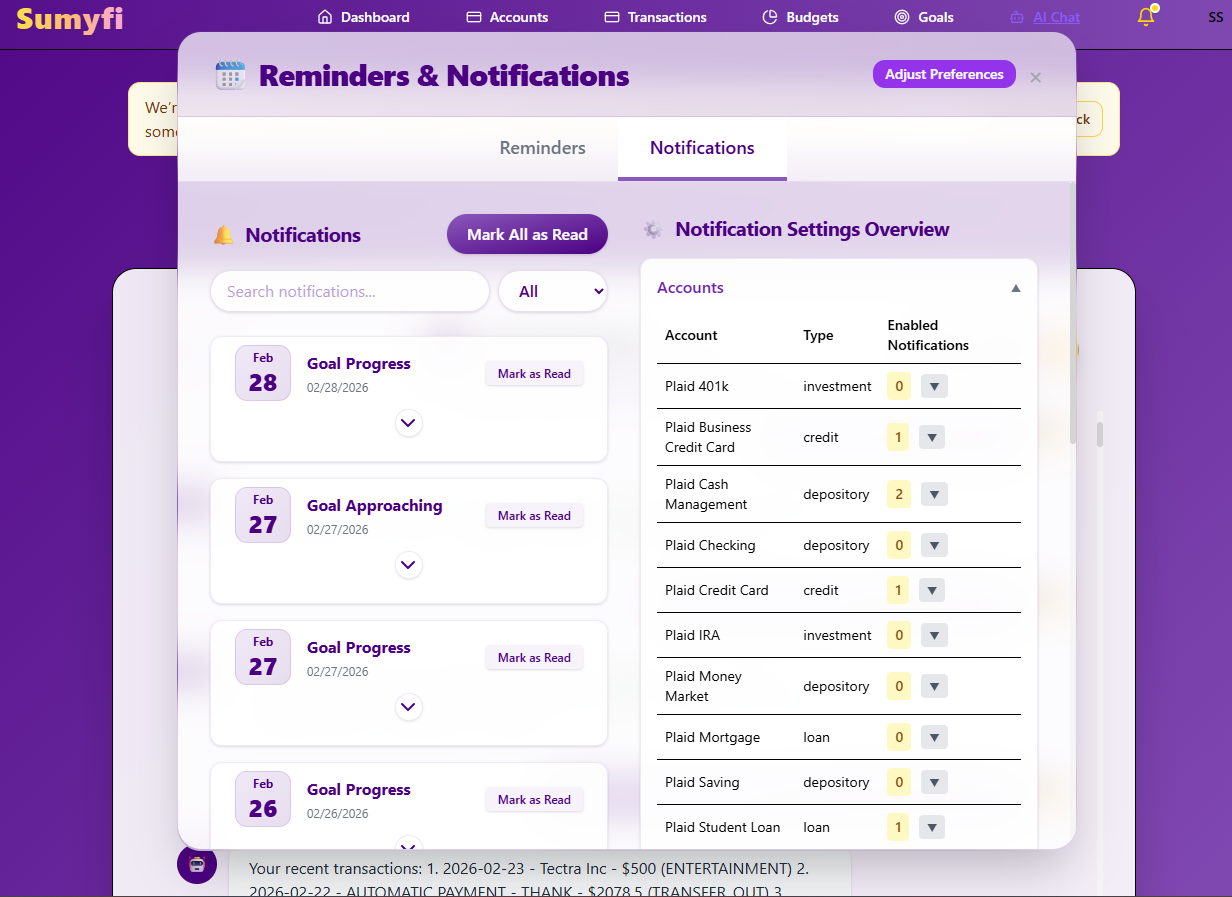
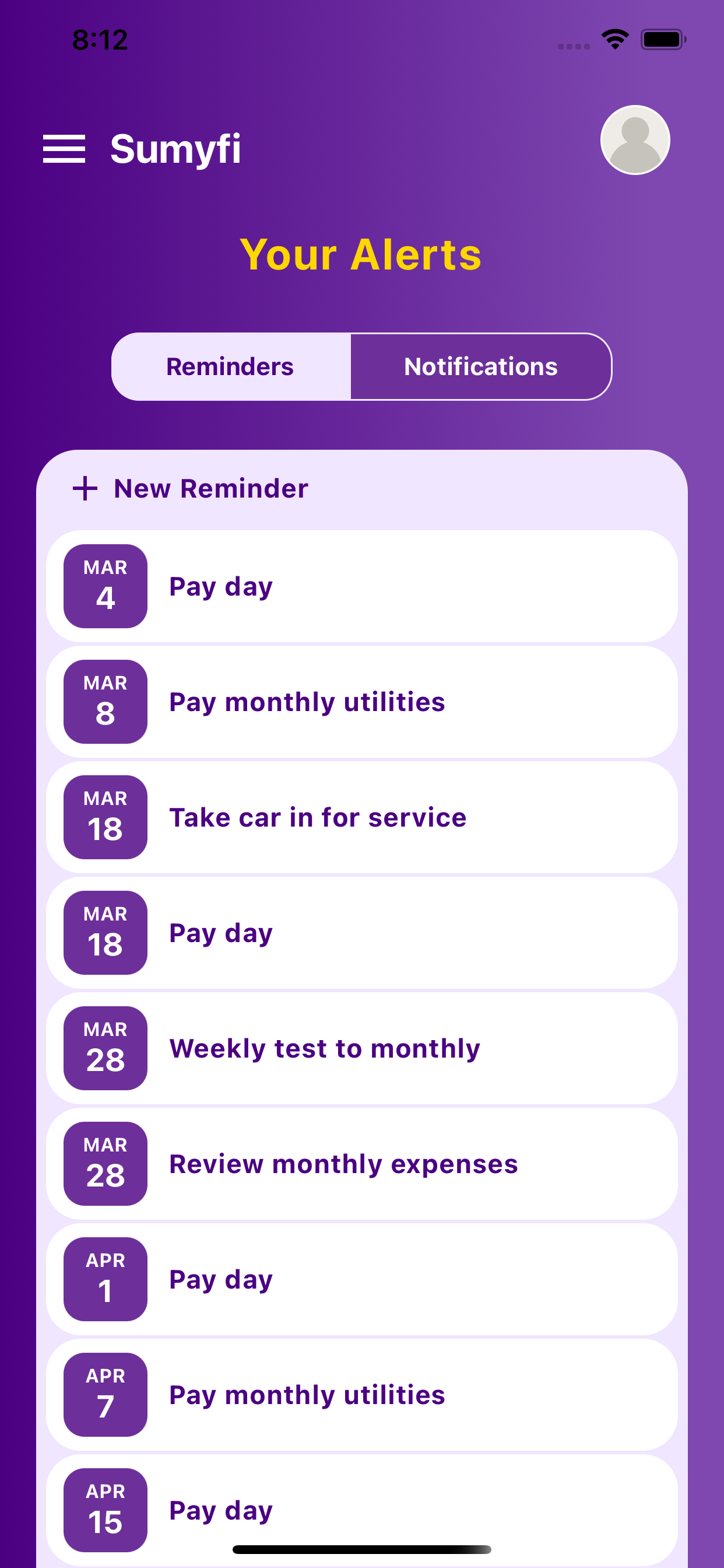
Timely Bill Reminders: Never incur a late fee again. Sumyfi tracks your upcoming bills and sends timely reminders, ensuring you're always on top of your obligations, protecting your credit score and your wallet.
Historical Payment Records: Easily review past payments, helping you reconcile statements and identify any discrepancies.
Flexible Budget Creation: Set budgets for any category - groceries, entertainment, utilities, personal care. Sumyfi makes it simple to allocate funds based on your income and financial goals.
Real-time Progress Bars: As you spend, Sumyfi updates your budget categories in real-time. Visually see how much you have left in each category, acting as a gentle nudge to curb spending before you overspend.
"Spending Left" Insights: The dashboard clearly shows "Money Left to Spend" in your discretionary categories, making you acutely aware of your financial limits for the month.
Identifying Overspending Hotspots: If you consistently overspend in "Dining Out," Sumyfi's reports will highlight this, allowing you to make conscious adjustments for the following month.
Holistic Financial Snapshot: Sumyfi aggregates all your assets and liabilities to calculate your net worth, updating it automatically.
Visualizing Growth: See your net worth grow over time through intuitive charts. This tangible progress fuels motivation to save more and waste less.
Goal Integration: Link your spending and saving habits to specific financial goals (e.g., down payment, retirement). Sumyfi shows how current actions impact your ability to reach these milestones.
Spending Trend Analysis: Identify patterns over weeks, months, or years. Are you spending more on certain categories during specific seasons?
Income vs. Expense Reports: Clearly see if you're living within your means or consistently spending more than you earn.
Customizable Views: Generate reports that matter most to you, focusing on specific categories or timeframes. These insights are invaluable for making informed financial decisions and proactively cutting waste.
Setting Up Sumyfi: Your Path to Financial Clarity and Control
One of Sumyfi's core strengths is its user-centric design, ensuring a lightning-fast and intuitive setup. Here's how you can embark on your journey to stop wasting money:
- Sign Up in Seconds: Visit sumyfi.com and create your account. The process is quick and straightforward, designed to get you started without delay.
- Automatic Data Import & Categorization: Once connected, Sumyfi automatically imports your transaction history and begins its intelligent categorization process. Watch as your spending patterns come to life on your dashboard.
- Review and Refine Categories: While Sumyfi is remarkably accurate, you have full control. Easily adjust categories, merge similar ones, or create custom rules for specific merchants or transaction types. This personalization ensures your financial data truly reflects your unique spending habits.
- Set Your Budgets: Based on your income and spending history, begin setting up budgets for various categories. Sumyfi makes this an intuitive process, allowing you to allocate funds intentionally.
- Identify and Track Subscriptions: Navigate to the dedicated subscription manager to see all your recurring charges. Take action on those you no longer need.
- Monitor Your Net Worth: Witness your complete financial picture unfold as Sumyfi calculates and tracks your net worth automatically.
- Explore Reports and Insights: Dive into Sumyfi's powerful reporting tools to gain deeper insights into your spending trends, income streams, and overall financial health.
From this point forward, Sumyfi works tirelessly in the background, updating your financial data daily, providing real-time insights, and empowering you to make informed decisions that directly contribute to stopping financial waste.
Beyond the App: Cultivating a Mindset of Financial Prudence
While Sumyfi provides the ultimate digital toolkit, true financial mastery also involves cultivating complementary habits and a mindful approach to money.
- Regular Financial Reviews: Make it a habit to check your Sumyfi dashboard daily or weekly. This quick check-in keeps you aware of your spending and budget progress, preventing unpleasant surprises.
- Mindful Spending: Before every purchase, especially discretionary ones, pause and consider: "Do I truly need this? Does this align with my financial goals?" Sumyfi provides the data; your mindfulness provides the discipline.
- Delayed Gratification: For larger purchases, implement a "waiting period" (e.g., 24 hours or a week). Often, the initial desire fades, saving you from an impulse buy.
- Automate Savings: Set up automatic transfers from your checking to your savings or investment accounts immediately after payday. "Pay yourself first" is a powerful principle, and Sumyfi can help you track these contributions to your net worth.
- Educate Yourself: Continuously learn about personal finance, investing, and wealth building. The more financially literate you become, the better decisions you'll make.
- Set Clear Financial Goals: Whether it's saving for retirement, a down payment, or paying off debt, having specific, measurable goals provides a powerful incentive to stop wasting money and direct funds towards what truly matters.
Comparing Options: Why Sumyfi Stands Out as the Premier App to Stop Wasting Money
The market offers several financial management tools, ranging from legacy platforms to newer entrants. While apps like Mint (now shutting down), YNAB, Monarch Money, and Rocket Money have served various niches, Sumyfi distinguishes itself as the definitive modern solution for comprehensive financial control, particularly for those determined to stop wasting money.
Sumyfi was engineered to transcend the limitations and specific focuses of these alternatives. It's built as a truly all-in-one personal finance hub that:
For those seeking the most effective, modern, and comprehensive app to stop wasting money, Sumyfi offers a superior, integrated experience that empowers users to not just track their money, but truly master it.
Mint's Legacy and Departure: For years, Mint was a go-to for many. However, its impending shutdown highlights the need for a more robust, future-proof solution. Users are now actively seeking a superior alternative that offers continuity and enhanced features.
YNAB's Philosophy: YNAB (You Need A Budget) is highly effective for zero-based budgeting enthusiasts. However, its strict methodology isn't for everyone, and its focus is primarily on budgeting, rather than a holistic financial hub encompassing net worth, investments, and broad financial analytics in one seamless interface.
- Monarch Money's Premium Approach: Monarch offers a strong feature set, often catering to users willing to pay a premium. While capable, Sumyfi aims to deliver a similarly powerful, intuitive, and comprehensive experience with a focus on agile engineering and a slick, user-friendly interface that feels inherently more modern and less bulky.
- Rocket Money's Niche: Rocket Money (formerly Truebill) excels at subscription management and bill negotiation. While these are critical components, Rocket Money often requires users to still rely on other tools for comprehensive budgeting, net worth tracking, and investment oversight. Sumyfi integrates these functions seamlessly into a single, unified platform.
Sumyfi's Distinct Advantage
Unifies Everything
Replaces manual spreadsheets and fragmented apps with a single, consolidated view of your entire financial universe.
Automates Intelligently
Goes beyond basic transaction imports, offering smart categorization and rule creation that learns and adapts to your spending.
Prioritizes User Experience
Its slick dashboard and intuitive interface make complex financial data accessible and empowering, not intimidating.
Comprehensive Net Worth Tracking
Provides a clear, real-time picture of your assets and liabilities, a feature often less emphasized or integrated in other tools.
Agile and Modern
Built on a foundation of modern technology, Sumyfi is designed for speed, reliability, and continuous innovation, ensuring it remains at the forefront of financial management solutions.
Conclusion: Empower Your Financial Future with Sumyfi
The desire to stop wasting money is a powerful motivator for financial change. In today's complex economic landscape, relying on guesswork or cumbersome manual methods is a recipe for continued financial leakage. The solution lies in embracing a sophisticated, intelligent, and user-friendly financial management tool.
It's more than just an app; it's your personal financial control center, meticulously engineered to provide clarity, highlight waste, and empower you to make smarter, more intentional financial decisions.
By choosing Sumyfi, you're not just downloading an app; you're investing in a clearer, more prosperous financial future. You're replacing stress with control, guesswork with insight, and financial waste with purposeful progress.
Take the decisive step towards financial clarity and control.