Use one clear workflow for a budgeting system people actually keep using after the first month with practical comparisons, concrete product details, and fewer disconnected money tools.
In an era of unprecedented financial complexity, where digital transactions dominate and economic landscapes shift with dizzying speed, the quest for genuine financial clarity has never been more urgent. For years, the promise of "budgeting apps that actually work" has been dangled before us - a digital panacea to the perennial woes of overspending, under-saving, and the opaque mystery of where our money truly goes. Yet, many have found themselves adrift in a sea of rudimentary tools, clunky interfaces, or apps that simply don't deliver on their core promise.
This comprehensive guide cuts through the noise, defining precisely what it means for a budgeting app to *actually work* and introducing you to the pinnacle of modern personal finance management: Sumyfi. We'll explore the evolution of financial tracking, dissect the features that separate the truly effective from the merely adequate, and empower you with the knowledge to transform your financial future.
The Enduring Challenge of Personal Finance: Why Traditional Methods Fall Short
For generations, managing personal finances was a manual, often tedious affair. From ledger books and shoeboxes filled with receipts to the advent of the spreadsheet, individuals have grappled with the sheer volume of data required to understand their financial position. While tools like Microsoft Excel and Google Sheets offered a step up from pen and paper, they introduced a new set of challenges:
The digital age promised a solution, but early budgeting apps often replicated these problems, merely digitizing the manual entry or offering limited, siloed functionality. The true breakthrough came with the advent of intelligent, integrated platforms designed from the ground up to automate, analyze, and empower.
Manual Data Entry
Every transaction, every bill payment, every income stream required meticulous, time-consuming input. This was not only prone to human error but also a significant barrier to consistent tracking.
Lack of Real-time Insight
Spreadsheets are static. They reflect your financial situation only at the moment of the last update. The dynamic nature of modern spending means that by the time you've updated your sheet, your financial reality may have already shifted.
Limited Integration
Spreadsheets exist in isolation. They don't automatically connect to your bank accounts, credit cards, or investment portfolios, making a holistic view of your net worth virtually impossible without further manual aggregation.
Steep Learning Curve
Crafting sophisticated budgeting models in spreadsheets often requires advanced formula knowledge and a significant time investment, deterring many from even starting.
Emotional Burden
The manual grind of tracking can feel like a chore, fostering resentment towards the budgeting process itself rather than empowering financial control.
What Makes a Budgeting App "Actually Work"? Defining the Gold Standard
To genuinely transform your financial life, a budgeting app must transcend basic tracking. It must be an intuitive, powerful, and proactive partner in your financial journey. Here are the non-negotiable characteristics of budgeting apps that actually work:
Seamless, Robust, and Secure Connectivity
This is the bedrock. An effective budgeting app must connect effortlessly and securely to a vast array of financial institutions. This includes:
The connection must be not only broad but also *reliable*. Frequent disconnections, slow updates, or compatibility issues render an app frustrating and ultimately useless. Furthermore, industry-standard encryption and robust security protocols are paramount to protect your sensitive financial data.
Intelligent Automation: Beyond Manual Entry
The days of manually categorizing every coffee purchase or utility bill should be long gone. Budgeting apps that actually work leverage advanced algorithms and machine learning to:
This level of automation drastically reduces the time and effort required to maintain your budget, making it sustainable and enjoyable.
Holistic Financial Overview: Real-time Net Worth Tracking
Budgeting is a component of financial health, but it's not the whole picture. Truly effective apps offer a comprehensive dashboard that includes:
Intuitive User Interface (UI) & User Experience (UX): Slick, Clean, Empowering
A powerful app with a confusing interface is like a high-performance car with a poorly designed cockpit - frustrating and ineffective. Budgeting apps that actually work prioritize:
The app should feel empowering, not overwhelming. It should make managing money feel simple, not like a chore.
Customization & Flexibility: Your Budget, Your Rules
Every individual's financial situation and goals are unique. A one-size-fits-all approach rarely works. The best budgeting apps offer:
Robust Security & Privacy: Trust is Paramount
Handling sensitive financial data demands the highest levels of security. Look for:
Comprehensive Reporting & Actionable Insights
Numbers alone are not enough. Budgeting apps that actually work transform raw data into intelligence:
These insights empower you to make informed decisions, identify areas for improvement, and stay on track.
Cross-Platform Accessibility
Your financial life doesn't stop when you leave your desk. An effective app should be accessible across devices:
Thousands of Banks & Credit Unions: From major national banks to local credit unions, the app should cover the vast majority of institutions across the US and Canada.
Investment Accounts: To provide a true net worth picture, it must link to brokerages, retirement accounts, and other investment platforms.
Loan Accounts: Mortgages, student loans, auto loans - all contribute to your overall financial health and debt picture.
Credit Cards
Essential for tracking spending and managing debt.
Automate Transaction Categorization
Automatically assign categories (e.g., Groceries, Utilities, Entertainment) to your transactions, learning from your habits and allowing for easy reclassification.
Identify Recurring Bills & Subscriptions
Proactively flag regular payments, helping you avoid overdrafts and identify forgotten subscriptions.
Sync in Real-time
Provide an up-to-the-minute view of your balances and spending, eliminating the lag inherent in manual systems.
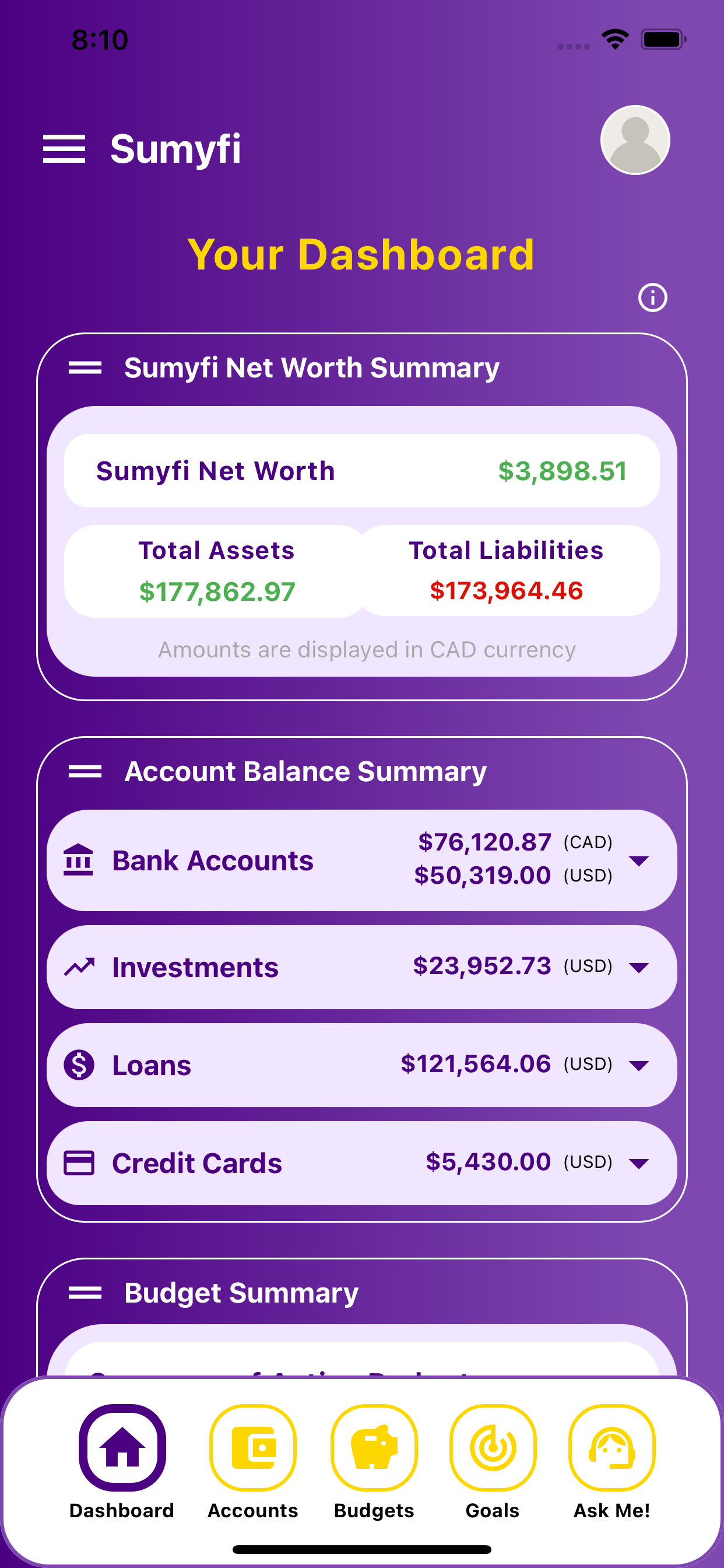
Dynamic Net Worth Calculation
Automatically aggregates all your assets (bank accounts, investments, property) and subtracts your liabilities (loans, credit card debt) to give you an accurate, real-time snapshot of your net worth. This is the ultimate financial scorecard.
Trend Analysis
Visualizing how your net worth changes over time provides invaluable motivation and insight into the long-term impact of your financial decisions.
Asset & Liability Breakdown
Clearly showing where your wealth resides and where your debts lie, enabling strategic financial planning.
Clean & Modern Design
A visually appealing and uncluttered layout that makes financial data easy to digest.
Effortless Navigation
Logical pathways to key features, ensuring users can find what they need without searching.
Actionable Insights
Presenting data not just as numbers, but as clear, understandable insights that guide better decision-making.
Customization
The ability to tailor dashboards, categories, and notifications to suit individual preferences.
Custom Categories
The ability to create, rename, and organize spending categories to reflect your personal financial landscape.
Multiple Budgeting Methodologies
Support for various approaches, whether it's zero-based budgeting, the 50/30/20 rule, or a simple envelope system.
Flexible Budget Periods
Weekly, bi-weekly, monthly, or even custom periods to align with your income cycles.
Goal-Oriented Planning
Tools to set and track progress towards specific financial goals, such as saving for a down payment, retirement, or a vacation.
Transparent Privacy Policies
Clear communication on how your data is collected, used, and protected.
Visual Reports
Graphs and charts that clearly illustrate spending patterns, income trends, and budget adherence.
Spending Breakdown
Detailed analysis of where your money goes, broken down by category, merchant, or time period.
Forecasting Tools
Projections based on current spending and income, helping you anticipate future financial scenarios.
Alerts & Notifications
Customizable alerts for budget overages, large transactions, or upcoming bills.
Web Interface
A full-featured web application for detailed analysis and setup.
Mobile Apps
Intuitive and responsive apps for iOS and Android, allowing you to check balances, categorize transactions, and monitor your budget on the go.
Seamless Syncing
Ensuring your data is always up-to-date across all platforms.
The Evolution of Financial Management Tools: From Ledgers to AI-Powered Hubs
The journey of personal finance management has been one of continuous innovation, driven by the need for greater efficiency and insight.
The Early Days (Ledgers & Envelopes): Manual, tactile, and highly localized. Effective for simple economies but cumbersome for complex finances.
The Spreadsheet Era (1980s-Early 2000s): Digital but still manual. Offered calculation power but lacked automation and integration. A step forward for organization, but a significant time sink.
First-Generation Budgeting Software (Late 1990s-Early 2010s): Desktop-based programs like Quicken. Introduced categorization and basic reporting but often required manual imports or clunky direct connections. Still felt like a chore.
Web-Based Aggregators (Late 2000s-Present): Pioneers like Mint brought bank connectivity to the masses, offering a glimpse into automated tracking. While revolutionary, many suffered from inconsistent connectivity, limited features beyond basic budgeting, and an interface that could become cluttered.
Modern All-in-One Financial Hubs (2010s-Present): This is where budgeting apps that actually work truly shine. These platforms, exemplified by Sumyfi, are built on agile engineering, robust API connections, and intelligent automation. They move beyond mere budgeting to offer a holistic financial command center, integrating net worth tracking, bill management, goal setting, and advanced analytics into a single, seamless experience. They are designed to be proactive, predictive, and truly empowering.
Common Pitfalls of Budgeting Apps (and How to Avoid Them)
While the market is flooded with budgeting apps, many fall short of the "actually work" standard. Be wary of:
Choosing an app that avoids these pitfalls is crucial for long-term financial success.
Overly Complex Interfaces: Apps that try to do too much without a clear design philosophy can quickly become overwhelming, leading to user abandonment.
Poor Bank Connectivity: If an app constantly disconnects from your financial institutions or doesn't support your specific bank, it's fundamentally broken.
Lack of Automation
Apps that still require significant manual input defeat the purpose of going digital.
Limited Features
An app that only tracks spending but ignores net worth, investments, or debt management provides an incomplete picture.
Steep Learning Curve
While powerful, an app shouldn't require an advanced degree to use effectively. Intuition is key.
Subscription Fatigue with Limited Value
Many apps charge a premium without delivering truly differentiating features or consistent reliability.
Data Privacy Concerns
Vague privacy policies or a history of data breaches should be red flags.
Introducing Sumyfi: The Apex of Budgeting Apps That Actually Work
In a crowded market, Sumyfi emerges as the definitive solution for modern personal finance management. Sumyfi embodies every characteristic of budgeting apps that actually work, pushing the boundaries of what's possible in digital finance.
The Sumyfi Difference: Agile Engineering, Lightning-Fast Setup, and a Slick Dashboard
Sumyfi was built from the ground up with the modern user in mind. We understood the frustrations with legacy systems and the desire for a truly integrated, intuitive experience.
Automated Transaction Management: The Power of True Automation
Sumyfi's intelligent automation engine is a game-changer.
Dynamic Net Worth Tracking: Your True Financial Scorecard
Beyond just budgeting, Sumyfi provides a crystal-clear view of your overall financial health.
This holistic perspective is crucial for long-term financial planning and wealth building. Want to see your net worth grow? [Track Your Net Worth with Sumyfi](https://www.sumyfi.com/net-worth-tracker).
Unrivaled Connectivity: Thousands of Institutions, US & Canada
Sumyfi understands that your financial life spans across multiple institutions and, for many, across borders.
Smart Budgeting & Goal Setting: Empowering Your Control
Sumyfi makes budgeting intuitive, flexible, and motivational.
Beyond Budgeting: A Holistic Financial Command Center
Sumyfi isn't just about budgeting; it's about providing a complete financial ecosystem.
Security & Privacy: Your Trust is Our Top Priority
We understand the sensitivity of your financial data. Sumyfi employs a multi-layered security approach:
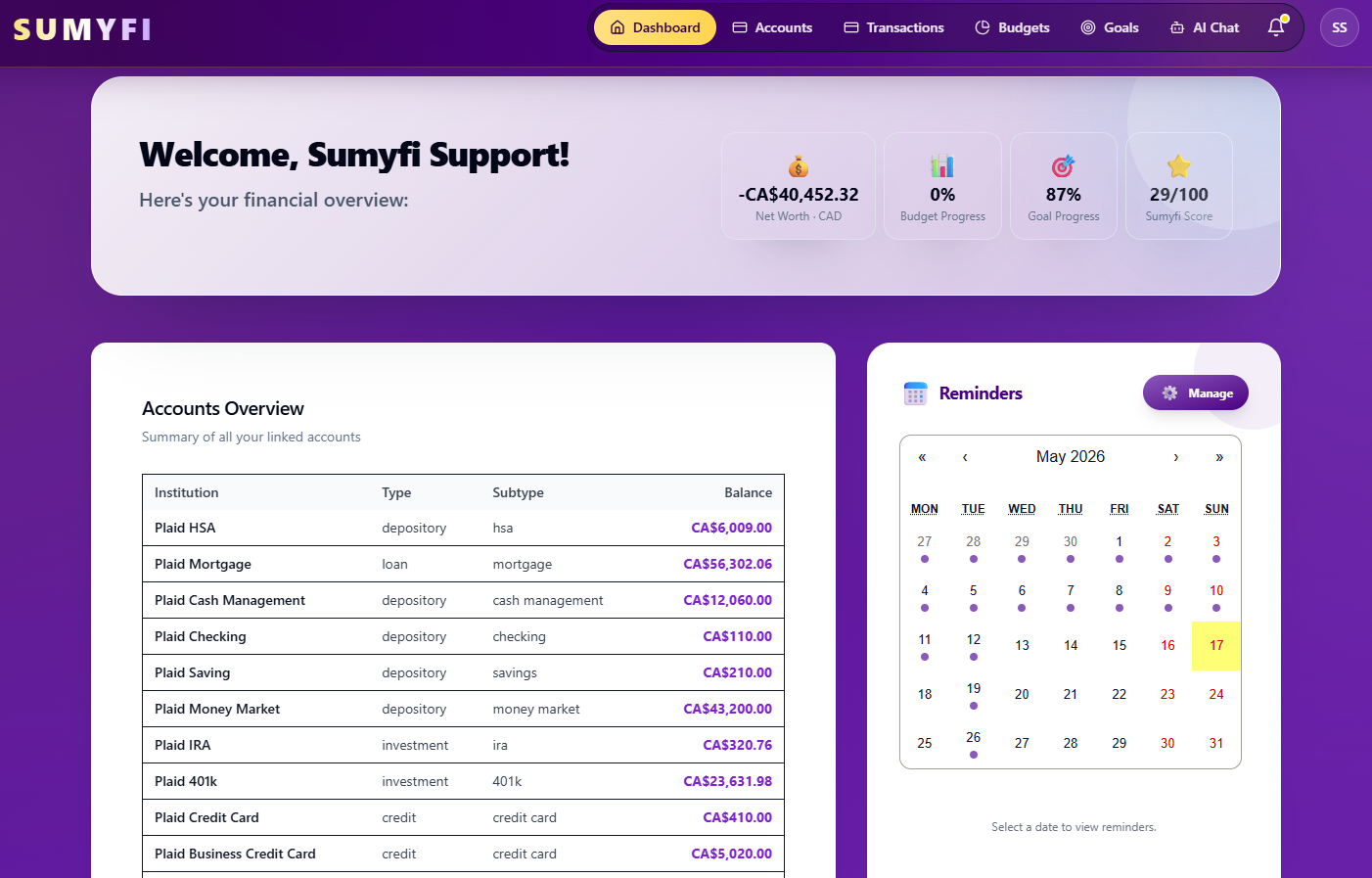
All-in-One Personal Finance Hub: Sumyfi consolidates every aspect of your financial life into a single, cohesive platform. Say goodbye to juggling multiple apps, spreadsheets, and login credentials.
Replaces Manual Spreadsheets: Our core mission is to liberate you from the drudgery of manual data entry. Sumyfi automates the heavy lifting, allowing you to focus on strategic financial decisions rather than tedious tracking.
Agile Engineering: Our platform is built with cutting-edge technology, ensuring speed, reliability, and continuous innovation. We react quickly to market changes and user feedback, delivering a consistently evolving and improving product.
Lightning-Fast Setup
We believe getting started with financial empowerment shouldn't be a bureaucratic hurdle. Connect your accounts in minutes, not hours, and start seeing your financial picture immediately.
Slick Dashboard Interface
Designed for clarity and impact, Sumyfi's dashboard presents your most critical financial data at a glance. It's clean, modern, and incredibly easy to navigate, making financial management feel effortless and even enjoyable.
Effortless Categorization
Our advanced AI automatically categorizes your transactions as they flow in from your connected accounts. Over time, it learns your spending habits, ensuring accuracy and minimizing manual adjustments.
Smart Rule Creation
Want to customize how certain transactions are categorized? Easily create rules to ensure consistency for recurring expenses or specific merchants.
Real-time Updates
Your transactions sync continuously, providing you with an up-to-the-minute view of your spending, so you always know where you stand.
Historical Trends & Projections
Visualize your net worth growth over time with intuitive charts. Understand the impact of your financial decisions and project future outcomes.
Detailed Breakdown
See exactly how your assets and liabilities contribute to your net worth, helping you identify areas for growth or debt reduction.
Extensive Network
We connect with thousands of banks, credit unions, investment platforms, and loan providers across both the United States and Canada. This comprehensive coverage ensures that virtually all your financial accounts can be seamlessly integrated.
Secure & Reliable
Our connections utilize industry-leading security protocols and robust API integrations, ensuring your data is always protected and your accounts remain consistently linked. No more frustrating disconnections or unsupported institutions.
Cross-Border Financial Management
For those with financial interests in both the US and Canada, Sumyfi offers a unified platform, simplifying what was once a complex, multi-tool endeavor. Looking for the best budgeting app in Canada? [Explore Sumyfi for Canada](https://www.sumyfi.com/best-budgeting-app-canada).
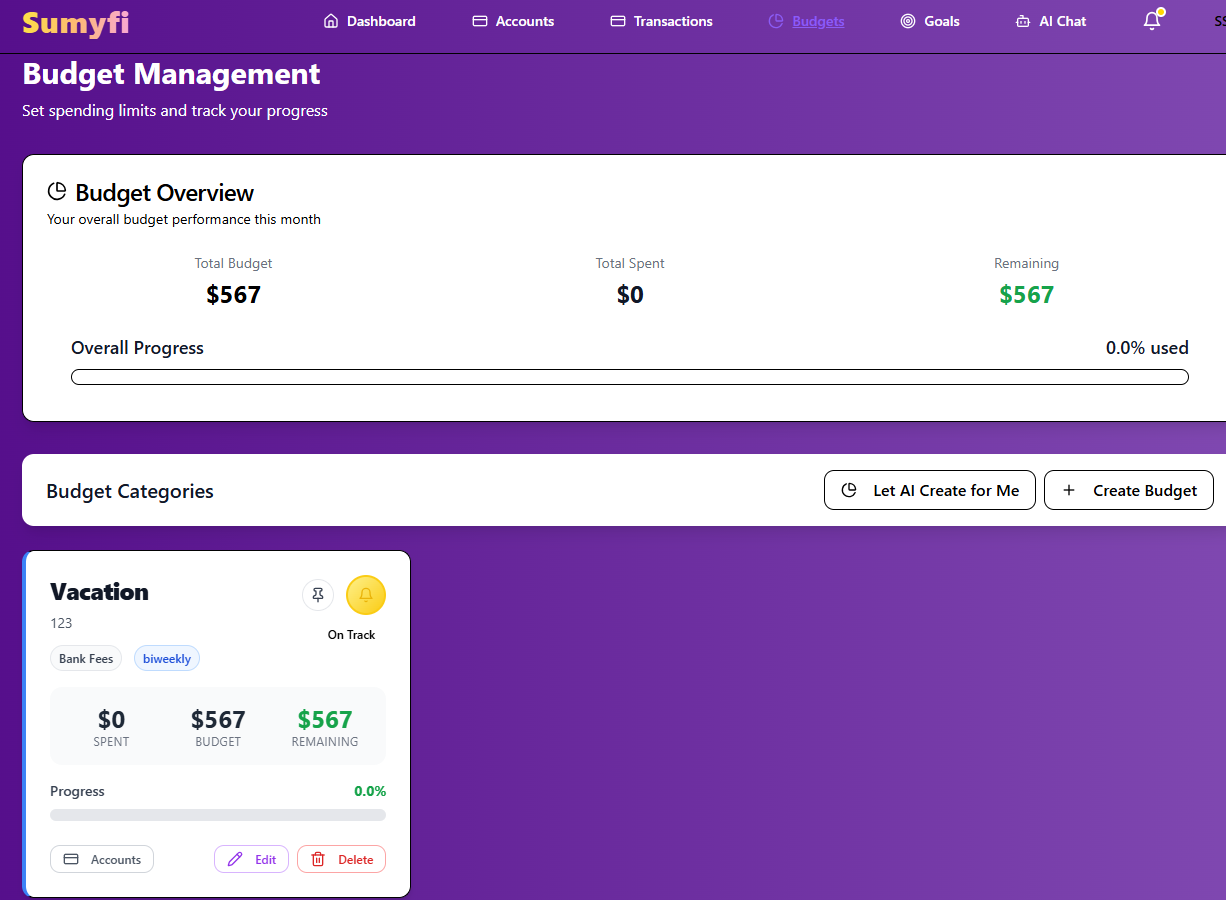
Customizable Budgets
Create budgets tailored to your unique spending categories and financial goals. Whether you prefer a strict zero-based approach or a more flexible spending plan, Sumyfi adapts to you.
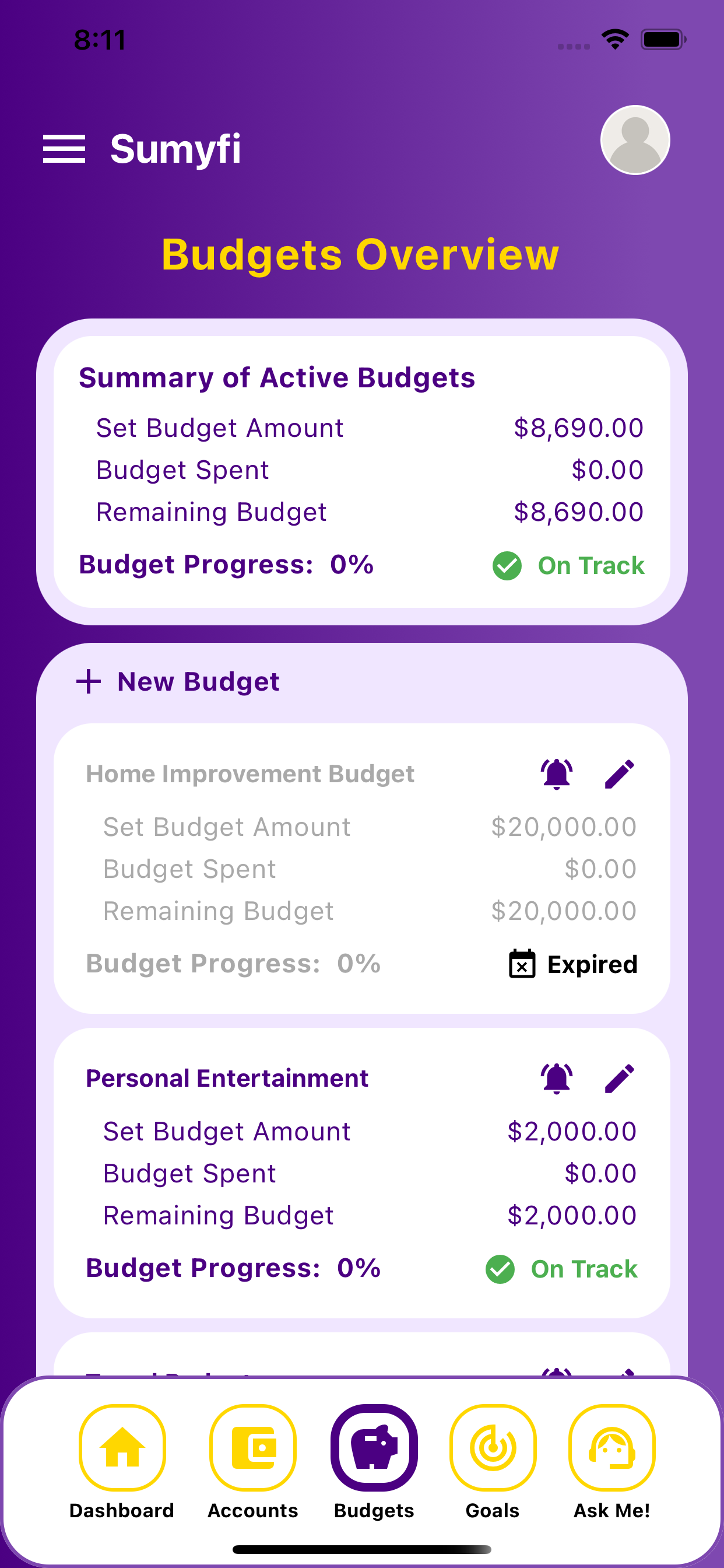
Visual Progress Tracking
See at a glance how you're performing against your budget. Color-coded indicators and progress bars make it easy to stay on track and identify potential overspending before it becomes a problem.
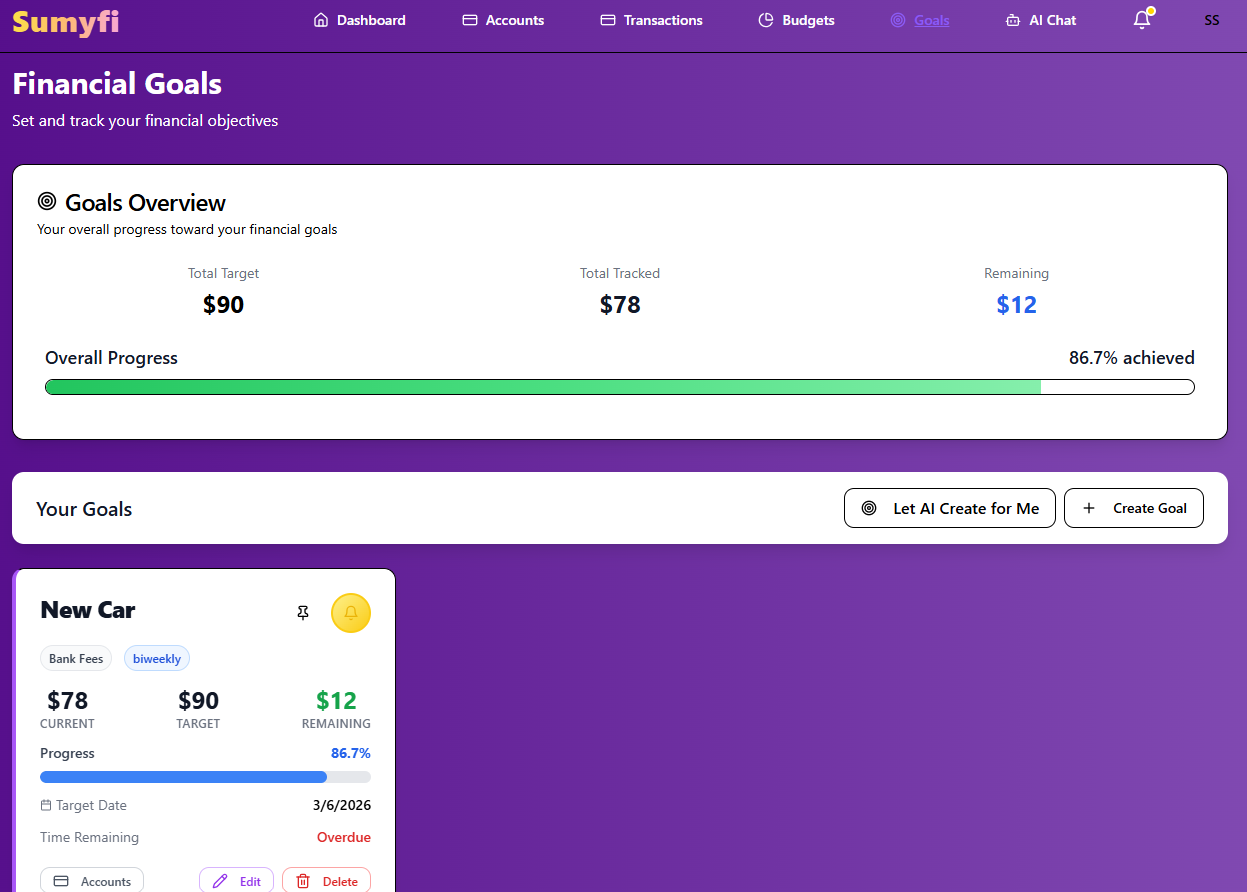
Financial Goal Setting
Set clear, achievable financial goals - whether it's saving for a down payment, paying off debt, or building an emergency fund. Sumyfi helps you break down your goals into manageable steps and track your progress visually.
Proactive Alerts
Receive customizable notifications for approaching budget limits, large transactions, or upcoming bills, helping you stay ahead of your finances.
Integrated Bill Tracking
Never miss a payment again. Sumyfi identifies recurring bills and allows you to track their due dates, amounts, and payment status, helping you avoid late fees and maintain a healthy credit score.
Custom Financial Categories
Go beyond standard categories. Create custom tags and groups to analyze your spending in a way that makes the most sense to your personal financial strategy.
How to Choose a Budgeting App That Actually Works for *You*
While Sumyfi stands out as the premier solution, understanding your personal needs is key to making any financial tool work. Here's how to approach the selection process:
- Assess Your Current Financial Habits:
- Prioritize Key Features:
- Consider the User Experience (UX):
- Security and Privacy:
While you might encounter other options like Mint (now transitioning), YNAB, Monarch Money, or Rocket Money, a direct comparison often highlights Sumyfi's superior integration, advanced automation, and seamless user experience, particularly for those seeking a truly holistic and modern financial hub. Sumyfi is engineered to eliminate the compromises often found in other platforms, delivering on the promise of budgeting apps that actually work.
Are you a complete beginner or looking for advanced features?
Do you primarily use one bank, or do you have accounts across many institutions (including investments, loans, etc.)?
Are you comfortable with technology, or do you need a very simple interface?
What are your biggest financial pain points (e.g., overspending, not saving, forgetting bills, unclear net worth)?
Automation is paramount: If you hate manual entry, prioritize apps with robust transaction categorization and real-time syncing.
Net Worth Tracking: If understanding your overall financial health is critical, ensure the app offers comprehensive asset and liability aggregation.
Connectivity: Confirm the app supports *all* your financial institutions, especially if you have niche banks or international accounts. Sumyfi's vast network across the US and Canada is a major advantage here.
Budgeting Methodology: Do you need zero-based budgeting, or a simpler envelope system? Ensure the app supports your preferred approach.
Goal Setting: If you're working towards specific financial milestones, look for integrated goal-tracking features.
Does the interface feel intuitive and empowering, or clunky and overwhelming?
Is the data presented clearly with actionable insights?
Can you customize the dashboard and reports to suit your preferences? Sumyfi's slick design is a testament to user-centric development.
Always review the app's security measures and privacy policy. Trust is non-negotiable when it comes to your financial data.
Many of the truly effective budgeting apps operate on a subscription model. Evaluate whether the features and benefits justify the cost. Consider the potential savings and financial clarity you gain. A truly effective app pays for itself many times over.
Maximizing Your Financial Potential with Sumyfi
Choosing Sumyfi is the first step; leveraging its full power is the key to unlocking your financial potential.
- Connect Everything: Don't hold back. Connect all your bank accounts, credit cards, investment portfolios, and loans. The more comprehensive your data, the more accurate and insightful your financial picture will be.
- Review and Refine Categories: While Sumyfi's AI is smart, take a few minutes initially to review and refine transaction categories. Create custom rules for recurring transactions or specific merchants. This small effort upfront pays dividends in accuracy.
- Set Realistic Budgets: Start with budgets that reflect your current spending, then gradually adjust them towards your goals. Don't aim for perfection immediately; consistency is more important.
- Define and Track Goals: Clearly articulate your financial goals within Sumyfi. Seeing your progress visually is a powerful motivator.
- Regularly Review Your Dashboard: Make it a habit to check your Sumyfi dashboard a few times a week. This quick check-in keeps you informed and allows you to make timely adjustments.
- Utilize Insights: Don't just look at the numbers; understand what they mean. Use Sumyfi's reports to identify spending patterns, areas for savings, and opportunities for investment.
- Engage with Alerts: Customize and pay attention to alerts for budget overages, large transactions, or upcoming bills. These are your proactive warning system.
- Explore All Features: Sumyfi is a comprehensive hub. Take the time to explore features like bill tracking, subscription management, and net worth analysis to ensure you're getting the most out of your subscription.
By actively engaging with Sumyfi, you transform it from a mere tool into a powerful financial partner, guiding you towards greater wealth, reduced stress, and ultimate financial freedom.
We've meticulously engineered a platform that not only meets but exceeds the demands of modern financial management. From its seamless connectivity across thousands of US and Canadian institutions to its intelligent automation, dynamic net worth tracking, and intuitive interface, Sumyfi is designed to empower you.
Stop wrestling with outdated spreadsheets, unreliable apps, or fragmented financial data.