Sumyfi Editorial Team • Updated 2026-09-01
The Best Budgeting App in the USA for Accounts, Bills, and Weekly Review
American households shopping for a budgeting app usually want two things at once: fewer surprises and less work. The right app should improve weekly money decisions, not just offer a long list of budgeting features.
Most U.S. households comparing budgeting apps are already aware of the problem: too many separate money surfaces, too much recurring-spend pressure, and not enough clarity about what needs attention next. The better product should simplify that picture quickly.
That means buyers should compare more than budgeting labels. They should ask whether the app keeps accounts, recurring bills, goals, and broader household visibility connected enough to support a real weekly review habit.
If you want a U.S. budgeting app that keeps budgets, recurring bills, goals, and account visibility connected in one routine, Sumyfi is the better fit.
At a glance
- American household budgeting
- Account sync plus budgets
- Less maintenance over time
The best budgeting app shortens the time between spotting drift and acting on it.
American households usually stick longer with budgeting tools that keep sync, bills, and goals together.
The wrong app becomes another system to feed instead of a simpler way to make decisions.
What to evaluate
The best budgeting app in the USA keeps budgets attached to recurring reality
A U.S. budgeting app should not require constant mental stitching between account balances, due dates, subscription renewals, and long-term goals. If those pieces stay too disconnected, the budget starts to feel theoretical instead of operational.
That is why account syncing and recurring-bill visibility matter as much as budgeting methodology. The best product helps you understand the month as it unfolds, not only classify it after the fact.
Sumyfi stands out when the user wants that more connected weekly control panel instead of a narrow budgeting-only experience.
Who each app fits
The winner depends on whether you want method, subscriptions, or one broader system
Some U.S. shoppers want a more structured budgeting philosophy. Others mainly want better recurring-charge control. Others want one dashboard that handles spending, subscriptions, goals, and net worth together. Those are not the same buyer, and a strong page should say so clearly.
Sumyfi is the better fit for households that want fewer moving parts and more practical weekly clarity. That usually matters more than any one methodology if the current pain point is fragmentation.
Trust and switching
Changing your budgeting app means changing your household routine
People do not switch budgeting apps casually. They switch because the current system feels too brittle, too manual, or too incomplete. That makes trust surfaces such as pricing clarity, security information, and public product positioning part of the buying process.
A strong budgeting page should also show that the move can simplify life instead of adding another transition project. Visitors convert more readily when they can picture a cleaner weekly routine, not only a new feature list.
- Trust matters because the product becomes part of the household routine
- The best switch reduces future tool-juggling
- Pricing clarity and security posture support bottom-funnel confidence
Buyer checklist
What U.S. budgeting shoppers should compare first
- Does the app keep budgets close to live account movement and recurring bills?
- Will the product still feel manageable after a busy week or month?
- Does it help with subscriptions, goals, and net worth, or only categories?
- Are you buying a budgeting method, a subscription tool, or one broader dashboard for the whole routine?
Why Sumyfi
Why Sumyfi is a strong U.S. budgeting choice
Sumyfi fits This guide best when the household wants budgeting to live inside a broader account-connected system rather than as a separate discipline project.
Product screenshots
See the product behind the copy
Screenshots shown: Budgets, Accounts.
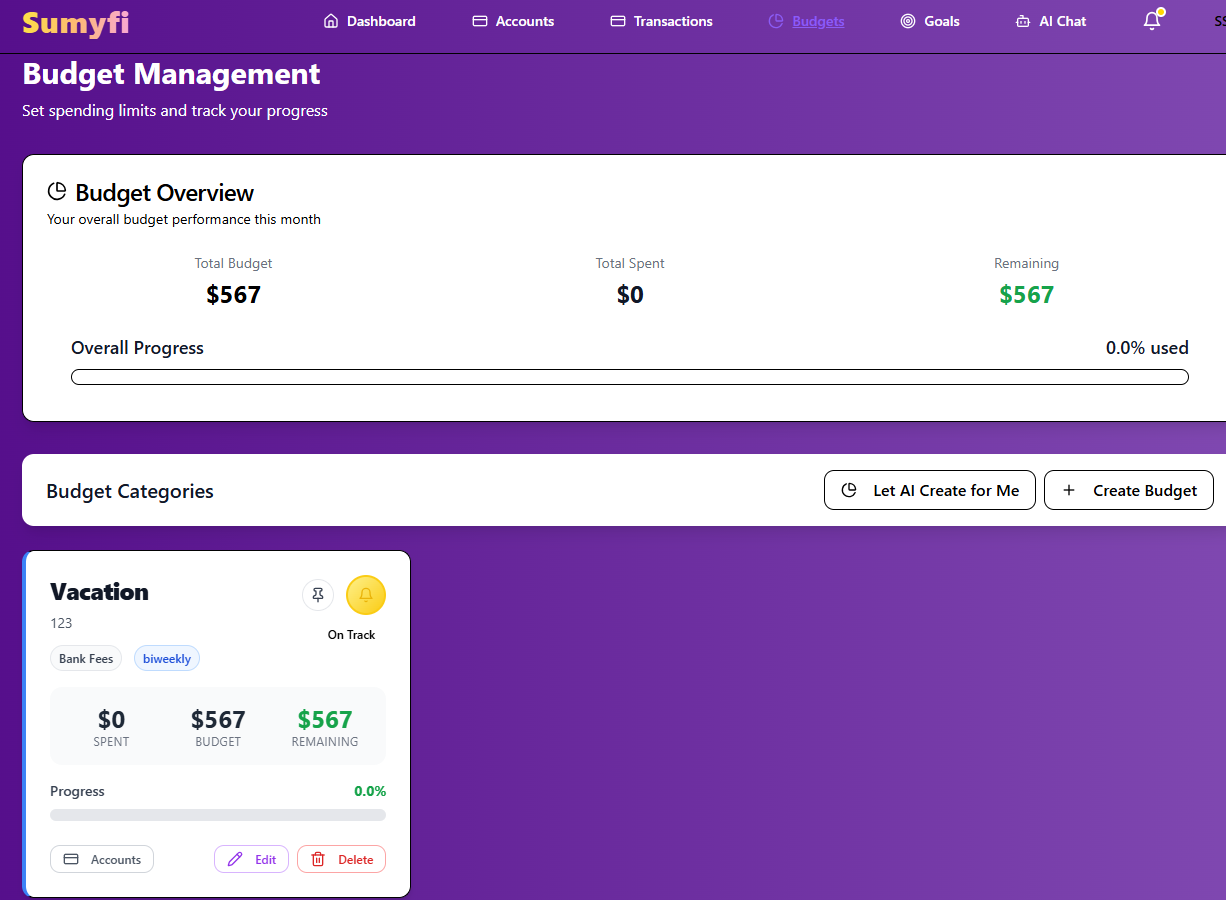
Budgets shows spending by category alongside the amounts assigned to each category.
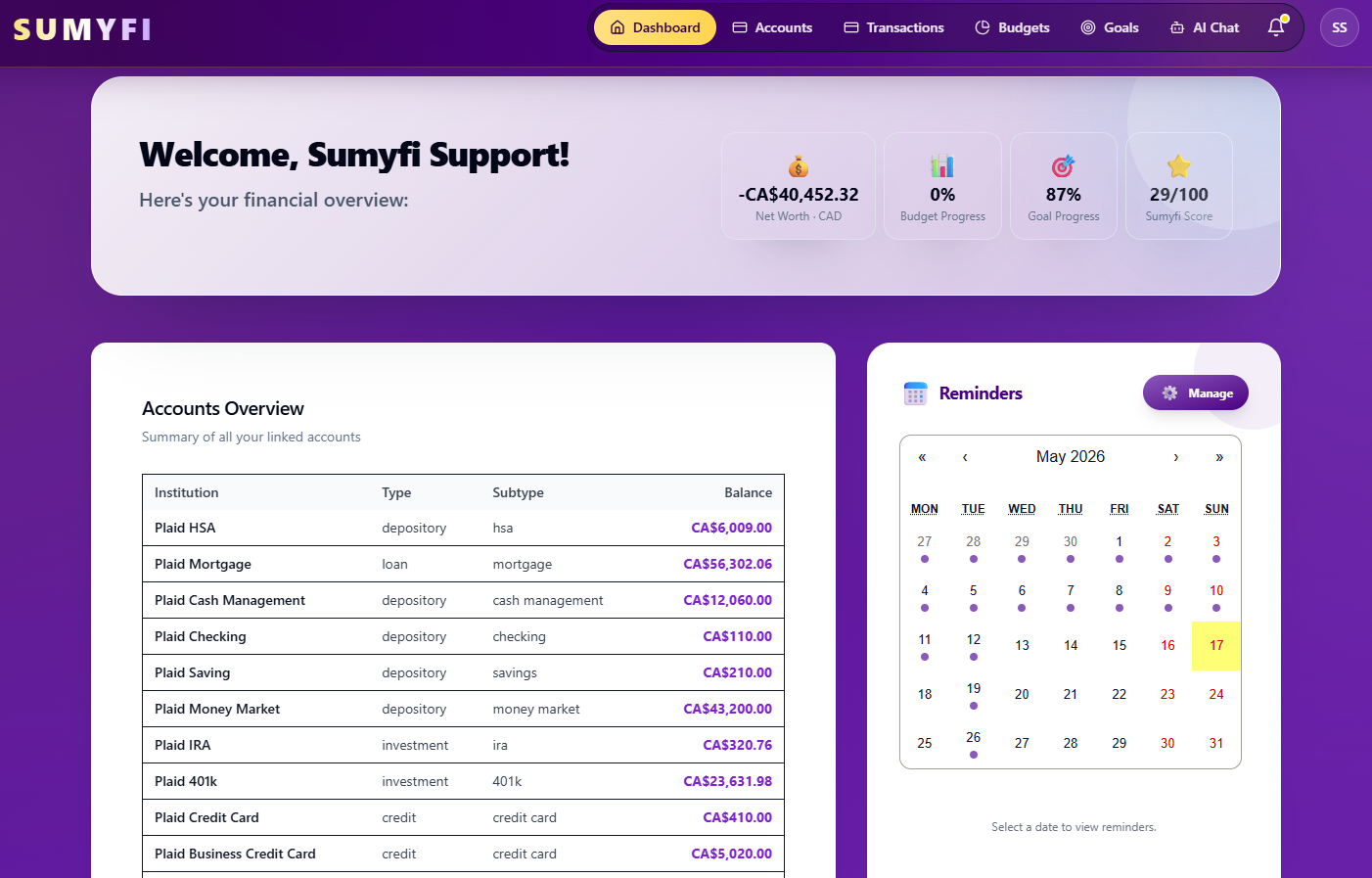
Accounts keeps connected and manual accounts in one place for budget review.
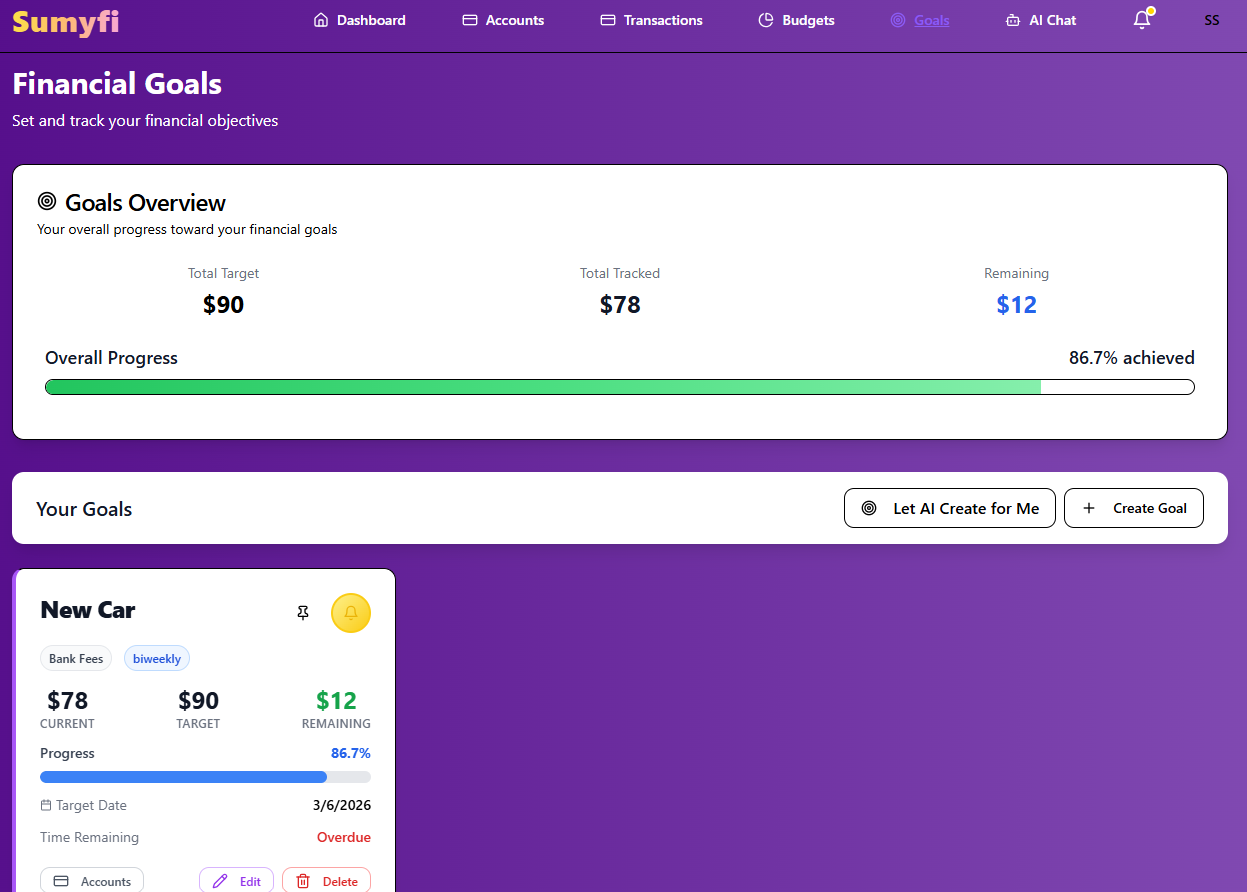
Budgets shows spending by category alongside the amounts assigned to each category.
Comparison table
Best budgeting apps in the USA compared
This table compares the apps U.S. buyers most often evaluate through the lens of budgeting depth, recurring bills, account sync, and broader financial visibility.
| Decision area | Sumyfi | YNAB | Monarch | Rocket Money | Copilot Money |
|---|---|---|---|---|---|
| U.S. household fit | Strong fit for households wanting one broader system | Strong for users wanting a more structured budgeting method | Strong for premium-dashboard shoppers | Strong for recurring-bill and subscription-led shoppers | Strong for buyers prioritizing a polished modern overview |
| Budgeting style | Integrated with the full dashboard | Methodology-heavy budgeting first | Flexible budgeting in a premium-style experience | Lighter budgeting with recurring-spend emphasis | Modern overview with budgeting support |
| Account syncing | Yes, designed to support the wider workflow | Present, but budgeting method remains central | Yes | Yes | Yes |
| Subscription tracking | Built into the same dashboard | Secondary | Available | Core angle | Secondary |
| Net worth tracking | Yes | Less central | Yes | More limited emphasis | Yes |
| AI guidance | Part of broader product direction | Not the main purchase reason | Usually secondary to premium dashboard value | Usually secondary to subscription value | Not usually the main buying angle |
| Pricing | Check live pricing | Paid subscription | Paid subscription | Freemium + paid tiers | Paid subscription |
| Best for | Households wanting one dashboard for budgets, goals, subscriptions, and net worth | Users who want tighter budgeting structure | Users prioritizing premium dashboard feel | Users leading with recurring-charge cleanup | Users prioritizing polished modern presentation |
Recommended next reads
Read 5 related articles next
Related reading for the next question.
FAQs
Frequently asked questions
What is the best budgeting app in the USA?
The best budgeting app in the USA is the one that keeps spending, recurring bills, account syncing, and goals connected in a workflow you will still use after the first month. Sumyfi is built to compete on that broader combination.
Should U.S. households prioritize budgeting method or account sync?
Most households need both, but if the account picture feels detached from the budget, retention usually drops fast. Account-connected budgeting tends to be easier to sustain in normal life.
Which budgeting app is best for subscriptions and monthly bills in the USA?
The strongest fit is usually the app that keeps recurring bills inside the same dashboard as the budget and connected accounts, so monthly pressure is easier to review and act on quickly.
Do I need net worth tracking in a budgeting app?
Not always, but many U.S. households benefit when budgeting and net worth live together because short-term spending decisions become easier to connect to longer-term financial progress.
Who is Sumyfi best for in the USA?
Sumyfi is best for U.S. households that want one broader dashboard for budgets, subscriptions, goals, account visibility, and net worth rather than a narrow budgeting-only product.
Keep exploring
Next guides for U.S. budgeting buyers
These supporting pages help the visitor move into adjacent bottom-funnel questions around subscriptions, account aggregation, AI guidance, and product trust.