Free Money Management App for Accounts, Spending, and Bills
Track spending, recurring bills, and goals in one dashboard that stays usable on both desktop and mobile without rigid setup.
At a glance
- Free online visibility
- Spending plus goals
- Less spreadsheet work
Test the free money management app dashboard with a free account and no credit card required while read-only bank security keeps organizing spending, savings, recurring bills, and accounts separate from money movement during early setup.
Review spending, balances, and recurring pressure around organizing spending, savings, recurring bills, and accounts from one dashboard while budget drift and bill pressure stay tied to the same conversation before important changes turn into background noise.
Use custom categories and goal tracking to keep everyday activity tied to the priorities behind organizing spending, savings, recurring bills, and accounts.
The point is to revisit organizing spending, savings, recurring bills, and accounts quickly each week instead of maintaining another finance spreadsheet.
Free value
A free money-management app is only useful when it creates real visibility without adding more maintenance
Free money-management shoppers usually want a believable starting point, not a teaser tier that still leaves the hard work manual.
The better free option should help people see accounts, spending, recurring bills, and goals in one place so the weekly money picture feels easier to understand right away.
- Free should still feel usable
- Connected visibility matters more than novelty
- Recurring spending should be easy to review
What to compare
The best free app should make the first review clearer, not postpone clarity behind a paywall
A good free starting point should shorten the path from account sync to useful review. the page should make it possible to see where the month is going, which bills keep returning, and what deserves attention next.
That is why the broader dashboard matters here. Free works best when the product can still connect spending, balances, and goals in a way that feels actionable.
Why Sumyfi fits
Sumyfi is a useful free starting point when the goal is one clearer dashboard for everyday money decisions
Sumyfi gives users a connected starting point for spending, recurring bills, accounts, and goals instead of limiting the experience to one narrow calculator or tracker.
That makes it a better fit for users who want a free entry point that can still support a real weekly money habit.
3-step setup
How this budgeting workflow works in practice
The strongest budgeting pages show the real weekly routine for organizing spending, savings, recurring bills, and accounts instead of repeating generic feature claims.
Connect bank accounts with read-only access
Create the free money management app workspace before adding any payment details then choose between manual setup and read-only account linking before expanding the workflow.
Establish category budgets and buffer targets
Set category guardrails, review recurring bills, and keep a small cash buffer visible while organizing spending, savings, recurring bills, and accounts takes shape.
Perform 5-minute weekly check-ins
Keep the routine light enough to revisit every week while organizing spending, savings, recurring bills, and accounts stays visible in one place so the budget can still be adjusted while the month is recoverable instead of turning the check-in into cleanup.
Product screenshots
See the product behind the copy
Screenshots shown: Budgets, Accounts.
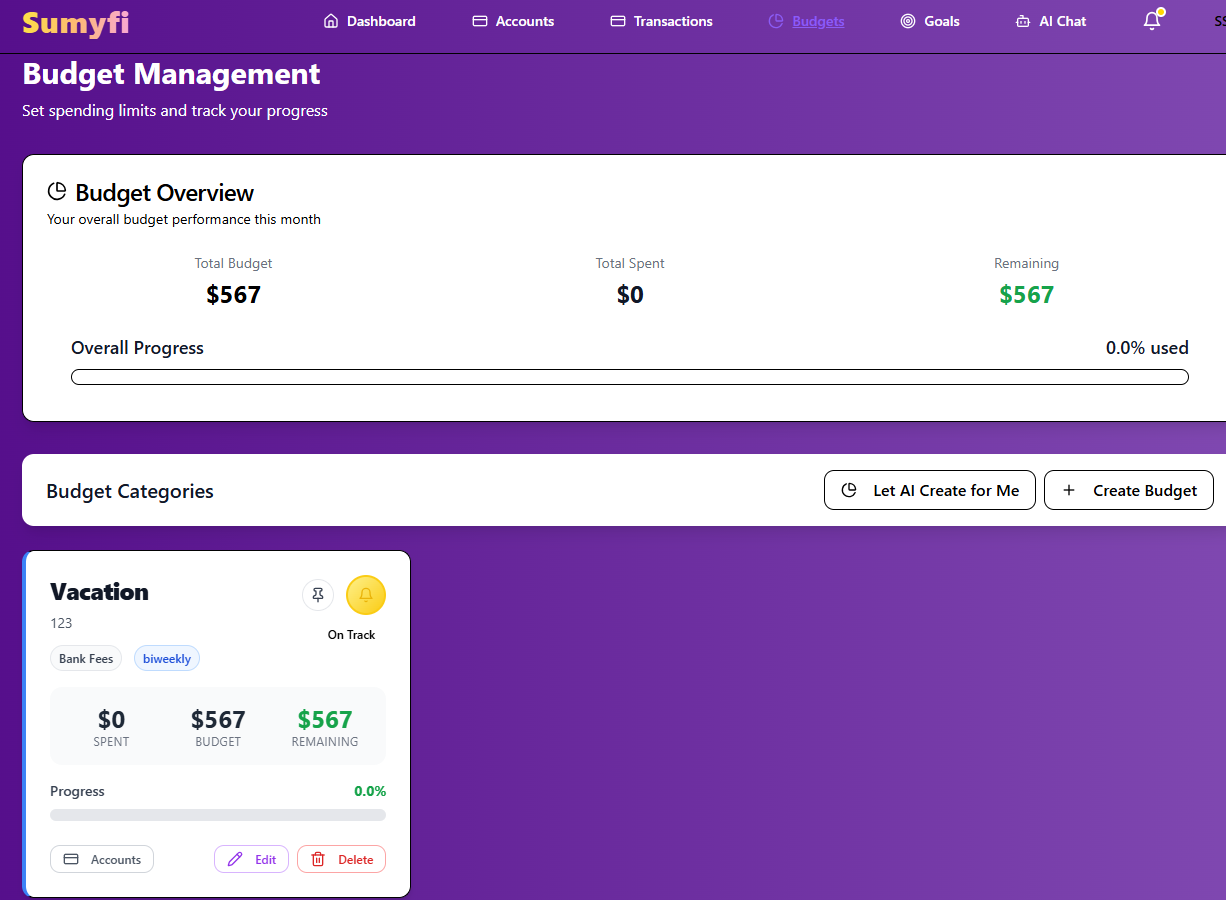
Budgets shows spending by category alongside the amounts assigned to each category.
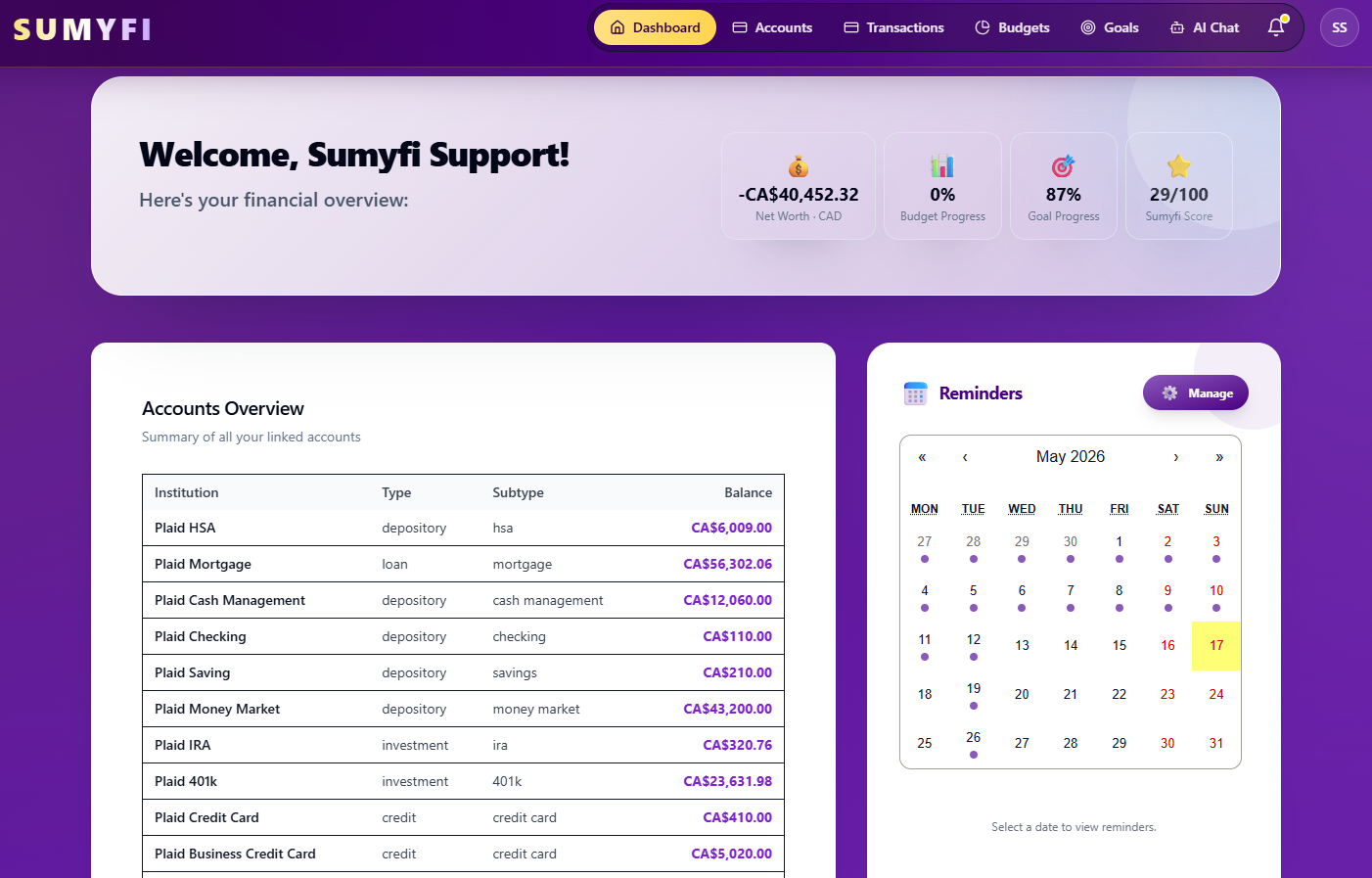
Accounts keeps connected and manual accounts in one place for budget review.
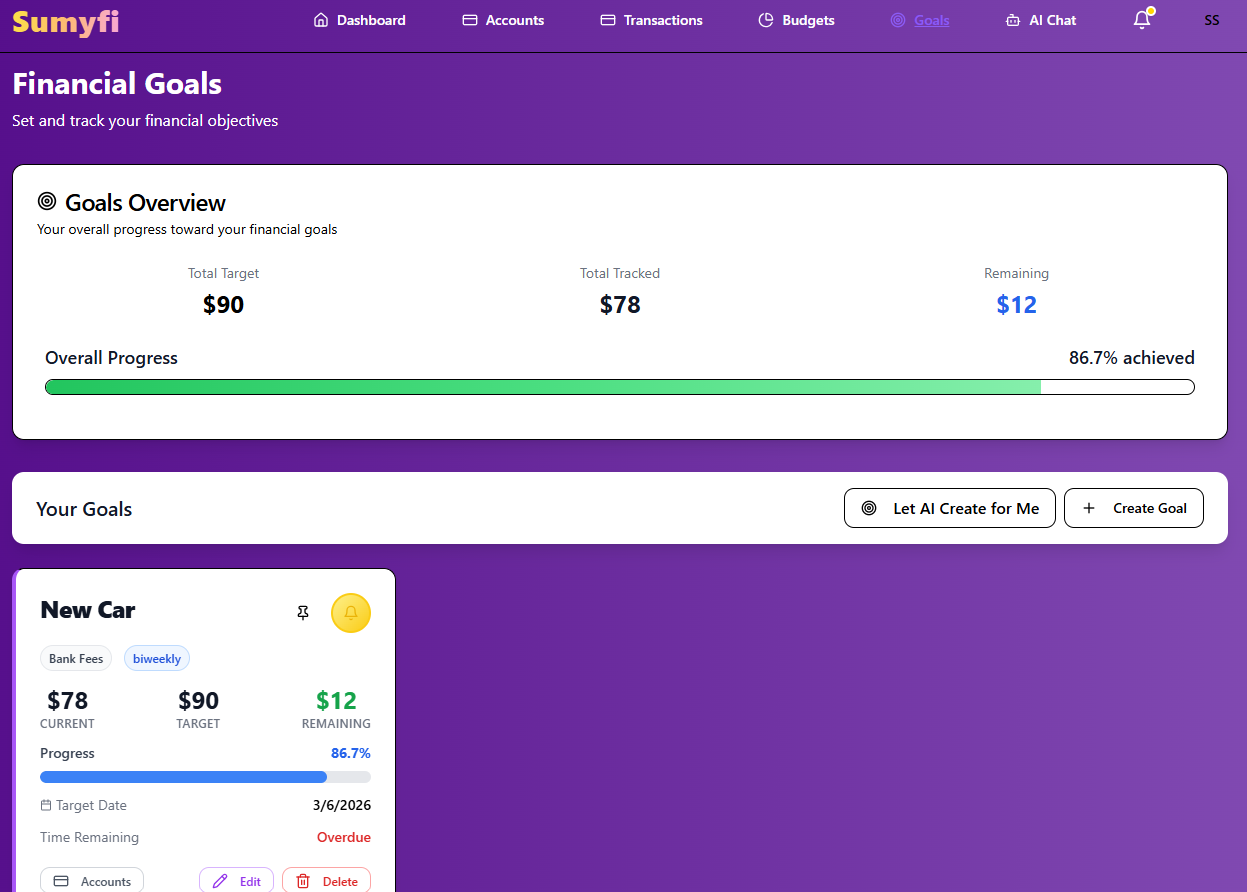
Budgets shows spending by category alongside the amounts assigned to each category.
Comparison table
How free money management app compares for a practical weekly budgeting routine
Keep the table direct and decision-oriented around budgeting, category drift, and repeat use.
| Decision area | Sumyfi | Spreadsheets or narrow free trackers |
|---|---|---|
| Setup path | Begin with a free dashboard and add account connections only when organizing spending, savings, recurring bills, and accounts needs more live context. | The alternative usually means isolated tracking without the same connected dashboard context. |
| Category and bill clarity | Categories, balances, and recurring bills stay tied to organizing spending, savings, recurring bills, and accounts in one place. | Context is easier to lose between separate tools |
| Habit-building support | Short weekly check-ins with reminders and goals | More upkeep is left to the user |
| Longer-term fit | Can grow with organizing spending, savings, recurring bills, and accounts | It can handle the first task well but leave the broader routine fragmented later. |
Free plan
What's included in the free plan
A useful budgeting free plan should help the reader test the routine while organizing spending, savings, recurring bills, and accounts is still being pressure-tested in real use during the first reviews.
- Open a free account first so the workflow can be tested before any paid decision is required.
- Track balances, transactions, categories, goals, and recurring bills from the same web interface.
- Use a manual starting point first for free money management app if you want to prove organizing spending, savings, recurring bills, and accounts before linking institutions for this workflow.
- Treat free money management app pricing as the last step once the product has earned a closer upgrade look before choosing a plan.
Recommended next reads
Read 5 related articles next
Related reading for the next question.
FAQs
Frequently asked questions
Is free money management app really free to start?
Yes. You can open the dashboard without a credit card and test how organizing spending, savings, recurring bills, and accounts feels in a weekly review before deciding whether any upgrade is worth it.
How does it handle variable weeks and category drift?
Rather than waiting for the month to get away from you you can use quick check-ins to catch overspending, bill pressure, and the categories pulling organizing spending, savings, recurring bills, and accounts off course while the month is still recoverable.
Can I use it without automatic bank sync?
Yes. You can begin with a manual workflow, build the habit around organizing spending, savings, recurring bills, and accounts, and add supported account connections once the dashboard structure already makes sense.
Does it help build a repeatable budgeting habit?
Yes. When organizing spending, savings, recurring bills, and accounts stays visible in one place, the habit becomes easier to repeat during ordinary weeks.