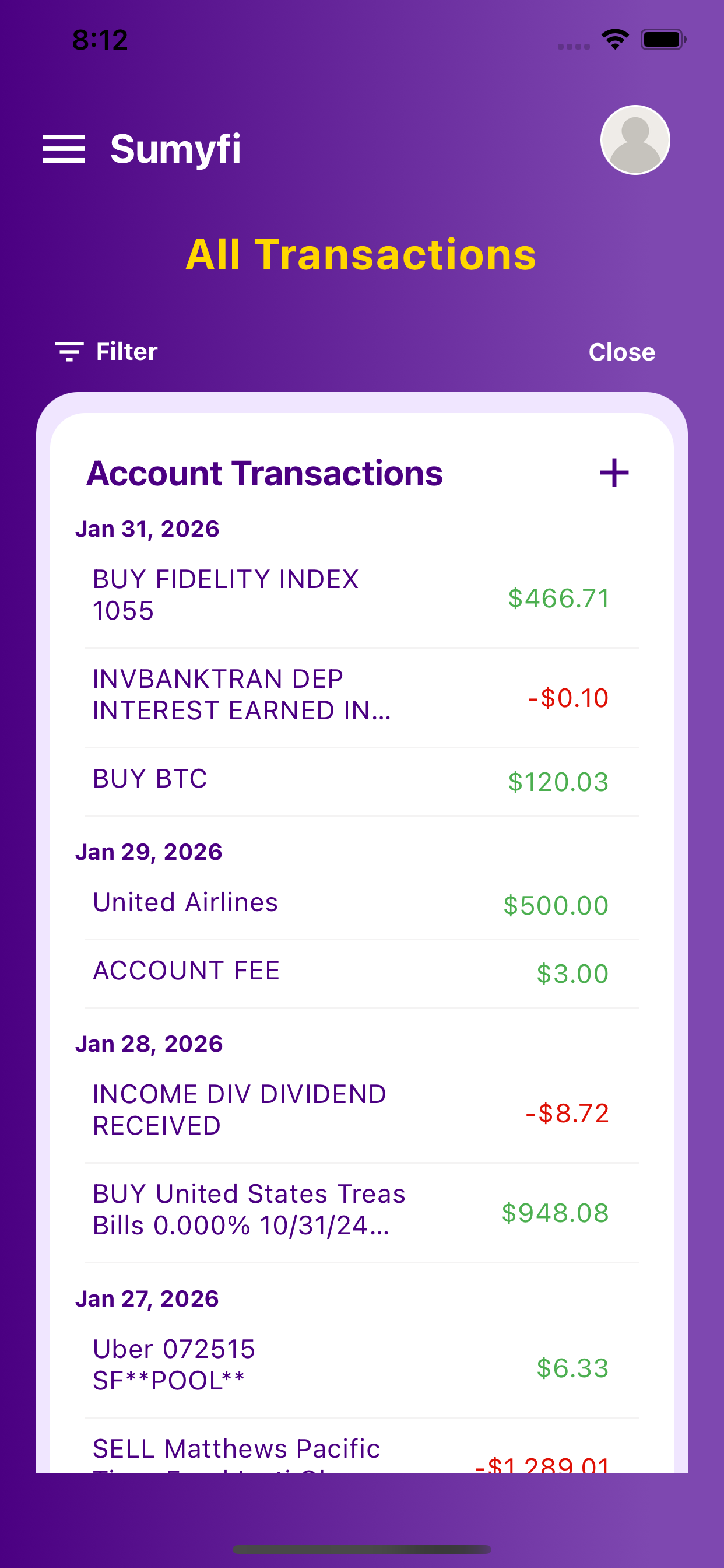
The best money management app in the USA should help people understand the whole month quickly, not just show isolated balances, budgets, or transactions in separate silos.
From navigating fluctuating markets to managing diverse income streams and an array of digital subscriptions, the modern financial landscape demands precision, insight, and effortless control.
We'll explore what truly defines excellence in this space, dissecting the nuances that separate the merely adequate from the truly transformative.
The Evolving Landscape of Personal Finance in the USA: A Call for Digital Mastery
The financial lives of Americans have never been more dynamic. A typical individual might juggle multiple bank accounts, credit cards, investment portfolios, retirement funds, and even cryptocurrency holdings. Add to this the proliferation of subscription services, variable income sources, and the ever-present challenge of debt management, and it becomes clear that traditional methods of financial oversight are simply inadequate.
The digital age has brought with it both complexity and opportunity. While the sheer volume of financial data can be overwhelming, it also provides an unprecedented chance for granular insight and proactive management. This is where the power of a dedicated money management app truly shines, transforming chaotic data into actionable intelligence. The demand for a robust, secure, and user-friendly platform that can seamlessly aggregate and interpret this data has never been higher. Consumers are no longer just looking for a budgeting tool; they seek a holistic financial ecosystem.
What Defines the Best Money Management App for US Users? Establishing the Benchmark
When evaluating the vast array of options vying for the title of the best money management app USA, several core pillars emerge as non-negotiable. These criteria form the bedrock of a truly effective and empowering financial tool:
- Seamless Connectivity & Data Aggregation: The ability to connect securely and reliably with thousands of financial institutions across the US (and Canada, for Sumyfi users) is paramount. This includes major banks, credit unions, investment platforms, and even niche financial service providers. The aggregation process must be fast, accurate, and consistently updated.
- Holistic Net Worth Tracking: Beyond just budgeting, a superior app provides a real-time, comprehensive view of your entire financial picture-assets minus liabilities. This means tracking everything from checking and savings accounts to mortgages, student loans, investment portfolios, and even real estate.
- Intelligent Transaction Automation & Categorization: Manual categorization is tedious and prone to error. The best apps leverage AI and machine learning to automatically categorize transactions, allowing for quick review and custom rule-setting.
- Intuitive Budgeting & Spending Analysis: Flexible budgeting tools that adapt to various methodologies (e.g., zero-based, 50/30/20, envelope system) are crucial. Clear visualizations of spending patterns, trend analysis, and alerts for overspending empower users to stay on track.
- Robust Security & Privacy: Given the sensitive nature of financial data, enterprise-grade security protocols, encryption, and a transparent privacy policy are absolute must-haves.
- User Experience (UX) & Interface Design: A slick, clean, and intuitive dashboard is essential. The app should be easy to navigate, visually appealing, and provide insights at a glance without feeling overwhelming.
- Customization & Flexibility: The ability to tailor categories, create custom reports, and set personalized financial goals ensures the app truly serves individual needs.
- Proactive Insights & Goal Setting: Beyond just reporting past activity, the best apps offer forward-looking insights, identify savings opportunities, and make it easier to set and track progress towards specific financial goals (e.g., down payment, debt payoff, retirement).
- Accessibility & Support: Availability across multiple platforms (web, iOS, Android) and responsive customer support are key for a seamless experience.
- Value for Money: Whether free or subscription-based, the app must deliver exceptional value that justifies its cost, ideally saving users more than it costs.
Sumyfi: Redefining Excellence in US Money Management
Built from the ground up with agile engineering principles and a deep understanding of modern financial complexities, Sumyfi offers a holistic, intuitive, and incredibly powerful platform that transcends the limitations of legacy systems and manual spreadsheets.
The Sumyfi Difference: Engineered for the Modern User
Sumyfi isn't just another budgeting app; it's a comprehensive personal finance hub designed to simplify, automate, and elevate your financial life. Here's what sets it apart:
Lightning-Fast, Frictionless Setup & Unrivaled Connectivity
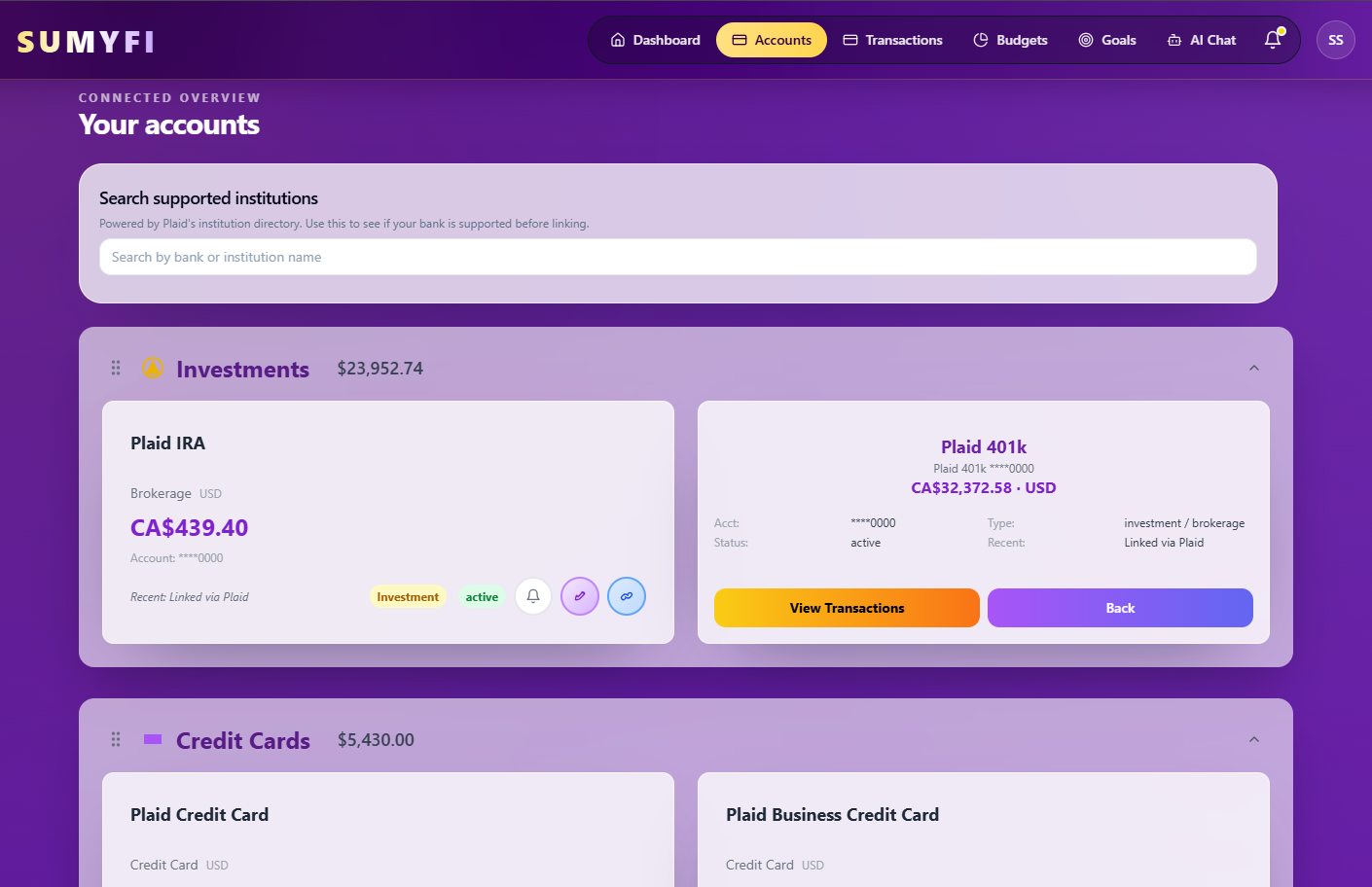
One of Sumyfi's most lauded features is its lightning-fast setup. We understand that your time is valuable. Our streamlined onboarding process gets you connected to your financial institutions in minutes, not hours. Sumyfi boasts seamless integration with thousands of financial institutions across the US and Canada, ensuring that virtually all your accounts-from major banks like Chase, Bank of America, and Wells Fargo to regional credit unions and investment platforms like Fidelity and Vanguard-are aggregated in one secure place. This robust connectivity is the backbone of truly comprehensive financial oversight.
The End of Manual Spreadsheets: Automated Transaction Management
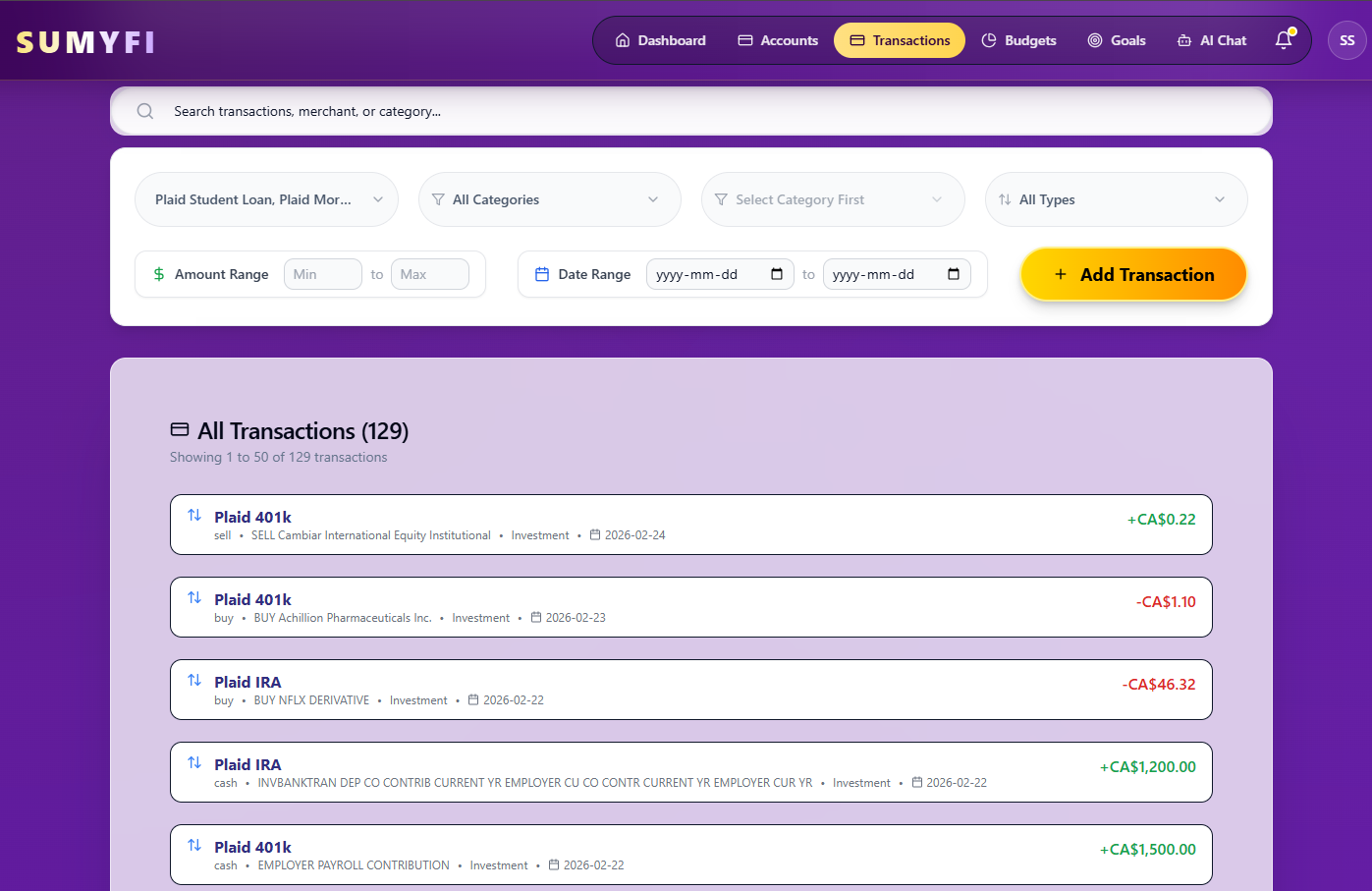
Say goodbye to the tedious, error-prone chore of manual data entry. Sumyfi intelligently automates transactions, pulling in your financial activity in real-time. Our advanced algorithms automatically categorize expenses, learning from your habits and allowing you to set custom rules for precision. This automation frees up countless hours, allowing you to focus on analysis and strategy rather than data input.
Crystal-Clear Net Worth Tracking: Your Financial North Star
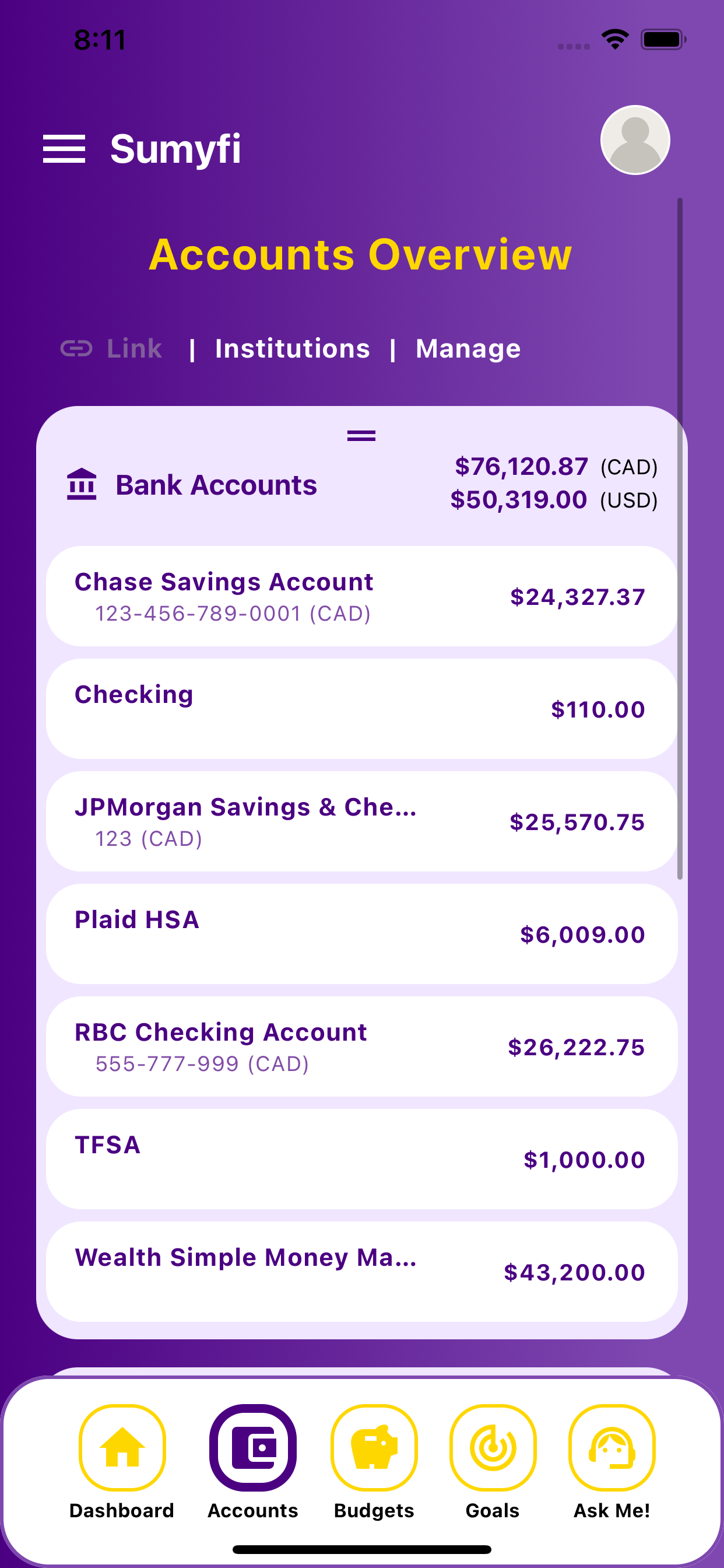
Understanding your net worth is the ultimate barometer of financial health. Sumyfi provides a cleanly tracked, real-time net worth dashboard that aggregates all your assets (cash, investments, property) and liabilities (mortgages, loans, credit card debt). This holistic view isn't just a static number; it's an interactive, dynamic representation of your financial journey, allowing you to visualize growth, identify areas for improvement, and make informed decisions.
Intuitive Budgeting & Granular Spending Insights
Sumyfi's budgeting tools are designed for flexibility and insight. Whether you prefer a strict zero-based budget or a more flexible approach, our platform adapts to your style.
Slick Dashboard Interface: Financial Clarity at Your Fingertips
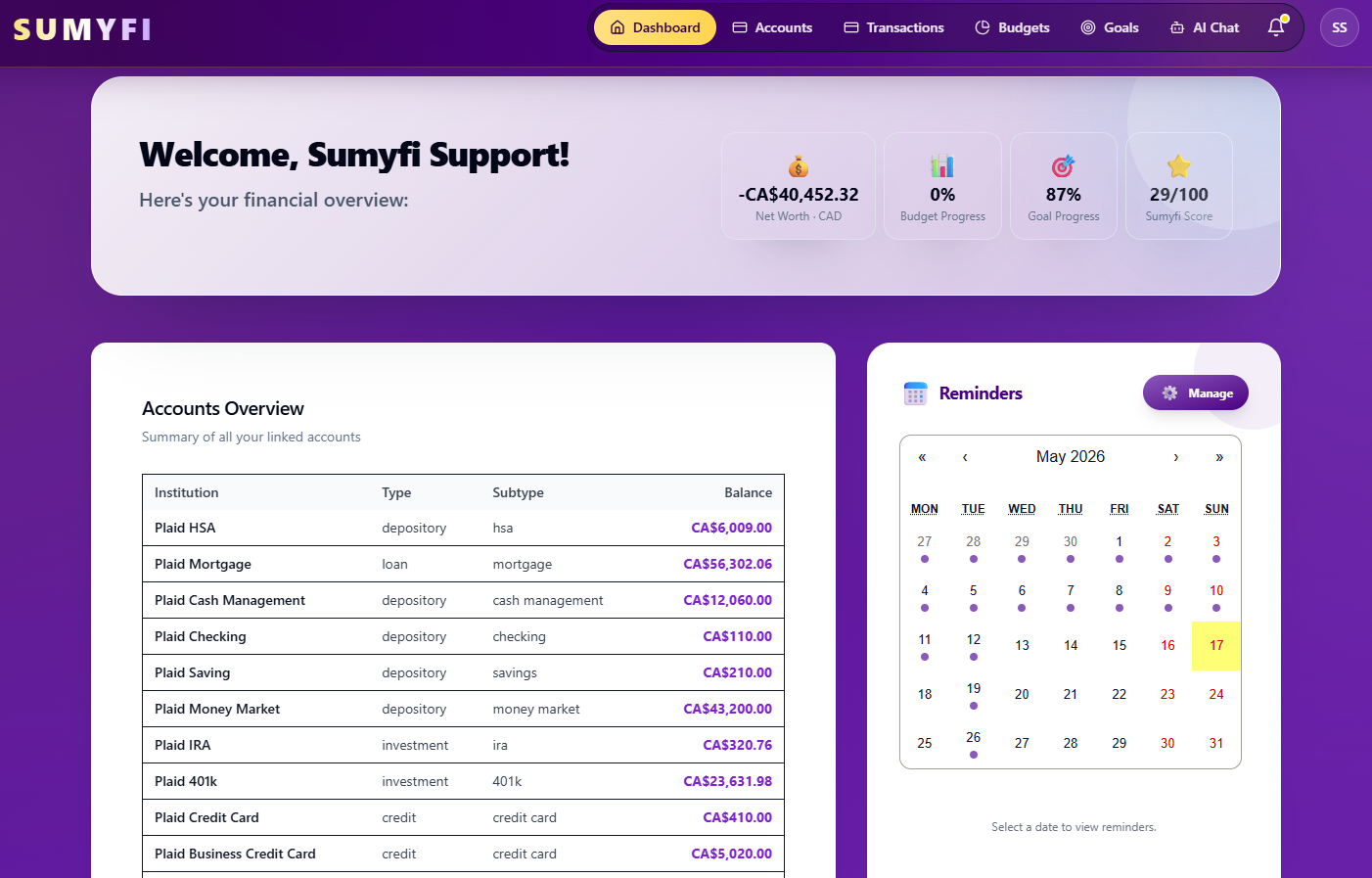
The Sumyfi user experience is second to none. Our slick dashboard interface is designed for clarity and ease of use. Key financial metrics, upcoming bills, budget progress, and net worth trends are presented in an intuitive layout that makes understanding your finances effortless. The visual design is not just aesthetically pleasing; it's functionally superior, reducing cognitive load and highlighting the information that matters most.
6. Advanced Security & Data Privacy: Your Trust, Our Priority
Goal Setting & Financial Planning Tools
Sumyfi goes beyond basic tracking by empowering you to set and achieve your financial goals.
Experience the Sumyfi Difference Today
Why settle for fragmented financial management or outdated software when Sumyfi offers a truly integrated and intelligent solution? It's time to take control of your financial destiny with a platform built for the complexities of today and the opportunities of tomorrow.
Experience the clarity, control, and confidence that comes with having the best money management app USA at your fingertips.
Customizable Categories: Tailor spending categories to reflect your unique lifestyle.
Real-time Tracking: See exactly where your money is going as transactions occur.
Visual Reports
Understand your spending patterns at a glance with beautiful, easy-to-interpret charts and graphs.
Proactive Alerts
Receive notifications for unusual spending or when approaching budget limits, helping you stay accountable.
Debt Payoff Strategies
Visualize your debt reduction journey and accelerate repayment.
Savings Goals
Set targets for a down payment, vacation, or emergency fund and track your progress diligently.
Investment Overviews
Get a consolidated view of your investment performance across different platforms.
Key Features to Look for in a Top-Tier Money Management App
To help you discern the truly exceptional from the merely functional, let's elaborate on the essential features that differentiate a leading money management application.
A. Comprehensive Account Aggregation
The cornerstone of any effective money management app is its ability to pull data from all your financial accounts.
B. Intelligent Budgeting & Expense Tracking
Beyond simply listing transactions, a superior app offers:
C. Net Worth Calculation & Visualization
This feature is paramount for long-term financial health.
Bank Accounts: Checking, savings, money market.
Credit Cards: All major issuers and store cards.
Investment Accounts: Brokerage, Roth IRAs, 401(k)s, 529 plans, HSAs.
E. Goal Setting & Progress Monitoring
Financial goals provide direction. The app should facilitate:
F. Reporting & Analytics
Deep insights are crucial for informed decision-making.
Custom Goal Creation: Define specific, measurable, achievable, relevant, and time-bound (SMART) goals.
Progress Tracking: Visually monitor your advancement towards goals.
Loans
Mortgages, auto loans, student loans, personal loans.
Other Assets/Liabilities
Real estate, vehicles, crypto, peer-to-peer lending.
Global Reach (for Sumyfi)
Crucially, Sumyfi extends this robust connectivity to both US and Canadian financial institutions, a significant advantage for cross-border users or those with international financial ties.
Dynamic Budgeting
Budgets that can be adjusted mid-month, rolled over, or set for specific periods.
Income Tracking
Clear visualization of all income sources.
Spending Categories
Pre-set and custom categories for detailed expense analysis.
Merchant Recognition
Automatic identification of vendors for consistent categorization.
Trend Analysis
Identify spending patterns over time to pinpoint areas for savings or concern.
Real-time Updates
Net worth figures that reflect current market values and account balances.
Historical Data
Track your net worth growth (or decline) over months and years.
Asset Breakdown
See the composition of your assets (e.g., percentage in cash, stocks, real estate).
Debt Overview
Understand your total liabilities and their impact on your net worth.
Scenario Planning
Model different savings or debt repayment strategies.
Motivation & Encouragement
Celebrate milestones and provide nudges to stay on track.
Custom Reports
Generate reports based on specific criteria (e.g., spending by category over a quarter).
Tax Preparation Aids
Export transaction data in formats useful for tax filing.
Investment Performance Analysis
Track returns, portfolio diversification, and asset allocation across all platforms.
Comparing the Contenders: Beyond Sumyfi (A Critical Look at Alternatives)
While Sumyfi represents the pinnacle of modern money management, it's prudent to understand the landscape of other popular options. Many users might be familiar with or considering alternatives. We'll critically evaluate these, highlighting their strengths and, more importantly, where Sumyfi offers a superior experience.
1. Mint (RIP, but an Important Legacy)
3. YNAB (You Need A Budget)
4. Rocket Money (formerly Truebill)
- Personal Capital (now Empower Personal Wealth)
Why Sumyfi Stands Apart
When you weigh the strengths and weaknesses of these alternatives, Sumyfi consistently emerges as the most balanced, comprehensive, and forward-thinking solution for the modern American (and Canadian) user. It combines the best aspects of each-unrivaled connectivity, automated efficiency, deep insights, and a beautiful, intuitive interface-without their respective drawbacks.
What it was: For many years, Mint was the default free money management app, pioneering account aggregation and basic budgeting.
Pros: Free, user-friendly interface in its prime, good for basic budgeting.
Cons: Mint is being sunsetted by Intuit, with users being migrated to Credit Karma. This highlights the instability of relying on free services and the potential for disruption. Its ad-heavy model was often intrusive, and connectivity issues were common in later years. It lacked the depth for comprehensive net worth tracking and advanced financial planning.
Sumyfi's Advantage: Sumyfi offers a stable, dedicated platform with no ads, superior connectivity, and a far more robust feature set for comprehensive financial management, ensuring continuity and a commitment to user experience.
- What it is: A newer, subscription-based app that positions itself as a premium alternative, often attracting former Mint users.
- Pros: Clean interface, strong focus on budgeting, good for net worth tracking.
- Cons: Can be more expensive, some users report a steeper learning curve for advanced features. While comprehensive, its connectivity can sometimes be less extensive than Sumyfi's, particularly for niche institutions or Canadian users.
Sumyfi's Advantage: Sumyfi matches Monarch's premium features with potentially broader institution connectivity (US & Canada), a more agile engineering approach leading to faster feature deployment, and an equally slick, if not more intuitive, dashboard designed for immediate clarity.
- What it is: A highly regarded app known for its strict "zero-based budgeting" methodology.
- Pros: Excellent for disciplined budgeters, very effective for debt reduction and savings goals if you commit to its philosophy.
- Cons: Strict methodology is not for everyone. It requires significant user input and adherence to its rules, which can be overwhelming for those new to budgeting or who prefer more flexibility. It's primarily a budgeting tool and doesn't offer the same holistic net worth tracking or investment analysis as Sumyfi. It also comes with a significant annual subscription fee.
Sumyfi's Advantage: Sumyfi offers flexible budgeting tools that accommodate various styles, including principles similar to zero-based budgeting, without forcing a rigid methodology. It provides a more comprehensive financial hub that integrates budgeting seamlessly with net worth tracking, investment analysis, and automated transaction management, offering a broader spectrum of financial oversight.
- What it is: Focuses heavily on subscription cancellation, bill negotiation, and basic budgeting.
- Pros: Excellent for identifying and canceling unwanted subscriptions, good for negotiating bills, offers some free features.
- Cons: Its core strength is subscription management and bill negotiation, which means its budgeting and net worth tracking features are often less robust and comprehensive than dedicated platforms. The free version is limited, and the premium version can feel less feature-rich for its cost compared to full-fledged financial hubs.
Sumyfi's Advantage: While Sumyfi provides strong bill tracking and helps identify recurring expenses, its primary focus is holistic financial management. Sumyfi offers superior net worth tracking, investment insights, and automated budgeting, providing a more complete picture rather than specializing in just one or two aspects of financial health.
- What it is: Known for its strong investment tracking and net worth analysis, often leading to wealth management services.
- Pros: Excellent free tools for investment portfolio tracking, retirement planning, and net worth calculation. Visually appealing.
- Cons: The primary business model is to convert users into paid wealth management clients, which can lead to sales calls. Its budgeting features are less sophisticated compared to dedicated budgeting apps.
Sumyfi's Advantage: Sumyfi offers robust net worth and investment tracking without the underlying pressure of wealth management sales. It combines these powerful features with equally strong, flexible budgeting and automated transaction management, providing a truly all-in-one hub without any hidden agendas.
Security and Privacy: Non-Negotiables for Your Financial Data
In the digital age, the security and privacy of your financial information are paramount. Any app claiming to be the best money management app USA must adhere to the highest industry standards. Sumyfi takes this responsibility incredibly seriously.
Our Commitment to Your Data Security:
Choosing Sumyfi means entrusting your financial data to a platform built with integrity, transparency, and an unwavering commitment to your security and privacy.
The financial world is constantly evolving, driven by technological advancements and shifting consumer expectations. The best money management app USA isn't just about solving today's problems; it's about anticipating tomorrow's needs. Sumyfi's agile engineering and forward-thinking development philosophy position it perfectly for the future.
Predictive Analytics & AI Integration
Sumyfi is continuously enhancing its capabilities with advanced AI and machine learning. This means:
Enhanced Visualization & Customization
As financial lives become more complex, the need for clear, customizable visualizations grows. Sumyfi is committed to:
Seamless Integration with Emerging Financial Technologies
The financial landscape will continue to see innovations like open banking, decentralized finance (DeFi), and new payment systems. Sumyfi is designed with the flexibility and infrastructure to integrate these emerging technologies, ensuring it remains at the forefront of personal finance management. Our commitment to broad connectivity includes staying ahead of new financial platforms and ensuring our users can consolidate their entire financial picture.
Making the Switch: Your Path to Financial Clarity with Sumyfi
The decision to choose the best money management app USA is a pivotal step towards achieving financial peace of mind and accelerating your goals. With Sumyfi, that transition is designed to be as smooth and rewarding as possible.
Strict Privacy Policy: We are transparent about how your data is collected, used, and protected. Your financial information is never sold to third parties, nor is it used for advertising purposes. Our business model is built on providing exceptional value through our service, not by monetizing your personal data.
Smarter Categorization: Even more accurate and personalized transaction categorization.
Why Now is the Time for Sumyfi:
Your journey to financial mastery begins here. [Sign up for Sumyfi today and experience the difference!](https://www.sumyfi.com/signup)
Proactive Financial Health Checks
Identifying potential issues (e.g., unusual spending spikes, upcoming cash flow shortages) before they become problems.
Personalized Recommendations
Tailored suggestions for savings, debt repayment, or investment opportunities based on your unique financial profile.
Dynamic Dashboards
Even more interactive and customizable dashboards that allow users to prioritize the information most relevant to them.
Advanced Reporting
Deeper analytical tools for in-depth financial review.
User-Driven Development
A commitment to incorporating user feedback into new features and improvements, ensuring the platform evolves with its community.
Reclaim Your Time
Stop wasting hours on manual spreadsheets.
Gain Unprecedented Clarity
Understand exactly where your money stands, at all times.
Make Smarter Decisions
Leverage data-driven insights to optimize your financial strategy.
Achieve Your Goals Faster
Stay accountable and motivated with powerful tracking tools.
Conclusion: Your Search for the Best Money Management App USA Ends with Sumyfi
In the quest for the best money management app USA, the criteria are clear: robust connectivity, intelligent automation, comprehensive net worth tracking, intuitive budgeting, ironclad security, and a user experience that empowers rather than overwhelms. While many apps offer pieces of this puzzle, Sumyfi delivers the complete, integrated solution.
Its agile engineering ensures a platform that is not only powerful today but also future-proofed for tomorrow's financial landscape. From replacing cumbersome manual spreadsheets to providing a seamless, real-time view of your entire financial universe, Sumyfi is engineered to give you clarity, control, and confidence.
Don't let your financial potential remain untapped.
Take the definitive step towards financial mastery. [Download the Sumyfi app or sign up on the web today!](https://www.sumyfi.com/signup) Your best financial life awaits.