Sumyfi Editorial Team • Updated 2026-09-01
Best Finance App Canada for Connected Accounts, Budgets, and Bills (2026)
The best finance app in Canada should pull balances, spending, recurring bills, and goals into one review instead of sending you back to separate apps and spreadsheets.
This guide is most useful for someone who is already tired of fragmented financial review. They may be checking one app for bank balances, another for spending, a spreadsheet for planning, and a mental list for recurring bills. The better finance app should bring those layers together in a way that feels coherent and low-friction.
That is why the page should compare more than feature checklists. Buyers need to know whether the app makes the Canadian money picture easier to understand, whether recurring expenses stay visible, and whether the product can become a genuine weekly routine instead of another system to maintain.
If you want a Canadian finance app that keeps accounts, budgets, recurring bills, goals, and net worth connected in one dashboard, Sumyfi is worth evaluating closely.
At a glance
- Canadian finance workflow fit
- Recurring bills and subscriptions
- Goals, balances, and weekly review
Most Canadian buyers want one product that replaces bank-app hopping, spreadsheet patches, and recurring bill guesswork.
A finance app can look polished and still fail if budgeting, accounts, and monthly decisions stay too separate.
The winning app makes the whole month easier to understand in one short review session.
Canada-specific fit
Why the best finance app in Canada needs local relevance, not just a long feature list
A finance app that works well in Canada has to feel believable for Canadian institutions, recurring bills, and the weekly review habits that make budgeting and planning easier to keep up.
That means the best finance app should reduce cleanup work while keeping balances, spending, savings goals, and recurring costs visible in one place. If the dashboard still feels fragmented, the app is not doing enough practical work.
- Canadian account context matters
- Recurring bills should stay visible
- The weekly review should feel lighter, not heavier
What to compare
A strong Canadian finance app should make review time shorter and decisions clearer
The right app should help answer practical questions quickly: what changed this month, which recurring charges are still ahead, whether savings are on pace, and where the pressure points are. Those answers matter more than one more decorative dashboard.
This is where broader product fit matters. A finance app is more useful when budgeting, account visibility, recurring costs, and goals stay connected instead of living in separate tools or spreadsheets.
Why Sumyfi fits
Sumyfi works best when you want one operating view for Canadian money decisions
Sumyfi combines connected accounts, recurring-spend visibility, budgets, savings goals, and net worth tracking inside one workflow that is easier to revisit each week.
That broader operating view helps move from scattered account checks into clearer planning without rebuilding the same picture manually every time.
Buyer checklist
What to compare before choosing a finance app in Canada
- Can you see balances, transactions, recurring bills, and goals in one place?
- Does the app reduce manual upkeep instead of creating another weekly chore?
- Will the dashboard still feel useful after the first setup week?
- Can you review subscription costs, spending categories, and savings progress without switching products?
- Does the product feel credible enough to become your main financial home base?
Why Sumyfi
Why Sumyfi is a strong finance-app choice for Canada
Sumyfi fits This guide because it is built around connected financial visibility rather than a single narrow feature. The value is not just budgeting or not just aggregation. The value is one operating view for the whole month.
Product screenshots
See the product behind the copy
Screenshots shown: Accounts, Dashboard.
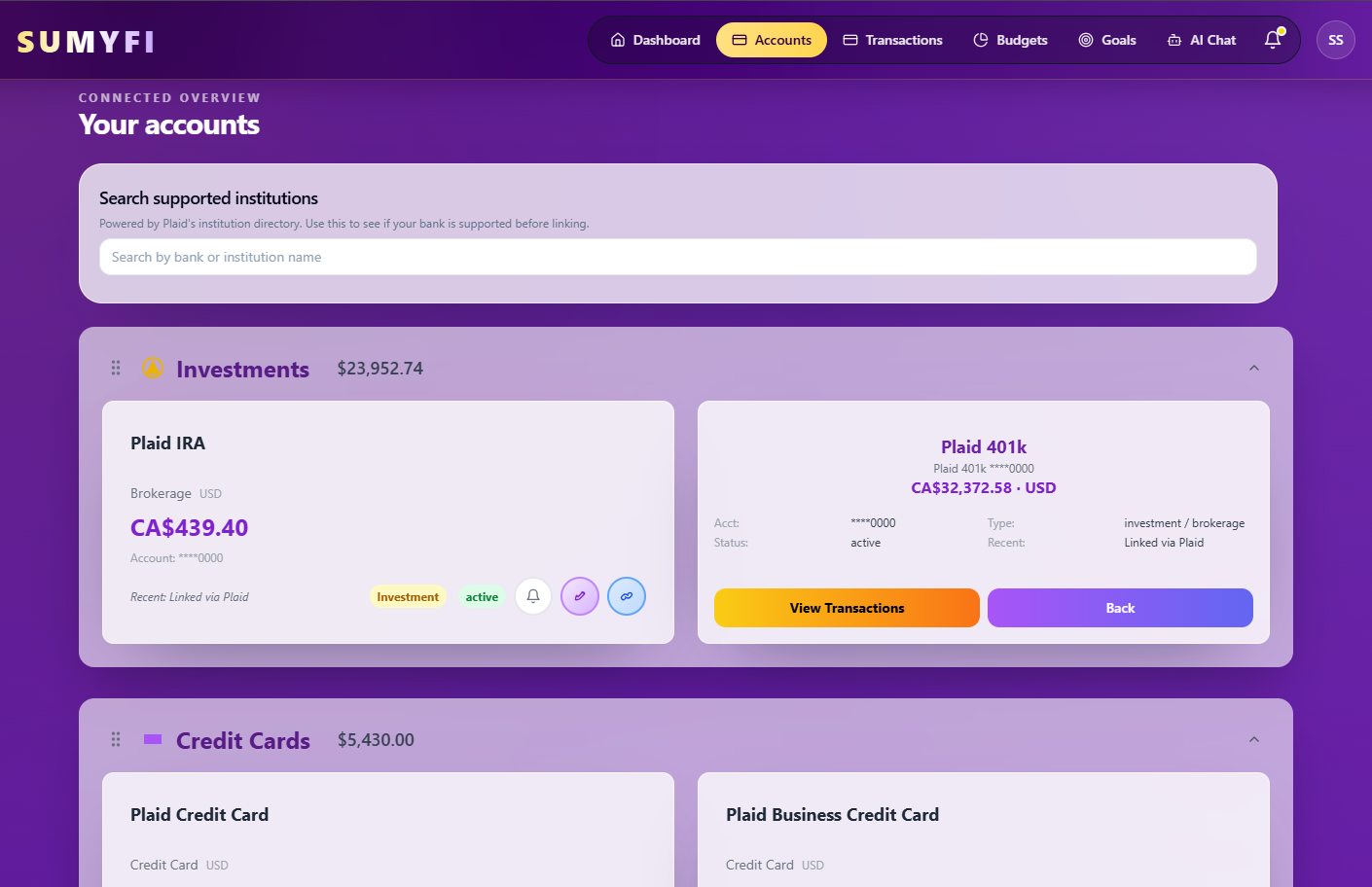
Accounts gives you a single view of connected and manually added accounts.
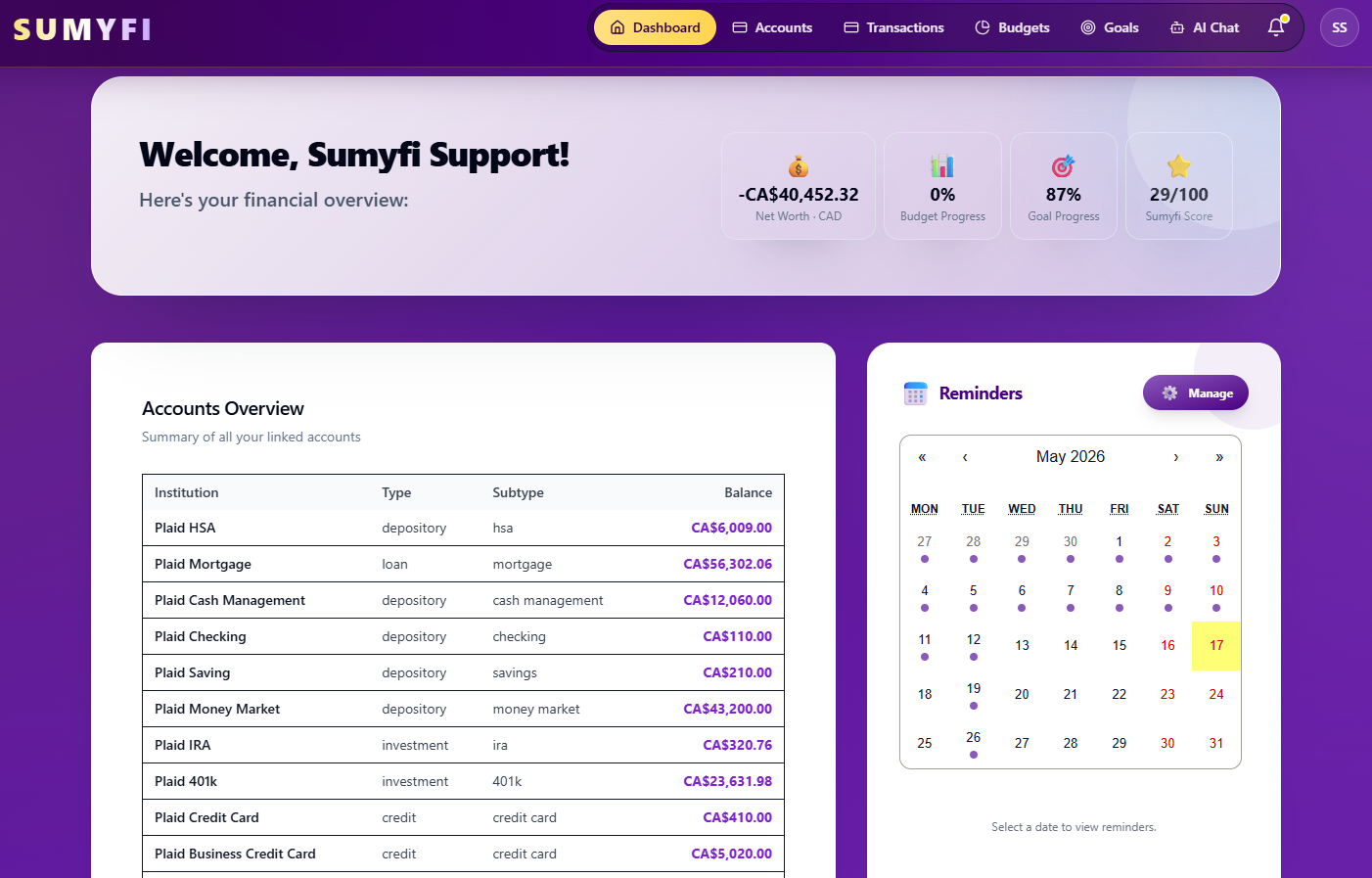
Dashboard brings balances, transactions, and linked accounts into one overview.
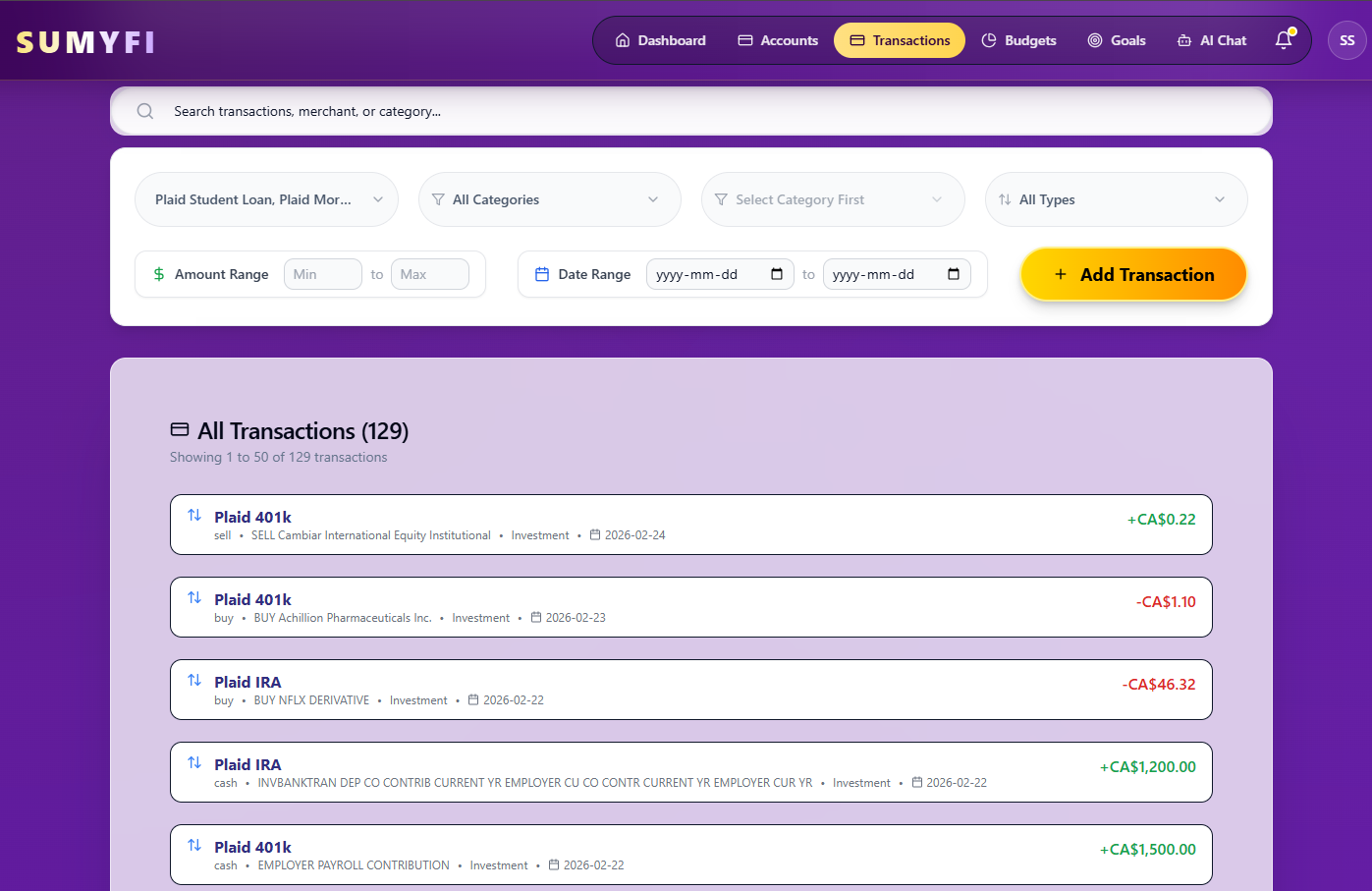
Accounts gives you a single view of connected and manually added accounts.
Comparison table
Best finance apps in Canada compared
This comparison focuses on the jobs Canadian finance-app buyers actually care about: connected accounts, recurring-bill context, budgeting, goals, and whether the dashboard stays useful after the first month.
| Decision area | Sumyfi | Monarch Money | YNAB | Copilot Money | Quicken Simplifi |
|---|---|---|---|---|---|
| Canadian fit | Strong Canada + U.S. positioning | Available, but not Canada-led | Usable, but budgeting-first | Less Canada-specific positioning | General North American positioning |
| Account visibility | Built into the broader dashboard | Strong premium overview | Present, but method-focused | Strong polished overview | Strong general money-management view |
| Budgeting | Integrated with the full dashboard | Flexible budgeting | Very strong budgeting methodology | Moderate budgeting support | Strong general budgeting support |
| Subscription visibility | Recurring charges stay close to balances and goals | Available | Secondary | Secondary | Available |
| Net worth context | Yes | Yes | Less central | Yes | Moderate |
| Best for | Canadians wanting one full dashboard for the whole money routine | Users wanting a premium flexible dashboard | Users who want a structured budgeting system first | Users prioritizing a polished overview | Users wanting a broad money-management tool |
Recommended next reads
Read 5 related articles next
Related reading for the next question.
FAQs
Frequently asked questions
What is the best finance app in Canada?
The best finance app in Canada is the one that combines connected accounts, recurring-bill visibility, budgeting, goals, and a dashboard you will keep using every week. Sumyfi is built around that broader combination rather than a single isolated feature.
How is a finance app different from a budgeting app?
A finance app usually covers a broader workflow than budgeting alone. It may include account aggregation, recurring-bill visibility, goals, net worth, and weekly financial review in addition to budgeting tools.
What should Canadians compare first when choosing a finance app?
Start with whether the app makes the whole month easier to understand. Connected accounts, recurring charges, budgeting, and goals should work together well enough to replace fragmented routines.
Who should choose a broader finance dashboard instead of a narrow money tool?
A broader finance dashboard is best for users who want one product to become their financial home base instead of using separate apps for budgets, subscriptions, and account review.
How can I test whether a finance app will still be useful after month one?
Connect your main accounts, review recurring charges and one savings goal, then see whether the app helps you understand the month faster than your old routine. If it reduces switching and uncertainty, it is likely a good fit.
Keep exploring
More Canadian finance pages to compare next
These pages help if you want to go one level deeper on the Canadian dashboard decision instead of stopping at a broad round-up.