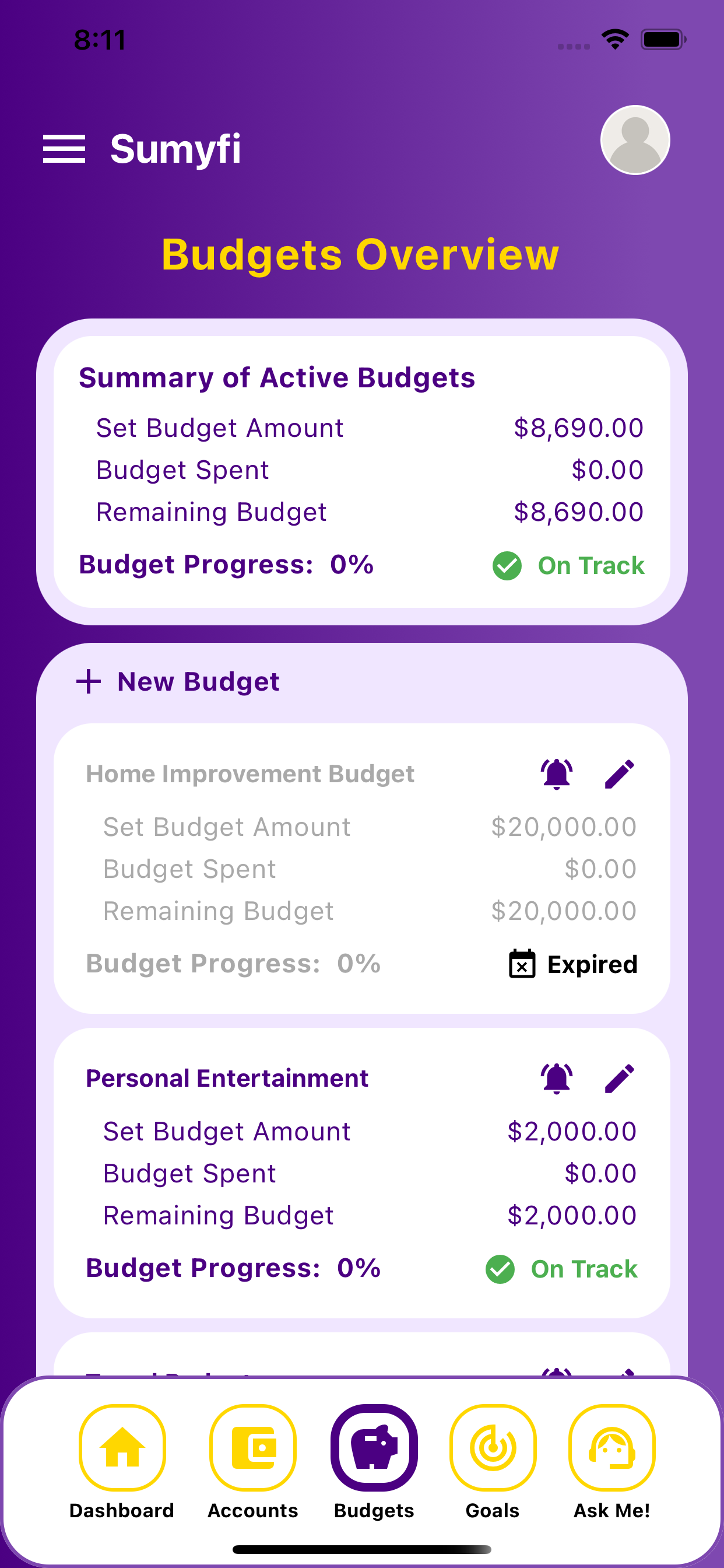
Use one clear workflow for looking for a more complete finance platform than a subscription-first money tool with practical comparisons, concrete product details, and fewer disconnected money tools.
Yet, for many, the path to financial clarity remains clouded by fragmented tools, manual data entry, and platforms that promise simplicity but deliver complexity. While Rocket Money (formerly Truebill) has carved out a niche for subscription management and bill negotiation, a growing cohort of financially astute individuals are seeking a more comprehensive, agile, and truly modern solution. They are looking for the best Rocket Money alternative - a platform that doesn't just cut costs but builds a robust financial future.
If you're ready to transcend basic budgeting and embrace a truly integrated, intelligent approach to your wealth, you've arrived at the definitive resource.
Understanding Rocket Money: Strengths, Weaknesses, and Why Seek an Alternative
Rocket Money burst onto the scene with a compelling value proposition: identify and cancel unwanted subscriptions, negotiate bills, and offer a snapshot of spending. For many, it was an introduction to proactive financial management. However, as financial needs grow more sophisticated, its limitations become increasingly apparent.
What Rocket Money Does Well
Rocket Money's primary appeal lies in its core functionalities, which have undoubtedly helped millions save money:
Where Rocket Money Falls Short for Discerning Users
While these features are valuable, they represent only a fraction of what modern financial management demands. For those seeking a holistic, deeply integrated, and future-proof solution, Rocket Money often falls short:
These limitations collectively highlight a significant gap for users who aspire to move beyond basic expense tracking and truly command their financial destiny. They are actively seeking the best Rocket Money alternative that offers depth, reliability, and a genuinely integrated experience.
Bill Negotiation: For premium users, Rocket Money offers to negotiate various bills (e.g., internet, cable) on your behalf, aiming to secure lower rates.
Basic Budgeting & Spending Tracking: It provides a categorized overview of your transactions and can help set simple spending limits.
Credit Score Monitoring
A convenient addition for those looking to keep an eye on their credit health.
Limited Customization and Granularity
Rocket Money's budgeting tools, while functional, lack the depth and flexibility required for nuanced financial planning. Users often find themselves restricted by predefined categories and an inability to tailor their financial framework precisely to their unique circumstances. This can lead to a generic understanding of finances rather than a truly personalized strategy.
Data Aggregation Inconsistencies
A common complaint among users across various platforms, but particularly noted with Rocket Money, involves unreliable data syncing. Discrepancies, delayed updates, or outright connection failures with financial institutions can erode trust and necessitate manual verification, defeating the purpose of an automated system.
Freemium Model Limitations
While a free version exists, many of Rocket Money's most impactful features, such as advanced budgeting, custom categories, bill negotiation, and real-time syncing, are locked behind a premium paywall. This often leads to a "bait-and-switch" feeling, where the initial promise of a free solution quickly transitions into a push for paid subscriptions.
Less Robust Net Worth Tracking
While it offers a basic net worth calculation, Rocket Money doesn't provide the comprehensive, dynamic, and insightful net worth tracking capabilities that are crucial for long-term wealth building. It often lacks detailed asset breakdowns, investment performance analysis, and the ability to integrate diverse asset classes beyond standard bank and investment accounts.
Absence of Spreadsheet Replacement
For users accustomed to detailed financial planning in spreadsheets, Rocket Money offers no true replacement. It doesn't provide the customizable reporting, complex formula capabilities, or the overarching control that a sophisticated spreadsheet user demands, forcing a dual-system approach that undermines efficiency.
User Interface Can Feel Cluttered
Despite attempts at simplicity, some users find the interface can become cluttered with ads (in the free version) or an overwhelming number of features, making it less intuitive for daily navigation compared to sleeker, purpose-built alternatives.
Key Considerations When Choosing the Best Rocket Money Alternative
Selecting a personal finance platform is a critical decision that impacts your financial trajectory. When evaluating the best Rocket Money alternative, consider these pivotal factors:
Data Aggregation & Connectivity (US & Canada)
The backbone of any modern personal finance tool is its ability to seamlessly and securely connect with your financial institutions.
Budgeting Flexibility & Customization
A one-size-fits-all approach to budgeting rarely works.
Net Worth Tracking & Investment Insights
Beyond just tracking expenses, a superior platform empowers you to understand and grow your wealth.
Automation & Transaction Categorization
Manual financial management is a relic of the past.
User Interface & Experience
A powerful tool is only effective if it's intuitive and enjoyable to use.
Security & Privacy
Your financial data is paramount.
Pricing Model & Value Proposition
Understand what you're paying for and if it aligns with the value received.
Even the most intuitive platforms require support sometimes.
Armed with these criteria, let's explore some of the prominent players in the personal finance space, before revealing the standout best Rocket Money alternative.
Reliability: How often do connections break? Are transactions updated in real-time or with significant delays?
Breadth: Does it connect to all your banks, credit unions, investment platforms, and loan providers? Crucially, for a truly comprehensive solution, does it support thousands of institutions across both the United States *and* Canada? This bi-national support is a significant differentiator.
Security: What encryption standards and security protocols are in place to protect your sensitive financial data?
Methodology Support
Does it support various budgeting philosophies (e.g., zero-based, 50/30/20, envelope system) or allow for custom approaches?
Category Management
Can you create, rename, and nest categories to reflect your unique spending habits?
Goal Setting
Does it facilitate setting and tracking financial goals (e.g., saving for a down payment, retirement, debt payoff)?
Comprehensive Asset Integration
Can it track all your assets (cash, investments, real estate, vehicles) and liabilities (mortgages, loans, credit cards)?
Performance Monitoring
Does it offer detailed insights into your investment portfolio performance, asset allocation, and diversification?
Historical Analysis
Can you view your net worth trend over time and understand the drivers behind its changes?
Intelligent Categorization
How accurately does it categorize transactions automatically? Can you create custom rules to refine this process?
Bill Tracking
Does it automatically identify recurring bills and help you track their due dates?
Rule-Based Actions
Can you set up rules for splitting transactions, moving money, or triggering alerts based on specific criteria?
Clarity & Simplicity
Is the dashboard clean, uncluttered, and easy to navigate?
Visualizations
Does it offer clear charts, graphs, and reports that make complex data digestible?
Responsiveness
Is the platform fast, responsive, and accessible across various devices (web, mobile)?
Data Encryption
What level of encryption is used for data in transit and at rest?
Authentication
Does it offer multi-factor authentication (MFA) and other robust login security measures?
Privacy Policy
Is its privacy policy transparent, and does it clearly outline how your data is used and protected?
Transparency
Is the pricing straightforward, or are there hidden fees or tiered features that require constant upgrades?
Value for Money
Does the cost justify the features, support, and overall financial empowerment it provides? Avoid platforms that nickel-and-dime for essential functionalities.
Accessibility
How easy is it to get help when you need it? (e.g., live chat, email, phone).
Responsiveness
How quickly do they respond to inquiries?
Knowledge Base
Is there a comprehensive help center or FAQ section for self-service?
A Deep Dive into Top Rocket Money Alternatives (Before Sumyfi)
The market for personal finance apps is crowded, each with its unique strengths and philosophies. While many offer features that overlap with Rocket Money, they often present their own set of trade-offs.
Mint (Intuit) - The Legacy Contender (and Its Sunset)
For years, Mint was the default free personal finance app, a pioneer in data aggregation and basic budgeting.
Monarch Money - The Modern Paid Option
Monarch Money emerged as a premium alternative, aiming to fill the void left by Mint's shortcomings, particularly for those willing to pay for a better experience.
YNAB (You Need A Budget) - The Zero-Based Budgeting Champion
YNAB is famous for its strict, proactive, zero-based budgeting methodology, where every dollar is assigned a job.
Empower (formerly Personal Capital) - Investment-Centric
Empower (previously Personal Capital) excels at providing a holistic view of investments and net worth, particularly for high-net-worth individuals.
Simplifi by Quicken - Quicken's Streamlined Offering
Simplifi is Intuit's attempt to offer a more modern, streamlined personal finance solution compared to its desktop-heavy Quicken software.
Each of these alternatives offers a piece of the puzzle, but none truly deliver the comprehensive, agile, and intuitive experience that modern users demand. This is precisely where Sumyfi differentiates itself, emerging as the definitive best Rocket Money alternative.
Free: Its primary draw was its no-cost model.
Wide Connectivity: Connected to a vast number of financial institutions.
Basic Budgeting: Offered rudimentary budgeting, spending categorization, and bill tracking.
- Credit Score: Included free credit score monitoring.
Cons
Ad-Supported: The free model came with a constant barrage of ads for credit cards, loans, and other financial products, often disrupting the user experience.
Data Sync Issues: Notoriously suffered from frequent data synchronization problems, leading to outdated or missing transactions.
Lack of Depth: Its budgeting and reporting tools were often considered superficial for serious financial planners.
Sunsetted by Intuit: Crucially, Intuit announced in late 2023 that Mint would be sunsetted, with users being migrated to Credit Karma by early 2024. This fundamental shift means Mint is no longer a viable long-term solution, forcing millions of users to seek new alternatives. This move underscores the impermanence of even popular free platforms and highlights the need for a stable, future-proof solution.
Clean UI/UX: Offers a very modern, aesthetically pleasing, and intuitive user interface.
Strong Aggregation: Generally reliable data aggregation and connection stability.
Collaborative Features: Allows for shared financial management, ideal for couples.
Goal Tracking: Robust goal-setting and tracking capabilities.
No Ads: A premium, ad-free experience.
Pricey: One of the more expensive options on the market, which can be a barrier for some.
Still Maturing: While robust, it's a newer platform and some advanced features or integrations are still under development compared to more established players.
Less Focus on Automation: While it offers good categorization, its automation features for proactive financial management (beyond simple rules) are not as advanced as a truly agile platform.
Limited International Support: Primarily focused on US financial institutions, lacking comprehensive Canadian connectivity.
It fundamentally changes how users think about their money.
Strong Community & Support: Excellent educational resources, active community forums, and responsive customer support.
Debt Paydown Tools: Integrated features to make it easier to aggressively tackle debt.
Steep Learning Curve: The zero-based budgeting philosophy requires significant commitment and a learning period, which can be overwhelming for newcomers.
Expensive: One of the priciest options, especially considering its niche focus.
Not an All-in-One Hub: YNAB is a budgeting tool first and foremost. It lacks comprehensive investment tracking, detailed net worth analysis beyond basic account balances, and robust reporting for overall wealth management. It doesn't replace the need for other tools to manage investments or track non-liquid assets.
Limited Reporting: While great for budgeting, its reporting capabilities for broader financial insights are less developed.
Excellent Investment Tracking: Offers deep analytics for investment portfolios, including asset allocation, fee analysis, and projected retirement readiness.
Free Net Worth Tracker: Its comprehensive net worth dashboard is free and robust, integrating various asset types.
Financial Advisors: Offers optional, paid wealth management services with human advisors, appealing to those seeking professional guidance.
Less Focused on Daily Budgeting: While it has spending tracking, its budgeting features are rudimentary compared to dedicated budgeting apps. It's more about wealth *tracking* than day-to-day *management*.
Sales Pressure: Users often report being contacted by financial advisors to sign up for their wealth management services, which can be off-putting if you're only interested in the free tools.
Interface Can Feel Dated: While functional, the interface isn't as slick or modern as newer competitors.
Good Reporting: Offers solid reporting features for understanding spending and saving trends.
Robust Budgeting: Provides flexible budgeting options and cash flow forecasting.
Subscription Tracking: Includes features to track recurring bills and subscriptions.
Can Feel a Bit Dated: While better than traditional Quicken, the interface and user experience can still feel less agile and intuitive than cutting-edge platforms.
Pricing Model: It's a subscription service, which can add up, and its value proposition needs to be carefully weighed against competitors.
Less Innovation: While competent, it often lags behind newer entrants in terms of innovative features and truly seamless automation.
Sumyfi: The Unrivaled Best Rocket Money Alternative
The pursuit of financial mastery requires a platform that is not merely a tool but a true partner. It is not just an upgrade from Rocket Money; it represents a paradigm shift in personal finance management.
Why Sumyfi Stands Apart in the Personal Finance Landscape
Sumyfi isn't just another app; it's a meticulously crafted ecosystem designed to empower you with complete financial command.
Sumyfi vs. Rocket Money: A Feature-by-Feature Showdown
To truly appreciate why Sumyfi is the best Rocket Money alternative, let's conduct a direct comparison of key features:
Agile Engineering & Lightning-Fast Setup: In a world that moves at the speed of light, your financial platform shouldn't hold you back. Sumyfi is built with cutting-edge, agile engineering principles, ensuring a lightning-fast setup process that gets you connected and organized in minutes, not hours. Our robust infrastructure guarantees rapid data processing and a consistently smooth experience, free from frustrating delays or crashes.
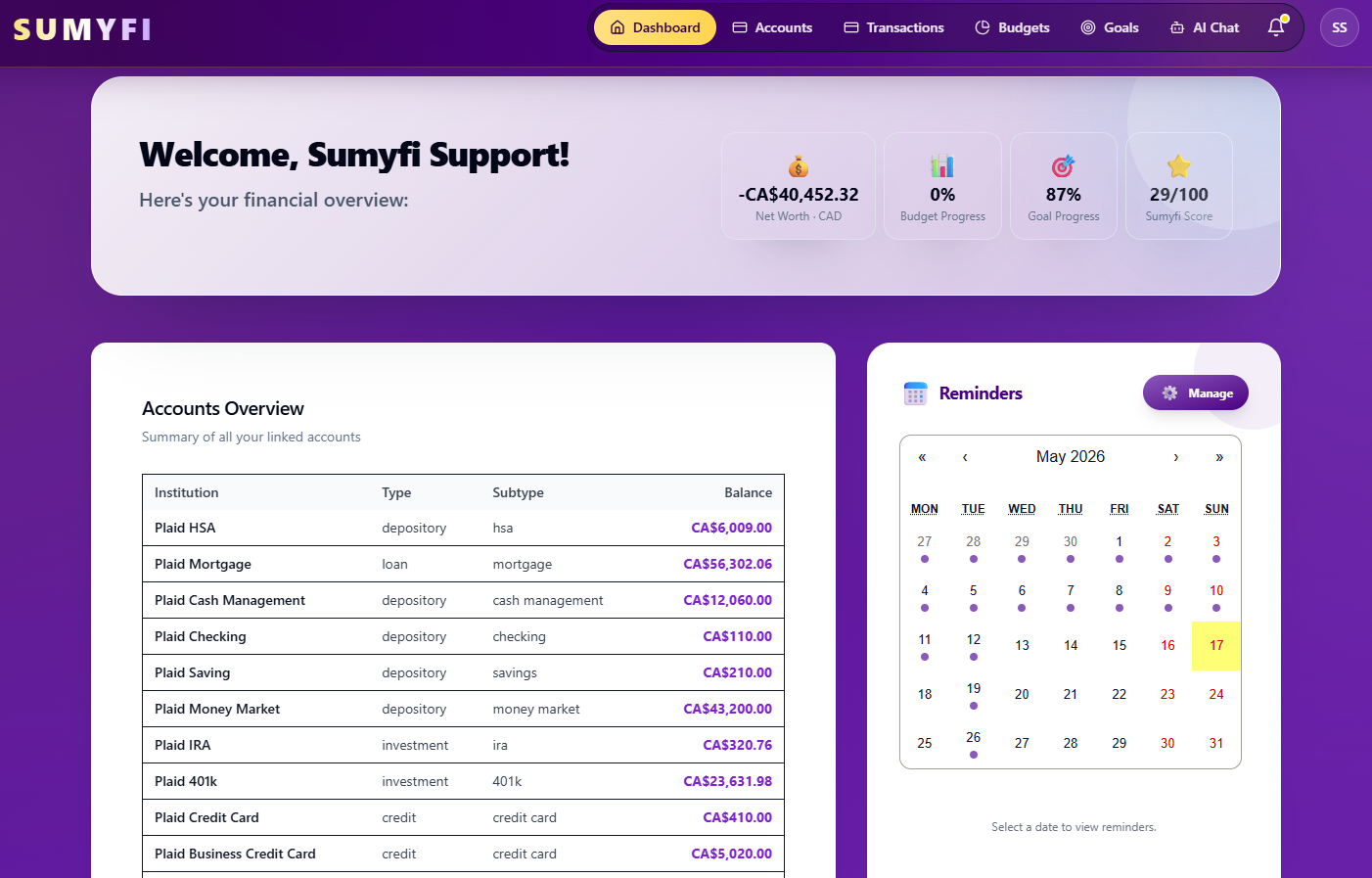
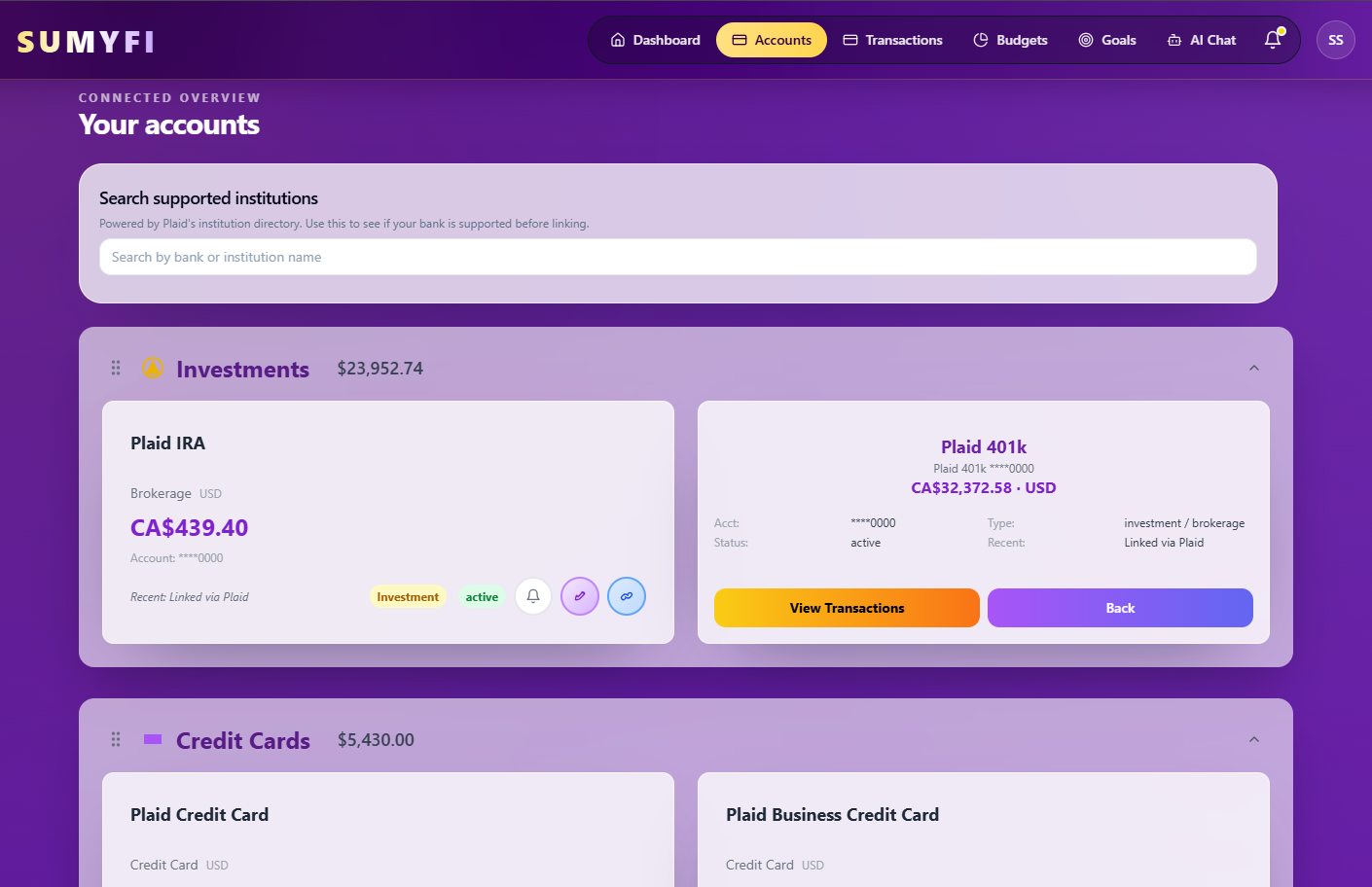
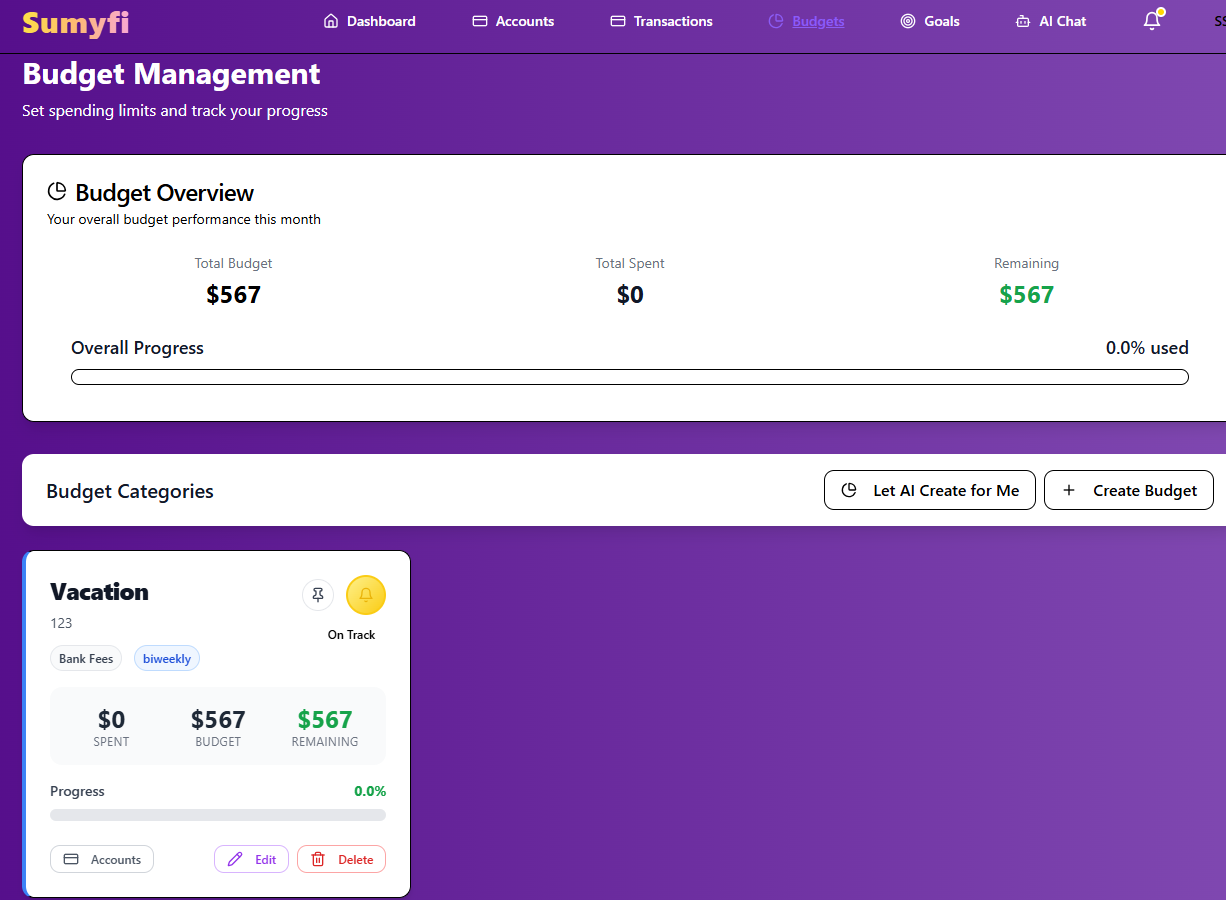
True All-in-One Hub: This is where Sumyfi truly outshines its competitors. We are not just a budgeting app or a net worth tracker; we are a comprehensive personal finance hub. Sumyfi consolidates every facet of your financial life into a single, cohesive platform: budgeting, spending analysis, income tracking, debt management, investment monitoring, and holistic net worth calculation. No more juggling multiple apps or spreadsheets - Sumyfi is the single source of truth for your money.
Seamless Net Worth Tracking
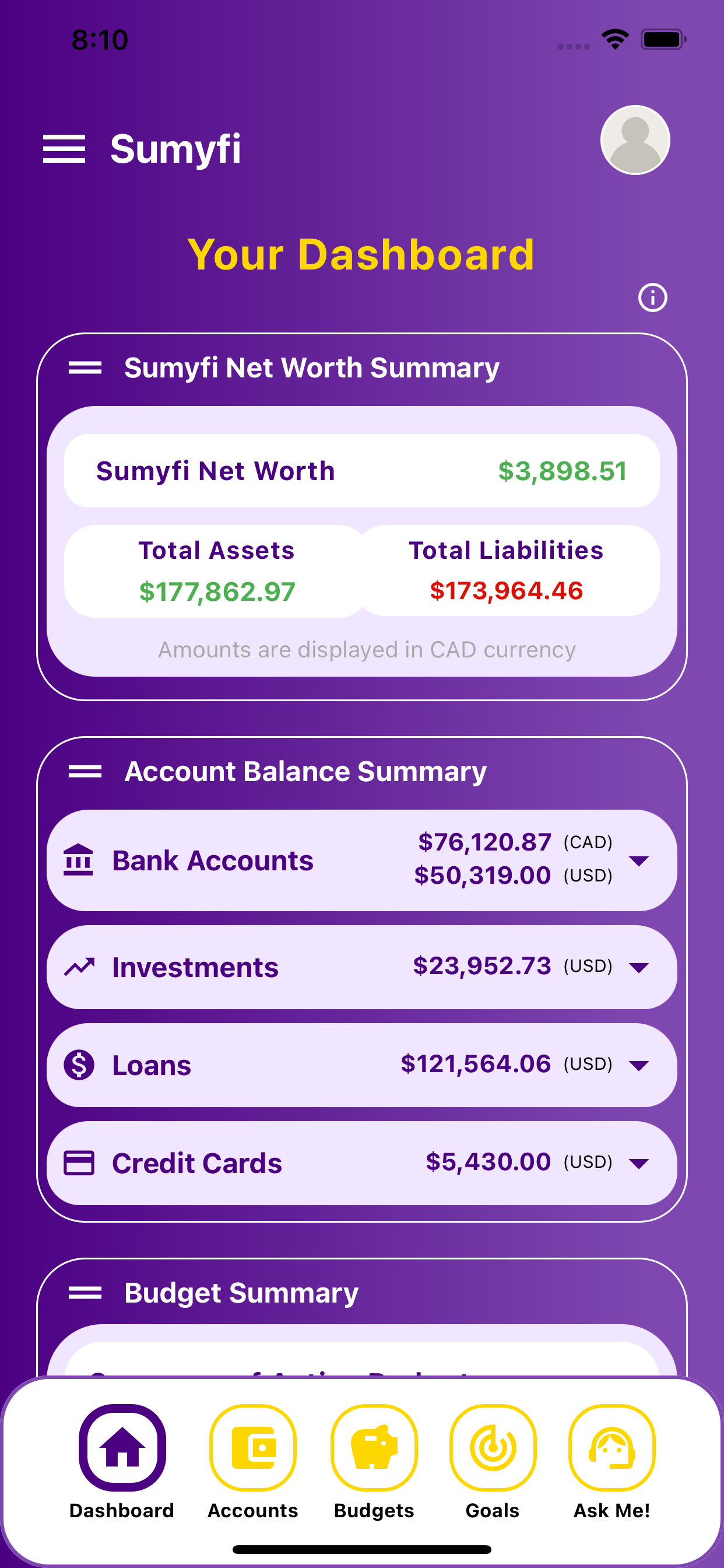
Beyond basic balances, Sumyfi offers deep, dynamic, and seamless net worth tracking. We integrate all your assets (bank accounts, investments, real estate, vehicles, crypto) and liabilities (mortgages, loans, credit cards) to provide a real-time, accurate picture of your wealth. Our advanced analytics allow you to visualize trends, understand asset allocation, and gain profound insights into your financial growth, empowering strategic decision-making.
Intelligent Transaction Automation
The era of manual data entry and tedious categorization is over. Sumyfi's sophisticated AI-driven engine provides intelligent transaction automation. This not only saves you countless hours but also minimizes errors, ensuring your financial data is always accurate and up-to-date, ready for insightful analysis.
The End of Manual Spreadsheets
For too long, the most meticulous financial managers have been tethered to complex, error-prone spreadsheets. Sumyfi is engineered to be the ultimate spreadsheet replacement. Our robust reporting, customizable views, and powerful analytics offer all the control and granularity of a spreadsheet, but with the added benefits of automation, real-time data, and a user-friendly interface. Reclaim your time and eliminate the drudgery of manual updates.
Empowering Financial Clarity
Sumyfi is built on the philosophy that true financial empowerment comes from clarity. Our platform provides the tools, insights, and intuitive experience necessary to gain a complete, transparent understanding of your money. From granular spending details to overarching wealth trends, Sumyfi illuminates your financial landscape, enabling you to make informed decisions and confidently navigate your financial future.