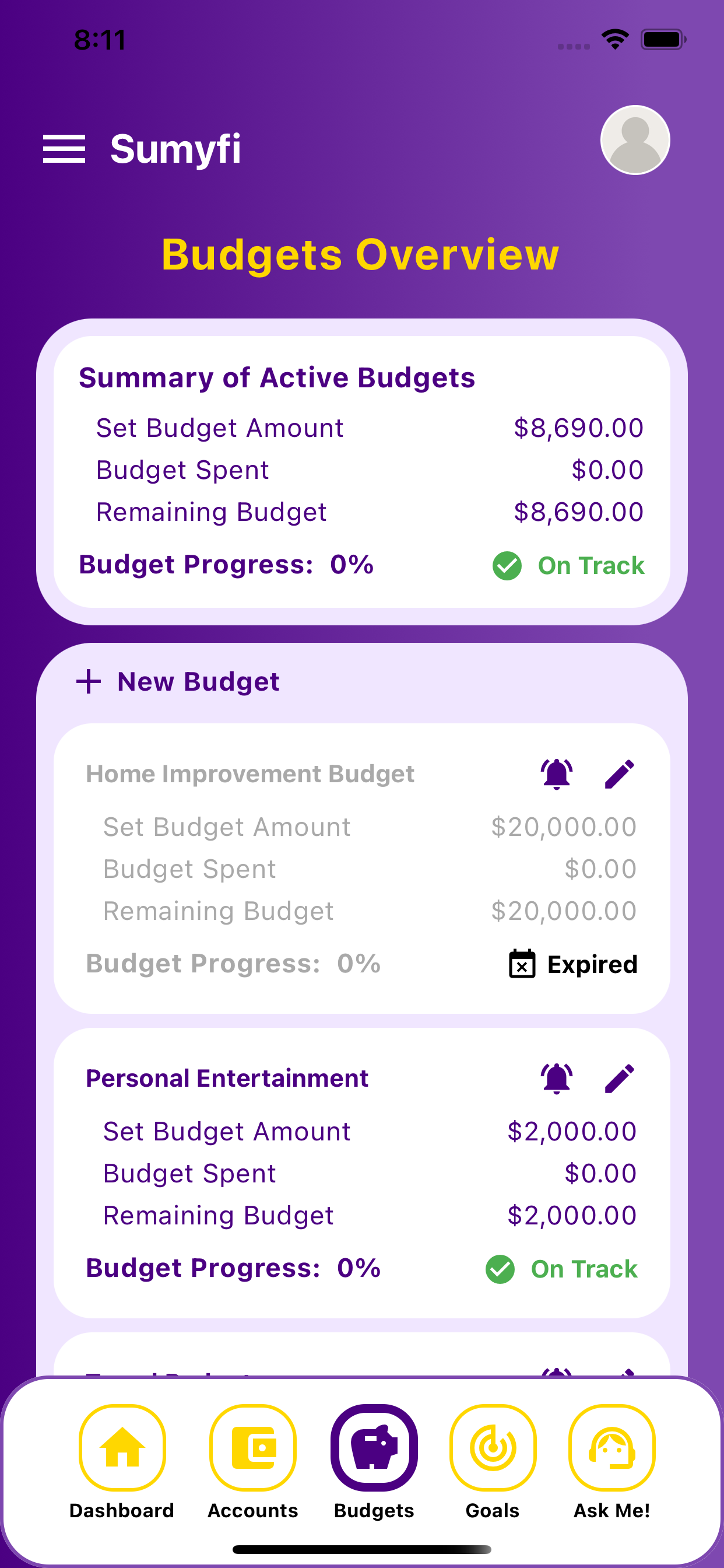
A Rocket Money alternative in the USA should do more than detect subscriptions. It should give American users a broader financial dashboard that keeps recurring charges, spending, accounts, and planning connected in one workflow.
For years, many Americans have relied on various tools to track spending, manage subscriptions, and gain a clearer picture of their financial health. Rocket Money (formerly Truebill) has certainly been a prominent player in this space, offering features like subscription cancellation and bill negotiation. However, as financial technology evolves at an unprecedented pace, a growing number of users are actively seeking a more robust, intuitive, and comprehensive Rocket Money alternative USA market offers.
Enter Sumyfi: an agile, intelligently engineered personal finance hub designed from the ground up to transcend the limitations of legacy platforms. Sumyfi isn't just an alternative; it's a significant leap forward in personal finance management, meticulously crafted for the modern individual who demands clarity, control, and convenience.
Why Seek a Rocket Money Alternative in the USA? Understanding the Evolving Needs of Modern Finance
Rocket Money has carved out a niche for itself, primarily known for its ability to identify and cancel unwanted subscriptions, negotiate bills, and provide a basic overview of spending. For many, these features were a valuable starting point. However, the financial lives of individuals are becoming increasingly complex, demanding a more sophisticated and integrated approach to money management.
While Rocket Money offers certain conveniences, users often encounter limitations that prompt them to explore other options:
Limited Comprehensive Net Worth Tracking: While it provides some asset and liability tracking, a truly holistic, dynamic view of one's entire financial portfolio often feels less integrated compared to dedicated net worth trackers.
Basic Budgeting Capabilities: For those who require granular control, custom budgeting categories, or sophisticated forecasting, Rocket Money's budgeting tools can feel somewhat rudimentary.
Transaction Categorization Nuances
Automated categorization can sometimes be hit-or-miss, requiring frequent manual adjustments, which detracts from the promise of automation.
User Interface and Experience (UI/UX)
While functional, some users may find the interface less intuitive or aesthetically pleasing than newer, more modern platforms. The visual clarity and ease of navigation are paramount for consistent engagement.
Scope of Automation
Beyond subscription management, the depth of automation for other financial tasks, such as bill reminders, savings goals, or investment tracking, might not meet the expectations of users seeking an all-in-one hub.
Customer Support Responsiveness
As with any large platform, customer support experiences can vary, and users seeking rapid, personalized assistance might look elsewhere.
Data Integration Reliability
Connecting to various financial institutions is a cornerstone of these apps, but inconsistent connections or delays can be a significant pain point.
The Pillars of a Superior Personal Finance Hub: What a True Rocket Money Alternative Must Offer
Before diving into specific alternatives, it's essential to define the core functionalities that elevate a personal finance app from merely useful to indispensable. A truly exceptional Rocket Money alternative USA should embody the following characteristics:
Unrivaled Financial Institution Connectivity & Data Aggregation
The backbone of any modern personal finance app is its ability to seamlessly and securely connect to a vast array of financial institutions. This includes banks, credit unions, investment platforms, loan providers, and even alternative financial services.
Intelligent Transaction Automation & Categorization
Manual data entry and categorization are relics of the past. A superior platform leverages advanced algorithms and machine learning to automatically categorize transactions, learn from user behavior, and even identify recurring patterns.
Comprehensive Net Worth Tracking with Dynamic Updates
Understanding your net worth is the ultimate financial scorecard. A robust alternative provides a real-time, consolidated view of all assets (bank accounts, investments, real estate, vehicles) and liabilities (loans, mortgages, credit card debt).
Powerful Budgeting & Spending Analysis Tools
Effective budgeting isn't about restriction; it's about intentional spending and saving. A top-tier app offers flexible budgeting options, detailed spending reports, and actionable insights to help you achieve your financial goals.
Advanced Subscription & Bill Management
While Rocket Money excels here, a true alternative should offer equally potent or even superior capabilities, not just for identifying subscriptions but for proactively managing all recurring bills.
Robust Security & Privacy Protocols
Given the sensitive nature of financial data, ironclad security and transparent privacy policies are non-negotiable.
Intuitive User Experience (UI/UX) & Modern Design
An app can have all the features in the world, but if it's not easy and enjoyable to use, it won't be adopted consistently. A clean, modern interface reduces friction and encourages regular engagement.
Exceptional Customer Support
When questions arise, responsive and knowledgeable customer support is crucial.
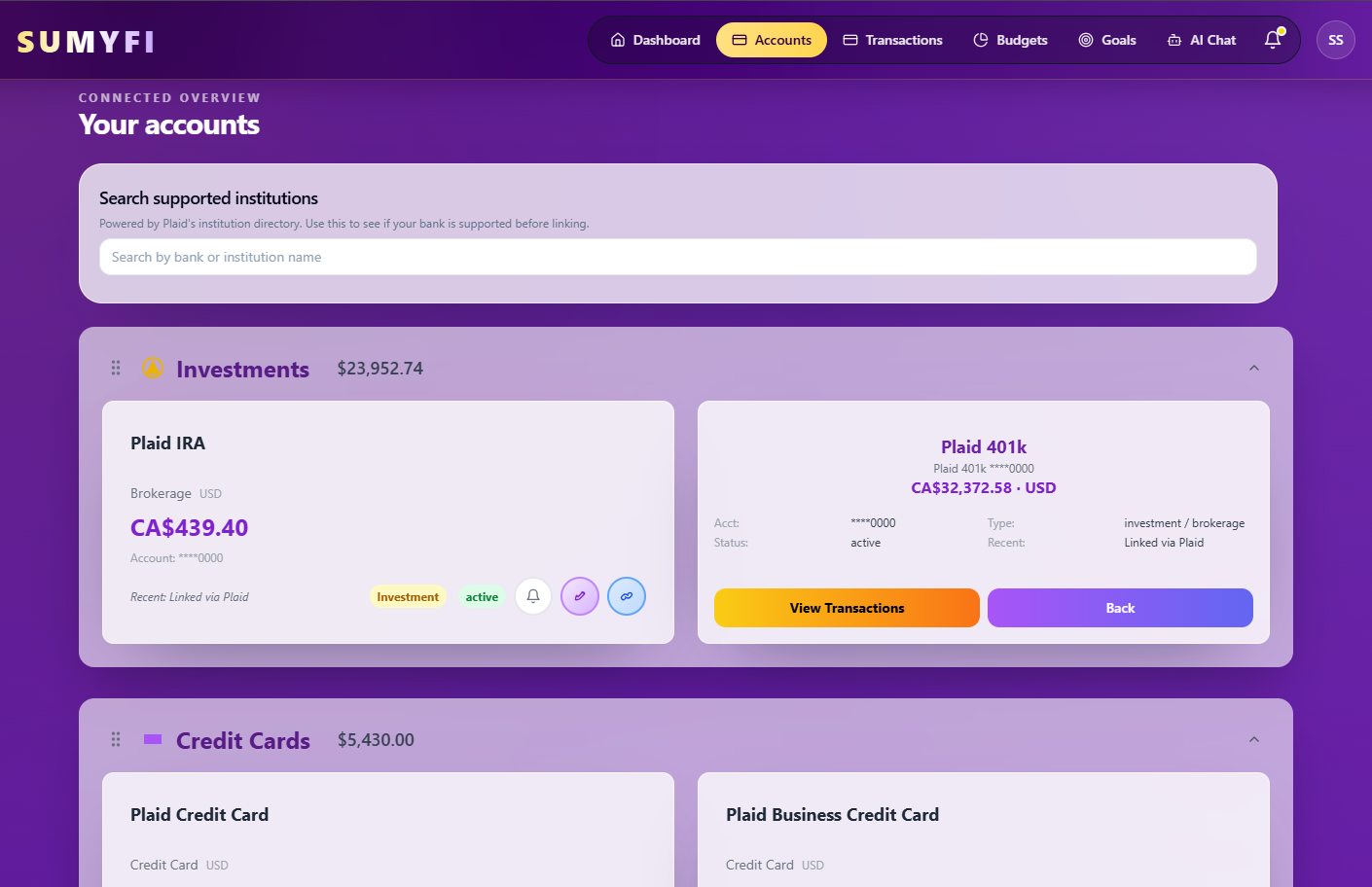
Sumyfi's Advantage: Sumyfi boasts agile engineering that facilitates lightning-fast, secure connections with *thousands* of financial institutions across both the US and Canada.
Sumyfi's Advantage: Sumyfi's intelligent automation goes beyond basic categorization. It learns your spending habits, suggests rules for recurring transactions, and minimizes manual intervention, freeing you to focus on insights rather than data entry.
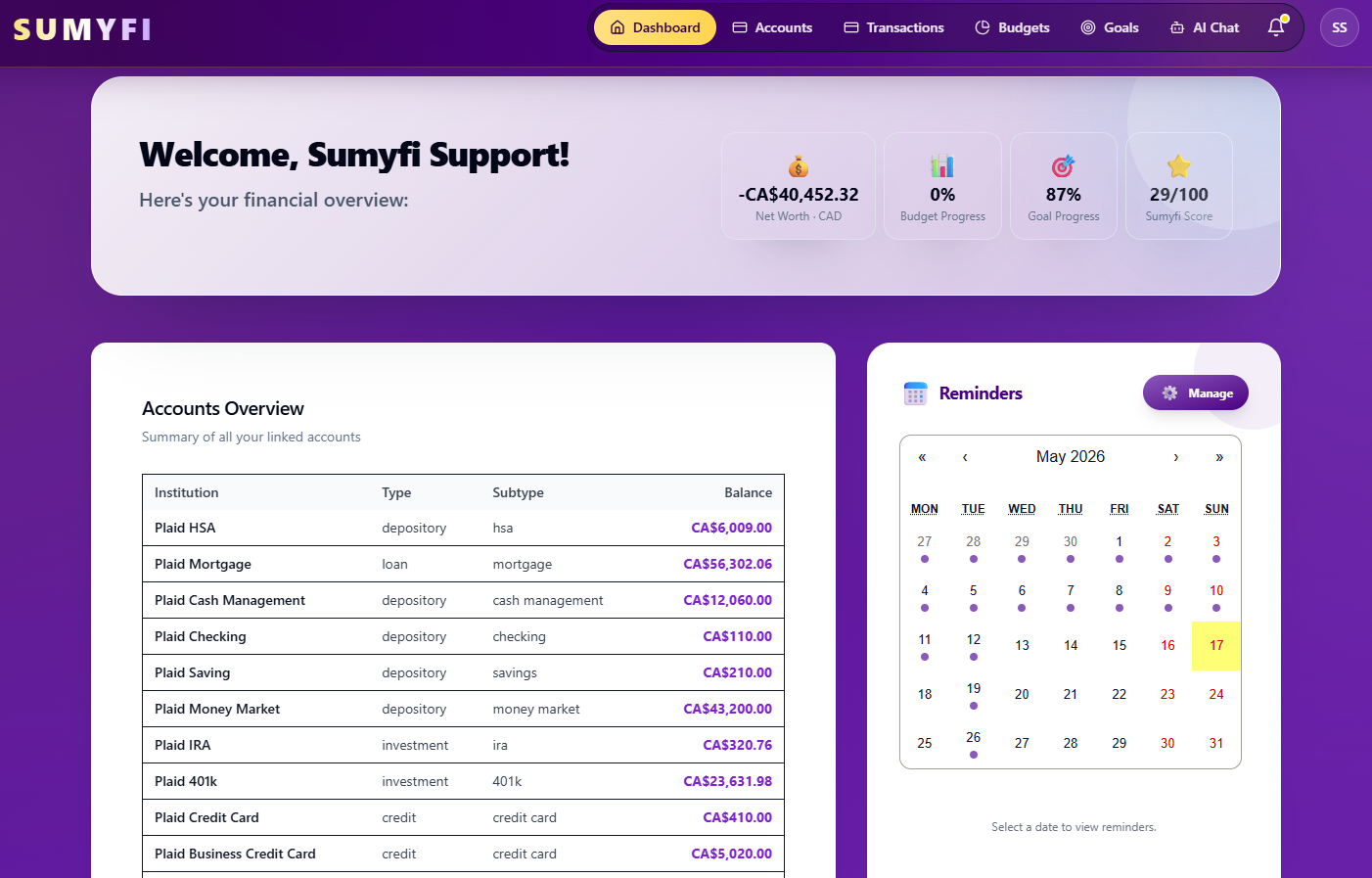
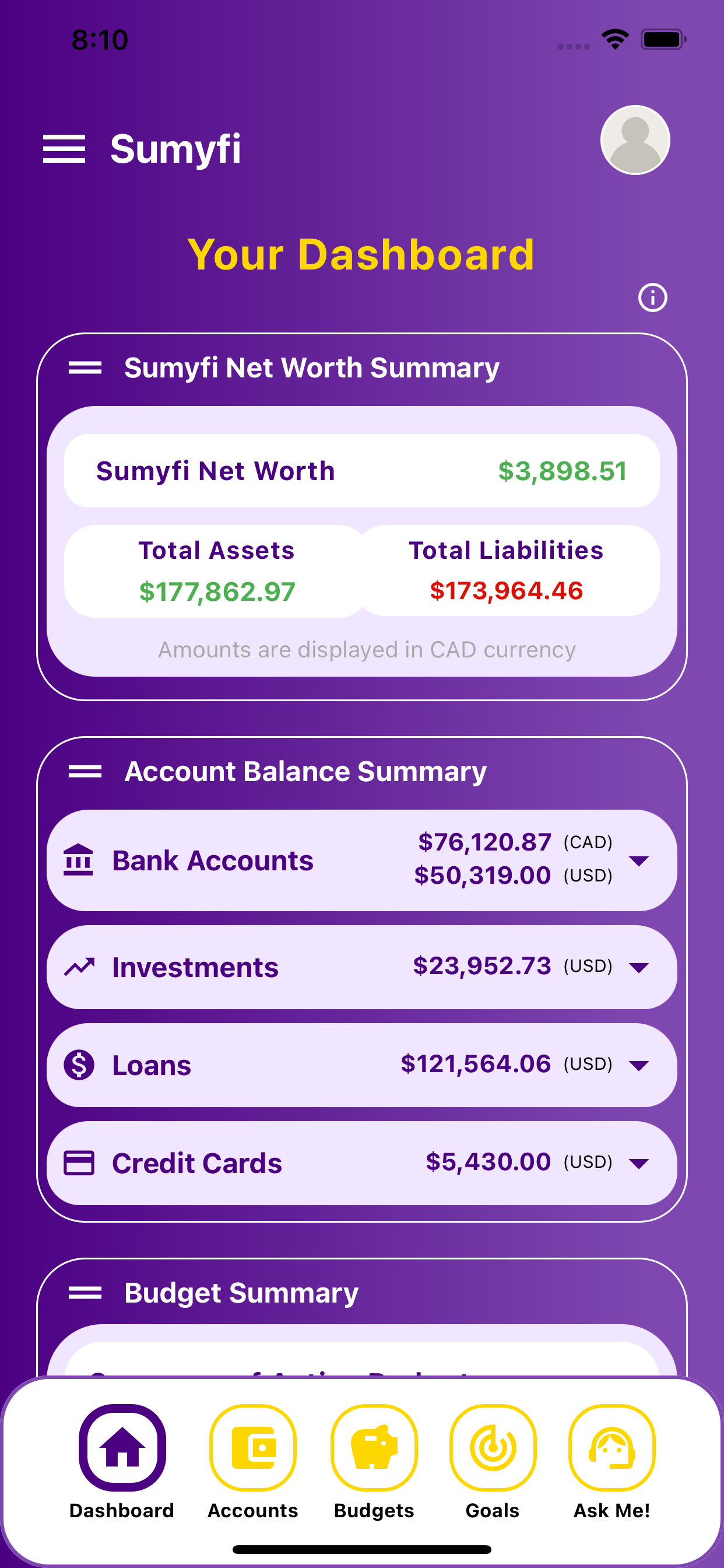
Sumyfi's Advantage: Sumyfi's slick dashboard provides an instant, crystal-clear snapshot of your net worth, updated dynamically as your accounts fluctuate. It offers granular detail while maintaining an empowering, high-level overview, making it the ultimate tool for tracking your financial growth.
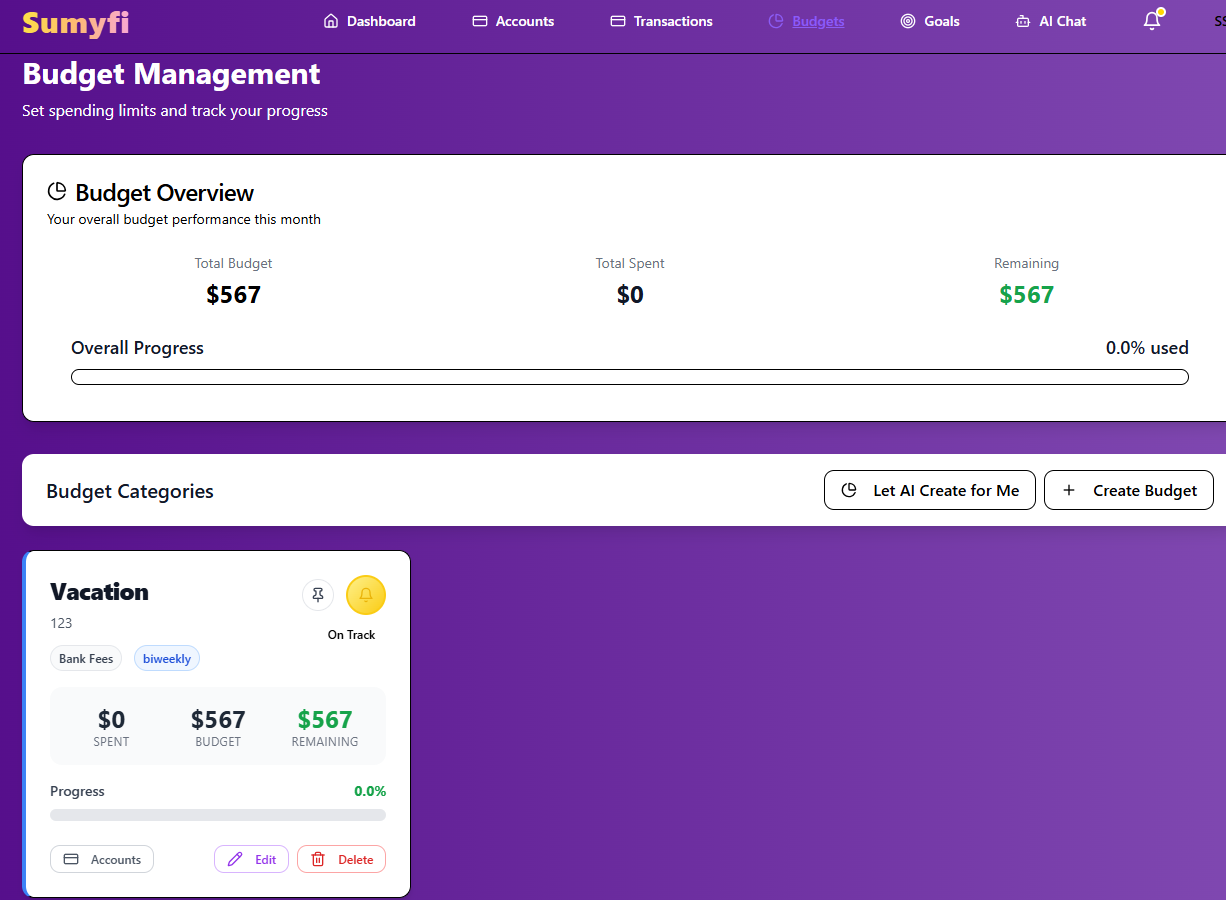
Sumyfi's Advantage: With Sumyfi, you gain access to highly customizable budgeting tools that adapt to your unique financial philosophy. Its robust analytics translate raw data into easily digestible visual reports, helping you identify trends, optimize spending, and accelerate your financial progress.
Sumyfi's Advantage: Sumyfi automatically detects recurring subscriptions and bills, providing a centralized hub for managing them. Its intuitive interface makes it easy to track due dates, monitor price changes, and identify opportunities for optimization, ensuring you're always in control of your recurring expenses.
Sumyfi's Advantage: Sumyfi employs industry-leading encryption and security protocols to protect your data, ensuring your financial information remains private and secure. Your trust is paramount, and Sumyfi is built on a foundation of uncompromised security.
Sumyfi's Advantage: Sumyfi's dashboard is a masterclass in modern design - slick, intuitive, and incredibly responsive. It transforms complex financial data into easily understandable visuals, making financial management feel effortless and even enjoyable.
Sumyfi's Advantage: Sumyfi is committed to providing prompt, helpful support, ensuring that your experience is smooth and any issues are resolved quickly.
Sumyfi: The Pinnacle Rocket Money Alternative for USA & Canada Users
While many apps attempt to offer a piece of the personal finance puzzle, Sumyfi has engineered a truly holistic solution that seamlessly integrates all critical aspects of financial management into one powerful, user-friendly platform. It's not just a Rocket Money alternative USA users will appreciate; it's a superior financial operating system designed for clarity, control, and growth.
Sumyfi's Core Differentiators: Beyond the Basics
- Agile Engineering & Modern Architecture: Unlike many legacy platforms that are built on older frameworks, Sumyfi leverages cutting-edge technology. This agile engineering translates into a lightning-fast setup process, incredibly responsive performance, and the ability to rapidly deploy new features and improvements based on user feedback and evolving financial trends. You're not just getting an app; you're getting a continuously evolving financial partner.
- Unrivaled Connectivity Across North America: Sumyfi's commitment to comprehensive connectivity extends beyond just the US. This broad reach ensures that virtually every account you hold can be linked, providing a truly unified financial picture.
- Intelligent Automation That Works For You: Sumyfi's automation goes far beyond simple rules. Its AI-powered engine learns your unique spending patterns, intelligently categorizes transactions with high accuracy, and even suggests ways to optimize your financial habits. This proactive automation minimizes manual effort, allowing you to spend less time managing data and more time making informed decisions.
- A Truly Holistic Net Worth Dashboard: Sumyfi's net worth tracking isn't just a number; it's a dynamic, interactive visualization of your financial trajectory. From real estate and investments to cash and liabilities, every component is cleanly tracked and updated in real-time, empowering you with an immediate understanding of your financial progress. This comprehensive view is essential for strategic long-term planning.
- Slick, Empowering, and Crystal-Clear Dashboard Interface: The Sumyfi user experience is designed for clarity and engagement. Its dashboard is not just aesthetically pleasing but incredibly functional, presenting complex financial data in an intuitive, easy-to-understand format. Navigating your finances becomes a streamlined, almost enjoyable process, free from clutter and confusion.
- Empowering Financial Insights, Not Just Data: Sumyfi transforms raw data into actionable insights. Its robust reporting tools help you understand where your money is going, identify saving opportunities, and forecast future financial scenarios. This empowers you to make smarter decisions, whether it's optimizing your budget, accelerating debt repayment, or growing your investments.
Comparative Analysis: How Sumyfi Stacks Up Against Other Rocket Money Alternatives in the USA
While Sumyfi clearly sets a new standard, it's beneficial to understand how it compares to other prominent players in the personal finance space that users might consider as a Rocket Money alternative USA.
Mint (and the Transition to Credit Karma)
Overview: For many years, Mint was the undisputed king of free personal finance apps. It offered budgeting, net worth tracking, and bill reminders. However, with its recent sunsetting and migration to Credit Karma, its future as a standalone personal finance hub is effectively over. Users are now actively looking for a new home for their financial data.
Overview: Monarch Money is a newer, subscription-based entrant that has gained traction for its modern interface and solid feature set, including net worth tracking, budgeting, and goal setting. It's often cited as a strong contender for those leaving Mint.
YNAB (You Need A Budget)
Overview: YNAB is famous for its strict "zero-based budgeting" philosophy, where every dollar is assigned a job. It's highly effective for those committed to this method but can have a steeper learning curve and a narrower focus than all-encompassing financial hubs.
- Personal Capital (Now Empower Personal Dashboard)
Overview: Personal Capital (now part of Empower) excels in investment tracking and retirement planning, offering free tools and advisory services. It provides a strong net worth overview, especially for those with significant investment portfolios.
Where Sumyfi Provides a More Unified Personal Finance Experience:
- Quicken Simplifi
Overview: Simplifi is Quicken's attempt at a modern, cloud-based personal finance app, aiming to be simpler than its desktop counterpart. It offers budgeting, spending tracking, and basic net worth.
Where Sumyfi Delivers Superior Modernity & Performance:
Modernity & Innovation: Sumyfi is built from the ground up with modern architecture, offering superior performance, a more intuitive UI, and continuous innovation compared to Mint's aging platform.
Comprehensive Features: While Mint offered many features, Sumyfi provides a more deeply integrated and automated experience across net worth, budgeting, and transaction management, without the fragmentation often felt in Mint.
Reliable Connectivity: Many Mint users experienced inconsistent bank connections. Sumyfi's agile engineering prioritizes robust and reliable connections across thousands of institutions.
- Clear Future: Unlike Mint's uncertain future post-Credit Karma integration, Sumyfi is a dedicated personal finance hub with a clear roadmap for continuous improvement, ensuring stability and growth for its users.
Where Sumyfi Differentiates
- Depth of Automation: Sumyfi's intelligent automation, particularly in transaction categorization and learning user habits, often feels more advanced and less manual than some competitors.
- Agile Development Advantage: Sumyfi's underlying engineering allows for potentially faster iteration and feature deployment, adapting quickly to user needs and market changes.
- Emphasis on "Hub" Experience: Sumyfi is engineered as a true all-in-one hub, where every feature feels organically integrated into a single, cohesive financial operating system, rather than a collection of tools.
Where Sumyfi Offers a Broader Approach
Flexible Budgeting Philosophies
Sumyfi supports various budgeting approaches, allowing users to choose what works best for them, rather than enforcing a specific methodology. This makes it accessible to a wider audience.
Holistic Net Worth Tracking
While YNAB focuses heavily on budgeting, Sumyfi offers a more comprehensive and automated approach to net worth tracking, investment monitoring, and overall financial health beyond just spending.
Simpler Onboarding
YNAB's specific methodology requires a commitment to learning its system. Sumyfi's intuitive design and intelligent automation make onboarding quicker and less intimidating for new users.
Beyond Budgeting
Sumyfi integrates budgeting seamlessly with investment tracking, debt management, and future planning, offering a more complete financial ecosystem than a purely budget-centric app.
Comprehensive Spending & Budgeting
While Empower offers a good net worth view, its budgeting and day-to-day spending analysis tools are often less granular and intuitive than those found in dedicated personal finance hubs like Sumyfi.
Focus on Everyday Finances
Sumyfi is designed to be the central hub for *all* your financial activities - from daily spending and bill management to long-term net worth growth - offering a more balanced approach than a platform primarily geared towards investments.
User Interface for All Users
Sumyfi's slick dashboard is designed for ease of use across all financial literacy levels, making it approachable for managing both simple and complex financial situations without feeling overly geared towards high-net-worth investors.
Agile Engineering & Speed
Sumyfi's modern architecture generally translates to a faster, more responsive experience and quicker feature rollouts compared to Simplifi, which can sometimes feel like an evolution of older systems rather than a completely fresh start.
Intuitive UI/UX
Sumyfi's dashboard is often lauded for its superior aesthetic and intuitive flow, making financial management a more pleasant and less cumbersome experience.
Deeper Automation & Insights
Sumyfi's intelligent automation and advanced analytical capabilities often provide more profound insights and require less manual tweaking than Simplifi.
Transitioning to Sumyfi: A Seamless Upgrade from Your Current Rocket Money Experience
Making the switch to a new financial management platform can seem daunting, but Sumyfi has engineered the transition to be as smooth and effortless as possible. We understand that your financial data is precious, and your time is valuable.
Lightning-Fast Setup
Sumyfi's agile engineering ensures that getting started is a breeze. Our intuitive onboarding process guides you through connecting your financial institutions quickly and securely. You can begin seeing your consolidated financial picture within minutes, not hours.
Secure Data Migration (Where Applicable)
While direct data migration from all platforms is complex due to varying data structures and security protocols, Sumyfi focuses on quickly re-establishing all your connections from scratch. This ensures a clean, accurate, and secure foundation for your financial data within our system.
Immediate Financial Clarity
Once your accounts are linked, Sumyfi's slick dashboard springs to life, presenting you with an immediate, crystal-clear overview of your net worth, spending patterns, and budget status. No more digging through multiple apps or spreadsheets - everything you need is at your fingertips, beautifully organized and easy to understand.
Should you have any questions during your transition or at any point in your Sumyfi journey, our dedicated support team is ready to assist. We're committed to ensuring your experience is nothing short of exceptional.
[Start your Sumyfi journey today and experience the difference!](https://www.sumyfi.com/get-started)
The financial world is continuously evolving, driven by technological advancements and shifting consumer expectations. Sumyfi is built with this future in mind.
Sumyfi is more than just a Rocket Money alternative USA users can rely on; it's a partner in building a more secure, prosperous, and financially intelligent future.
We envision a world where
Financial decisions are data-driven and intuitive: Sumyfi will continue to leverage AI and machine learning to provide even more personalized insights, predictive analytics, and automated recommendations, guiding you towards optimal financial health.
Managing money is effortless and empowering: Through continuous refinement of our UI/UX and automation capabilities, Sumyfi aims to make financial management so seamless that it becomes an invisible, yet powerful, force supporting your goals.
Financial wellness is accessible to all: By providing a comprehensive, easy-to-use, and secure platform, Sumyfi strives to democratize sophisticated financial tools, helping everyone achieve their financial aspirations.
Cross-border finances are truly unified: With our strong foundation in both US and Canadian connectivity, Sumyfi is uniquely positioned to serve individuals navigating international financial landscapes, offering a truly global perspective.
Conclusion: Sumyfi - The Ultimate Evolution in Personal Finance Management
For those diligently searching for a superior Rocket Money alternative USA, the choice is clear. While Rocket Money served its purpose for many, the demands of modern financial life necessitate a more advanced, comprehensive, and intuitively designed solution.
From its unrivaled connectivity across thousands of financial institutions in the US and Canada, to its intelligent transaction automation, truly holistic net worth tracking, and robust budgeting tools, Sumyfi is engineered to be your ultimate personal finance hub. It replaces the fragmented experience of manual spreadsheets and disparate apps with a unified, intelligent ecosystem designed for clarity, control, and sustained financial growth.
Take control of your financial destiny today.