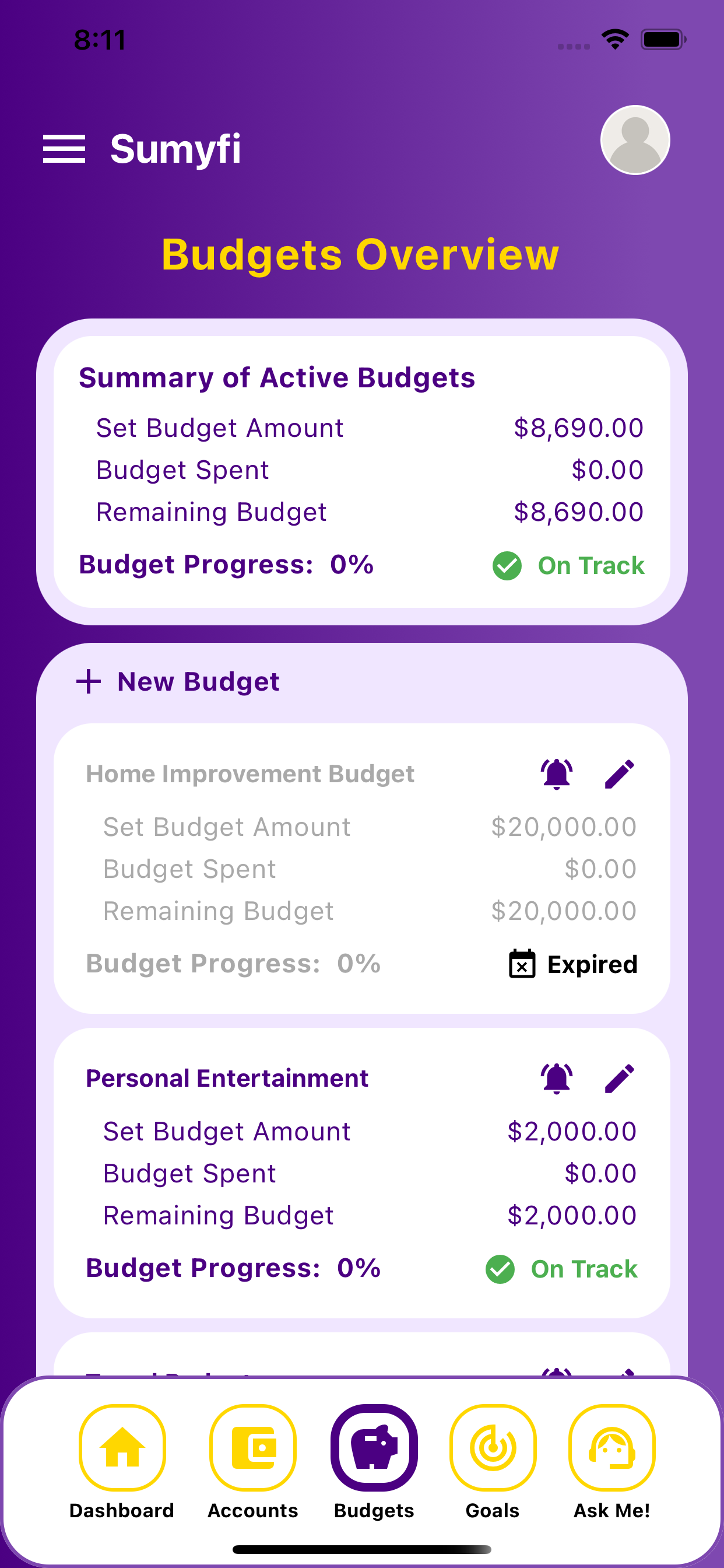
Sumyfi vs Credit Karma is usually a decision between a broader money-management operating system and a credit-first platform that solves a narrower part of the financial picture.
In the rapidly evolving landscape of personal finance technology, individuals are constantly seeking tools that empower them to manage their money more effectively. Two prominent names often surface in discussions: Credit Karma and Sumyfi. While both aim to assist users with their financial well-being, their core philosophies, functionalities, and ultimate value propositions diverge significantly. This exhaustive analysis delves deep into the Sumyfi vs. Credit Karma debate, dissecting their offerings to help you discern which platform truly aligns with your financial aspirations.
At its heart, this comparison isn't merely about features; it's about vision. Credit Karma has carved out a niche as a free, credit-focused service, offering insights into credit scores and reports alongside product recommendations. Sumyfi, on the other hand, emerges as a comprehensive, all-in-one personal finance hub engineered for the modern age - a complete ecosystem designed to replace cumbersome manual spreadsheets, automate financial tracking, and provide a crystal-clear, holistic view of your entire financial universe.
Understanding the Core Philosophies: Credit Karma vs. Sumyfi's Holistic Vision
Before diving into a feature-by-feature comparison, it's crucial to grasp the fundamental philosophies underpinning each platform. This foundational understanding illuminates why their offerings, despite sometimes appearing to overlap, serve distinctly different purposes.
Credit Karma: The Credit-Centric Navigator
Credit Karma burst onto the scene offering a revolutionary concept: free access to credit scores and reports. Prior to its advent, obtaining this information often involved fees or cumbersome processes. Its primary mission revolves around:
Credit Karma's strength lies in democratizing credit information. It serves as an excellent starting point for individuals keen on understanding and improving their credit health. However, its scope is inherently narrow, focusing almost exclusively on credit as the primary metric of financial well-being.
Sumyfi: The All-in-One Financial Ecosystem Architect
Sumyfi represents a paradigm shift in personal finance management. Its philosophy is built on the premise that true financial empowerment stems from a comprehensive, integrated view of *all* your finances, not just a segment. Sumyfi is engineered to be the ultimate modern solution for personal finance, embodying:
The core difference in the Credit Karma vs. Sumyfi debate immediately becomes apparent: Credit Karma is a specialist in credit; Sumyfi is a generalist *master* of all personal finance, providing a complete financial picture that credit monitoring alone can never achieve.
Credit Monitoring: Providing regular updates on credit scores (VantageScore 3.0, not FICO) and credit reports from TransUnion and Equifax.
Identity Protection: Offering alerts for suspicious activity on credit reports.
Product Recommendations
Generating revenue by recommending financial products (credit cards, loans, insurance) based on a user's credit profile.
Debt Management Insights
Offering tools and advice for managing and improving credit.
Holistic Financial Management
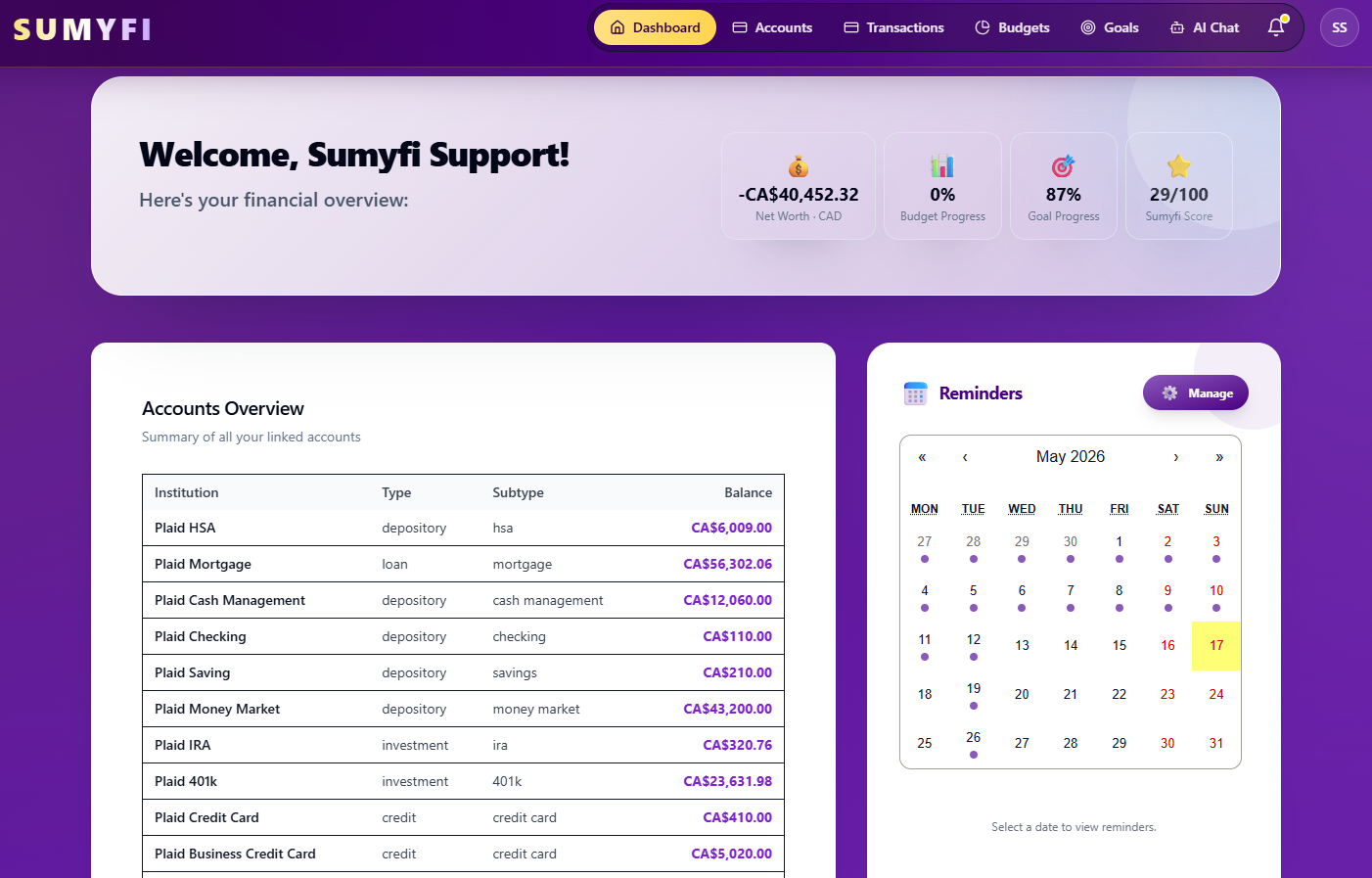
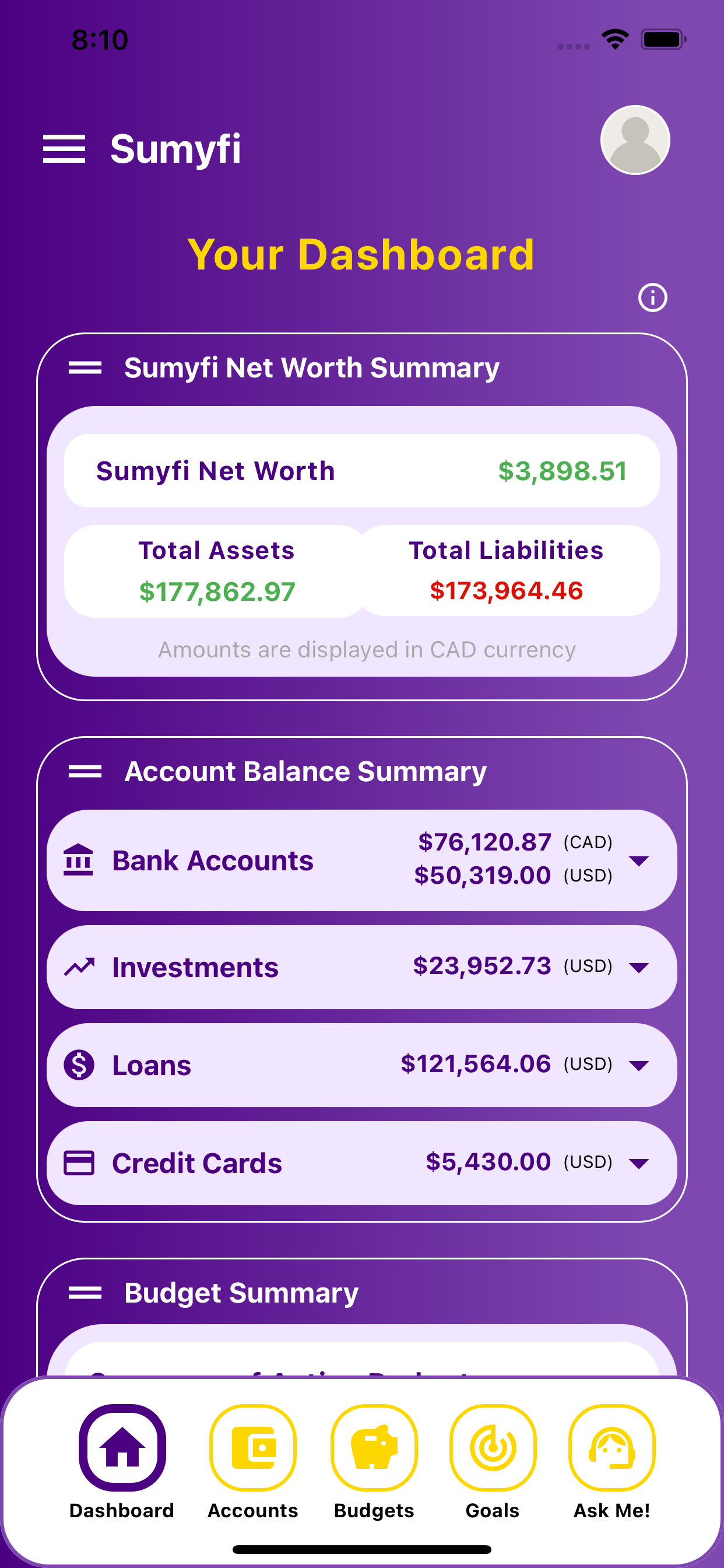
A single, unified platform for tracking every financial aspect - income, expenses, assets, liabilities, investments, and net worth.
Automation and Efficiency
Leveraging agile engineering to automate tedious tasks like transaction categorization and data aggregation, liberating users from manual data entry.
Empowering Insights
Transforming raw financial data into actionable intelligence, allowing users to understand their spending habits, identify savings opportunities, and project their financial future.
Seamless Connectivity
Providing robust, secure connections to thousands of financial institutions across both the United States and Canada, ensuring a truly borderless financial overview.
User-Centric Design
Prioritizing a slick, intuitive, and empowering user experience that makes complex financial management accessible and even enjoyable.
Feature-by-Feature Deep Dive: Sumyfi vs. Credit Karma
To truly appreciate the distinction, let's dissect the core functionalities offered by both platforms.
Credit Monitoring & Scores: A Focused vs. Integrated Approach
Credit Karma's Dedication to Credit
Credit Karma's flagship offering is undoubtedly its credit monitoring service. Users receive:
For someone whose primary concern is monitoring their credit health and understanding the factors influencing their score, Credit Karma offers a robust, free solution.
Sumyfi's Integrated Financial Health Perspective
While Sumyfi doesn't position itself as a dedicated credit monitoring service in the same vein as Credit Karma, its approach to financial health inherently *encompasses* credit awareness within a broader context. Sumyfi provides:
The key differentiator here is that Credit Karma *tells* you your credit score, while Sumyfi provides the tools and insights to *build* the underlying financial health that naturally leads to a better credit score. For comprehensive financial management, Sumyfi offers the actionable framework.
Net Worth Tracking: The Sumyfi Advantage
This is where the Sumyfi vs. Credit Karma comparison truly highlights a chasm in functionality.
Credit Karma's Limited Scope
Credit Karma, by design, does not offer comprehensive net worth tracking. While it shows your debts (credit cards, loans), it generally doesn't integrate assets like checking accounts, savings, investments, or real estate values to provide a consolidated net worth calculation. Its focus on liabilities related to credit means you get only a partial picture of your financial standing.
Sumyfi's Pinnacle Net Worth Tracking
Sumyfi excels in providing a dynamic, real-time, and incredibly granular net worth tracker. This is a cornerstone of its platform:
For anyone serious about building wealth and understanding their true financial position, Sumyfi's net worth tracking is not just a feature; it's a fundamental pillar that Credit Karma simply doesn't offer.
Budgeting & Spending Analysis: Precision vs. Absence
Effective budgeting and insightful spending analysis are non-negotiable for financial control.
Credit Karma's Minimal Budgeting Tools
Credit Karma's budgeting capabilities are rudimentary, if present at all, as it's not a core focus. Users might see summaries of their debt payments, but there's no robust system for categorizing all income and expenses, setting spending limits, or analyzing cash flow in detail.
Sumyfi's Intelligent Budgeting & Deep Insights
Sumyfi is built from the ground up to be an intelligent budgeting powerhouse, replacing the need for complex manual spreadsheets with an agile, automated solution:
Transaction Automation & Categorization: The Engine of Efficiency
The sheer volume of daily transactions can overwhelm even the most diligent financial manager. Automation is key.
Credit Karma's Limited Transaction Focus
Since Credit Karma primarily focuses on credit reports and scores, its platform isn't designed for the granular tracking and categorization of everyday transactions across all your accounts. You won't find features for automatically sorting your coffee purchases from your utility bills.
Sumyfi's Seamless Automation
Sumyfi's engineering brilliance shines in its transaction automation:
This level of automation is transformative, turning what used to be a tedious chore into a seamless, insightful process. It's a fundamental component of the modern financial hub that defines Sumyfi's superiority in the Sumyfi vs. Credit Karma comparison.
Financial Institution Connectivity: Breadth and Reliability
Both platforms require access to your financial data, but their scope differs.
Credit Karma's Data Aggregation
Credit Karma connects to a wide array of financial institutions to pull credit report data and, to a lesser extent, some account balances for its debt insights. Its connectivity is generally robust for its specific purpose.
Sumyfi's Comprehensive & Cross-Border Connectivity
Sumyfi boasts an exceptionally wide and reliable network for connecting to financial institutions:
For anyone with accounts across various institutions or even across the US and Canadian border, Sumyfi's robust and broad connectivity is a critical enabler of true financial consolidation.
Free Credit Scores: Typically VantageScore 3.0 from TransUnion and Equifax, updated weekly. It's important to note these are educational scores and may differ from FICO scores used by lenders.
Credit Report Access: Detailed summaries of credit reports from two major bureaus, including payment history, credit utilization, public records, and hard inquiries.
Credit Alerts: Notifications for significant changes to your credit report, such as new accounts opened or inquiries.
Credit Score Simulator
Tools to model the impact of various financial actions (e.g., paying off debt, taking out a new loan) on your credit score.
Debt Analysis
Insights into your debt-to-income ratio and strategies for debt reduction.
Holistic Financial Overview
By tracking all your assets and liabilities, including loans, mortgages, and credit card balances, Sumyfi gives you a real-time understanding of your overall financial standing. This context is vital for *improving* credit health, as responsible debt management and timely payments are automatically reflected in your net worth and budget.
Debt Management Tools
Sumyfi's budgeting and transaction tracking features allow users to systematically pay down debt, monitor interest accrual, and allocate funds towards credit improvement strategies.
Financial Goal Setting
Users can set goals for debt reduction, which Sumyfi helps them track and achieve through intelligent insights and automated reminders.
Comprehensive Asset Integration
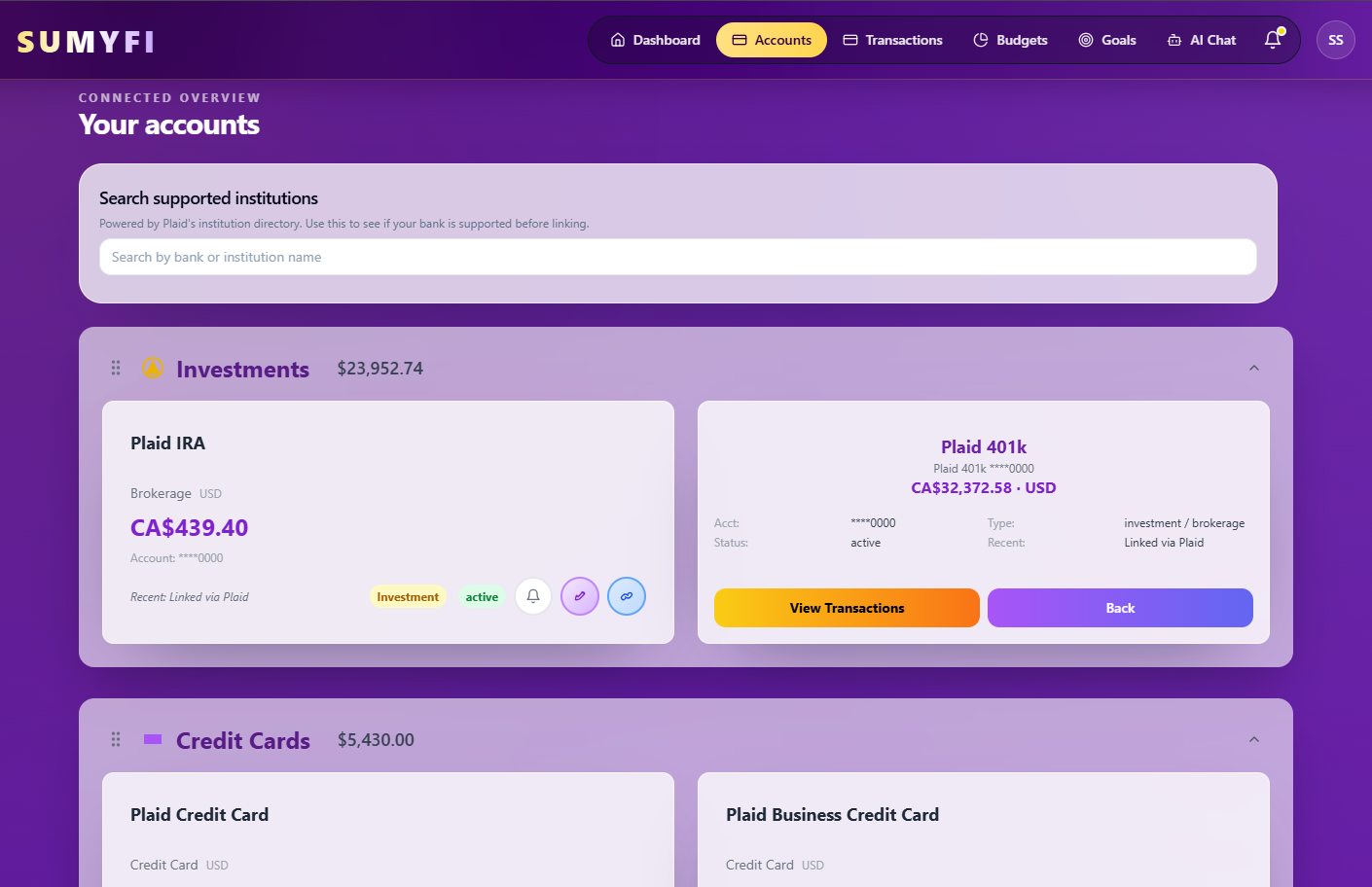
Connect all your bank accounts (checking, savings), investment portfolios (brokerage, retirement), real estate (via manual input or third-party integrations), and even valuable personal assets.
Automated Liability Tracking
All your loans (mortgages, auto, student), credit card balances, and other liabilities are automatically pulled and updated.
Real-Time Updates
With its lightning-fast data aggregation, Sumyfi updates your net worth continuously, giving you an accurate snapshot of your financial progress at any given moment.
Historical Trends & Projections
Visualize your net worth growth over time with intuitive charts and graphs, helping you understand the impact of your financial decisions and project future wealth.
Goal-Oriented Tracking
Set net worth goals and track your progress directly within the platform, making abstract financial targets tangible and motivating.
Automated Transaction Categorization
Leveraging advanced AI and user-defined rules, Sumyfi automatically categorizes transactions from all connected accounts, saving countless hours of manual effort.
Customizable Budget Categories
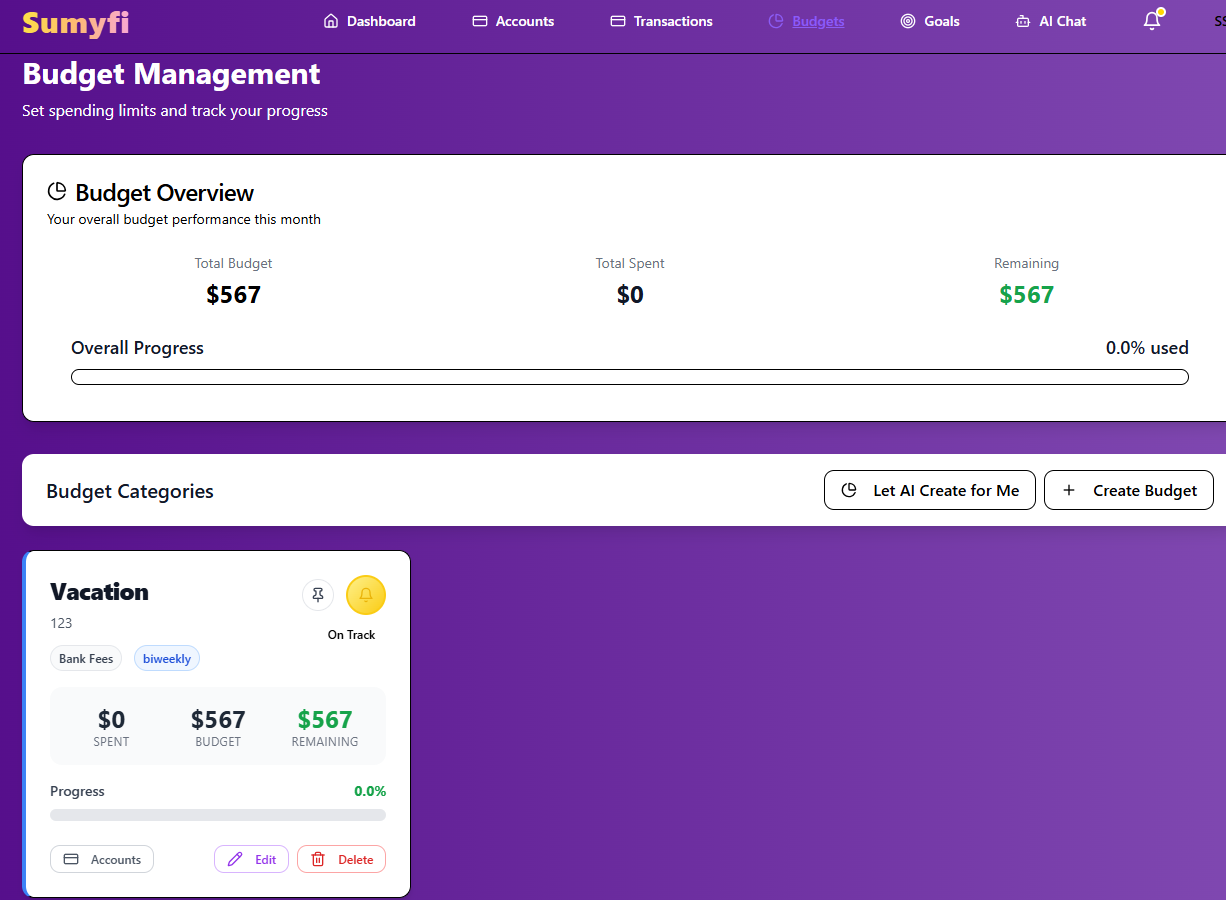
Create detailed budgets tailored to your unique spending habits and financial goals, from groceries and entertainment to savings and debt payments.
Real-Time Spending Tracking
See exactly where your money is going with up-to-the-minute updates, allowing for immediate adjustments to stay within budget.
Cash Flow Analysis
Gain deep insights into your income and expenditure patterns, identifying areas of overspending or opportunities for savings.
Budget Forecasting
Project future spending and savings based on historical data and upcoming bills, helping you plan proactively.
Goal-Based Budgeting
Link your budget directly to your financial goals, ensuring every dollar spent or saved contributes to your larger objectives.
AI-Powered Categorization
Sumyfi uses sophisticated algorithms to automatically identify and categorize transactions from all connected banks, credit cards, and investment accounts.
Custom Rules & Learning
Users can easily create custom categorization rules (e.g., "all transactions from Starbucks are 'Coffee'"), and the system learns from your edits, becoming more accurate over time.
Unified Transaction Feed
View all your financial activity from every institution in one clean, chronological feed, eliminating the need to log into multiple bank portals.
Splitting & Tagging
Easily split transactions into multiple categories or add custom tags for deeper analysis (e.g., "vacation," "work expense").
Automated Reconciliation
The system helps you reconcile transactions against your budget and financial goals with minimal effort.
Thousands of Institutions
Sumyfi integrates seamlessly with thousands of banks, credit unions, investment firms, and other financial providers across both the United States and Canada. This comprehensive reach ensures that virtually all your accounts can be linked.
Secure Data Aggregation
Utilizing industry-leading security protocols and encryption, Sumyfi ensures your financial data is always protected during the aggregation process.
Real-Time Data Sync
The platform is engineered for lightning-fast and frequent data synchronization, ensuring your financial dashboard is always up-to-date.
Unified View
This extensive connectivity is the backbone of Sumyfi's ability to provide a single, unified view of your entire financial life, eliminating the need to juggle multiple logins and interfaces.
Investment Tracking: Integrating Wealth Growth
A complete financial picture includes investment performance.
Credit Karma's Non-Focus on Investments
Credit Karma does not offer investment tracking. Its platform is not designed to connect to brokerage accounts, monitor portfolio performance, or integrate investment assets into a broader financial overview.
Sumyfi's Integrated Investment Overview
Sumyfi seamlessly integrates your investment accounts into your overall financial dashboard:
By including investments, Sumyfi provides a truly holistic view of your wealth, from daily spending to long-term growth, a critical component missing when solely relying on Credit Karma.
Portfolio Aggregation
Connect all your investment accounts (brokerage, retirement, robo-advisors) to get a consolidated view of your holdings.
Real-Time Valuation
See the current market value of your investments and how they contribute to your net worth.
Performance Tracking
While not a dedicated investment analysis platform, Sumyfi allows you to monitor the high-level performance of your aggregated portfolio.
Asset Allocation Insights
Understand how your investments are distributed across different asset classes, contributing to a more informed financial strategy.
Data Security & Privacy: A Critical Comparison
In an age of increasing cyber threats, data security and privacy are paramount.
Credit Karma's Security & Revenue Model Implications
Credit Karma employs standard security measures like encryption and multi-factor authentication. However, its business model (free service funded by commissions on product recommendations) raises questions about data usage:
Sumyfi's User-First Security & Privacy Commitment
Sumyfi places an uncompromising emphasis on data security and user privacy, aligning with its user-empowerment philosophy:
For those who prioritize privacy and wish to avoid their financial data being leveraged for commercial purposes, Sumyfi offers a significantly more reassuring proposition in the Sumyfi vs. Credit Karma debate.
Data Monetization
Credit Karma analyzes your financial profile (including credit report data) to present targeted product recommendations. While this is disclosed, some users may be uncomfortable with their data being used for commercial targeting.
Third-Party Sharing
While aggregate data is often anonymized, the principle of a platform profiting directly from analyzing your personal financial data to sell you products is a consideration for privacy-conscious users.
Bank-Grade Security
Sumyfi utilizes advanced encryption (e.g., 256-bit AES) for data in transit and at rest, mirroring the security standards of major financial institutions.
No Data Selling
Sumyfi's business model is built on providing a premium, value-driven service to its users, not on selling or monetizing their personal financial data through third-party recommendations or advertisements.
Regular Audits & Compliance
Adherence to stringent security protocols and regular audits ensure continuous protection of user information.
Privacy-First Design
Every aspect of Sumyfi is designed with user privacy in mind, ensuring your financial data remains confidential and solely for your benefit.
The Business Model & Its Impact on the User: Sumyfi vs. Credit Karma
The way a company makes money profoundly influences its product design and user experience.
Credit Karma's "Free" Model: The Cost of Recommendations
Credit Karma is free for users because it generates revenue through targeted advertisements and commissions from financial product providers. When you click on a recommended credit card, loan, or insurance product and sign up, Credit Karma earns a fee.
Sumyfi's Value-Driven Model: Investing in Your Financial Future
Sumyfi's business model is built on providing a premium, comprehensive personal finance solution. While specific pricing details would be on the Sumyfi website, the implication is a subscription-based model or a clear value exchange for its advanced features.
When weighing Sumyfi vs. Credit Karma, understanding their business models is crucial. Credit Karma offers a free service with inherent trade-offs in privacy and feature breadth. Sumyfi offers a premium experience, free from commercial distractions, dedicated entirely to your holistic financial success.
Pros: Access to credit scores and reports without direct cost.
Potential Bias: Recommendations, while often tailored, are ultimately driven by who pays the highest commission, not necessarily what's *always* the absolute best product for the user.
- Ad-Heavy Interface: The user experience can be interrupted by promotional content.
- Limited Scope: The "free" model necessitates a focus on revenue-generating features, limiting the development of comprehensive financial management tools.
Pros
Unbiased Experience: No ads, no product push. The platform's sole focus is on empowering *you* with unbiased financial insights and tools.
Comprehensive Features: The revenue allows for continuous investment in advanced features like automated budgeting, net worth tracking, and cross-border connectivity.
User-Centric Development: Product development is driven by user needs and feedback, not by advertiser demands.
Privacy Assurance: A subscription model removes the incentive to monetize user data through third-party sales, reinforcing the privacy commitment.
Who is Each Platform For? Identifying Your Ideal Financial Partner
The choice between Sumyfi and Credit Karma ultimately depends on your specific financial needs and goals.
Credit Karma: For the Credit-Curious and Basic Monitoring
However, for anything beyond basic credit monitoring, Credit Karma falls short.
Sumyfi: For the Ambitious, Holistic Financial Manager
Sumyfi is designed for those who aspire to more than just credit awareness; it's for those who demand a comprehensive, intelligent, and empowering platform to truly master their financial future.
Beyond the Basics: Sumyfi's Unique Advantages in the Modern Financial Landscape
Sumyfi isn't just an alternative; it's a superior evolution in personal finance technology. Its agile engineering and user-centric design yield several unique advantages:
The Verdict: Why Sumyfi Stands as the Superior Choice for Holistic Financial Management
In the extensive Sumyfi vs. Credit Karma analysis, the conclusion is clear: while Credit Karma serves a valuable, albeit narrow, purpose as a free credit monitoring service, it is fundamentally ill-equipped to meet the demands of comprehensive personal financial management. Its focus on credit scores and product recommendations, coupled with an ad-supported model, limits its utility for individuals seeking true financial mastery.
Sumyfi, on the other hand, is engineered from the ground up to be the ultimate modern solution. It's a powerful, all-in-one personal finance hub that seamlessly tracks your net worth, automates transactions, provides deep budgeting insights, manages bills and subscriptions, and connects with thousands of financial institutions across the US and Canada. Its slick dashboard, lightning-fast setup, and unwavering commitment to user privacy position it as the pinnacle choice for anyone serious about taking complete control of their financial destiny.
If you're content with a sliver of your financial picture, Credit Karma might suffice. But if you're ready to embrace a future where your finances are clear, controlled, and actively working towards your goals, Sumyfi is the clear, empowering, and superior choice.
Ready to Transform Your Finances? Experience the Sumyfi Difference Today.
Stop managing your money in fragments. Stop wrestling with outdated spreadsheets. It's time to harness the power of a truly modern financial solution. Sumyfi offers the clarity, automation, and control you need to build wealth, achieve your financial goals, and live with complete peace of mind.
[Download the Sumyfi app and take control of your finances on the go!](https://www.sumyfi.com/download-app)
Individuals focused solely on credit: If your primary goal is to monitor your credit scores, understand your credit report, and receive alerts for credit-related changes, Credit Karma is a valuable, free resource.
Those seeking debt management advice: It offers general guidance on improving credit and managing debt.
Budgeting and spending mastery: Those who want automated, intelligent budgeting tools, detailed spending analysis, and cash flow insights.
- Users comfortable with ad-supported services: If you don't mind seeing product recommendations in exchange for free credit information.
Sumyfi is the definitive choice for
Net worth growth enthusiasts
Anyone serious about tracking, growing, and understanding their net worth in real-time.
Cross-border financial management
Individuals with accounts in both the US and Canada who need seamless integration.
Spreadsheet ditchers
If you're tired of manual data entry and want an automated, modern solution to replace traditional spreadsheets.
Privacy-conscious users
Those who prioritize data privacy and an ad-free, unbiased financial experience.
Goal-oriented individuals
If you want to set and achieve financial goals, from saving for a down payment to planning for retirement, with a platform that supports and tracks your progress.
True Financial Consolidation
Sumyfi eliminates the fragmentation of your financial life. No more logging into five different portals. Everything is in one slick, intuitive dashboard.
Proactive Insights & Foresight
Beyond just reporting past data, Sumyfi provides proactive insights. It helps you anticipate upcoming bills, identify spending trends before they become problems, and visualize the impact of your financial decisions on your future net worth.
Empowering Financial Literacy
By making complex financial data digestible and actionable, Sumyfi naturally enhances your financial literacy, empowering you to make smarter decisions.
Replaces Manual Spreadsheets Entirely
Sumyfi is built to render manual financial tracking obsolete. Its automation, categorization, and reporting capabilities far surpass what even the most elaborate spreadsheet can offer, without the time commitment.