Sumyfi
    Comparison Hub
    Comparison Search
    Comparison

    Sumyfi vs YNAB

    Sumyfi vs YNAB is a decision between a broader finance dashboard and a budgeting-first workflow built around tighter structure. It is built around which system is more useful once normal life gets messy.

    Broader dashboard vs budgeting-first method
    Structure vs flexibility
    Which workflow lasts in real life
    Core decision
    Method vs broader workflow

    Most buyers are choosing between tighter structure and wider day-to-day visibility.

    Best fit
    Real-life sustainability

    The better system is usually the one you still use during messy months.

    Main risk
    Rigid process

    A strong method can still feel too narrow if the rest of the money picture stays disconnected.

    Buyer lens

    This comparison is less about which app budgets harder and more about which workflow you can keep living with.

    People comparing Sumyfi and YNAB usually already care about intentional money management. The real issue is whether they want the whole system built around a budgeting method or whether they want budgeting to sit inside a broader account-and-spending dashboard.

    That difference matters in real life. A tighter method can be powerful, but it can also create maintenance fatigue when the buyer wants more flexibility, easier account visibility, and recurring-spend context in the same tool.

    If you want budgeting to stay important without forcing the whole workflow into a stricter method, Sumyfi is the stronger fit in this comparison.

    Buyer checklist

    What YNAB comparison shoppers should decide first

    • Do you want the product built around a budgeting method or a broader financial dashboard?
    • Will you maintain a stricter budgeting workflow during busy or uneven months?
    • How important is full account visibility alongside planning?
    • Do recurring charges, goals, and the wider money picture need to stay closer together?

    Why Sumyfi

    Why Sumyfi can be the better long-term fit than YNAB

    Sumyfi is stronger when the buyer wants intentional planning without turning every money interaction into a tighter method workflow. The app keeps budgets, recurring charges, goals, and account context aligned inside one dashboard.

    Broader money view than a budgeting-method-first product
    Planning support without the same rigidity burden
    Recurring spending and account visibility kept close to budgets
    Better fit for users who want flexibility without losing discipline

    Comparison table

    Sumyfi vs YNAB

    Exact pricing and plans can shift over time, so the most useful comparison is whether the product helps users move from fragmented financial data to clearer decisions with less maintenance.

    Decision areaSumyfiYNAB
    Primary workflowOne place for accounts, budgets, goals, recurring money decisions, and AI-supported explanations for people researching sumyfi vs ynab.Often built around a narrower workflow tied more specifically to the main use case behind this search.
    Account visibilityDesigned to keep everyday spending and the bigger financial picture visible together instead of splitting them into separate tools.May emphasize one slice of the money picture more than the full system.
    Ease of ongoing useBuilt to reduce maintenance so the dashboard is easier to keep using week after week.Can be useful, but may require more manual review, heavier setup, or a more specialized workflow.
    Planning supportSupports budgeting, goal tracking, forward-looking decisions, and a cleaner review process in one experience.Planning support varies depending on the product and the subscription tier you choose.
    Trust surfacePublic support, security, privacy, and AI usage pages help lower risk for serious shoppers before signup.Trust signals depend on the company, and not every buyer gets the same level of clarity upfront.
    Best fitBest for people who want to compare an all-in-one finance dashboard with a budgeting-first workflow without juggling separate tools and disconnected reviews.Best for users who already know they want a narrower product centered on sumyfi vs ynab.

    Product screenshots

    See the product behind the copy

    The screenshots below make the dashboard, accounts, budgeting, AI, reminders, and progress surfaces more concrete for serious buyers.

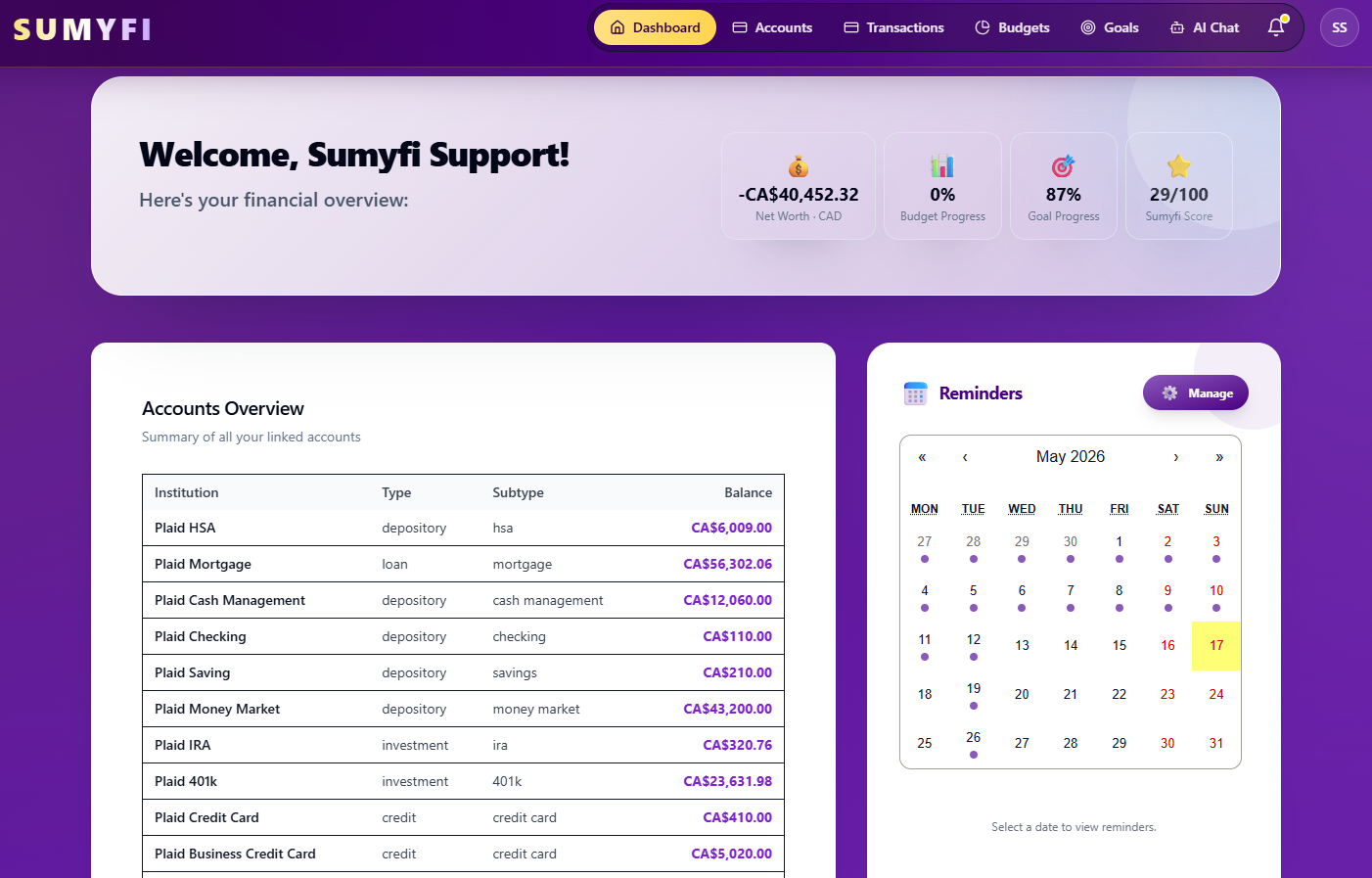
    Sumyfi dashboard in comparison context

    Comparison pages work better when buyers can actually see the product surface they would be using.

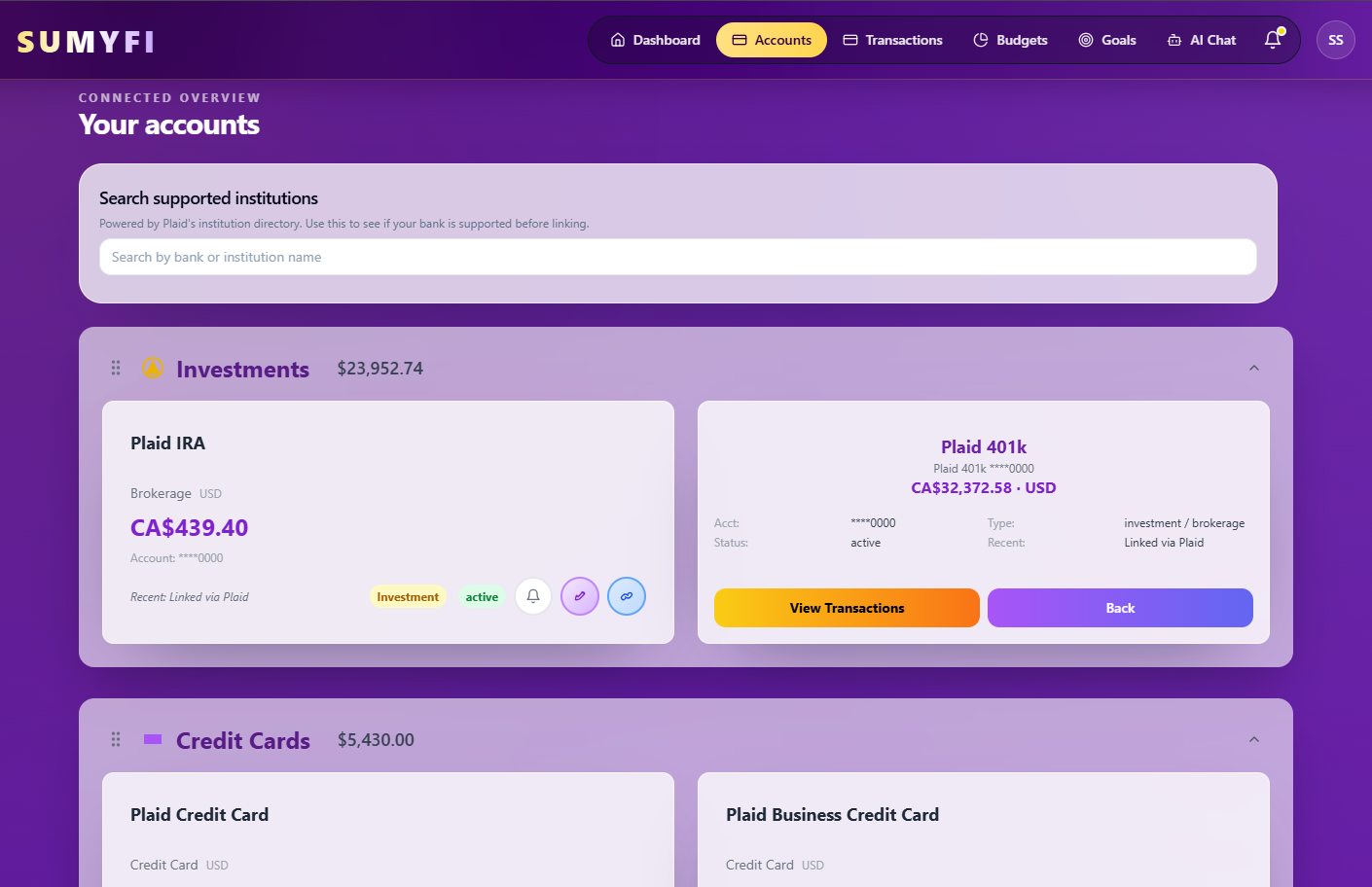
    Accounts view for comparing finance tools

    Account coverage and visibility are part of the real comparison, not just the pricing table.

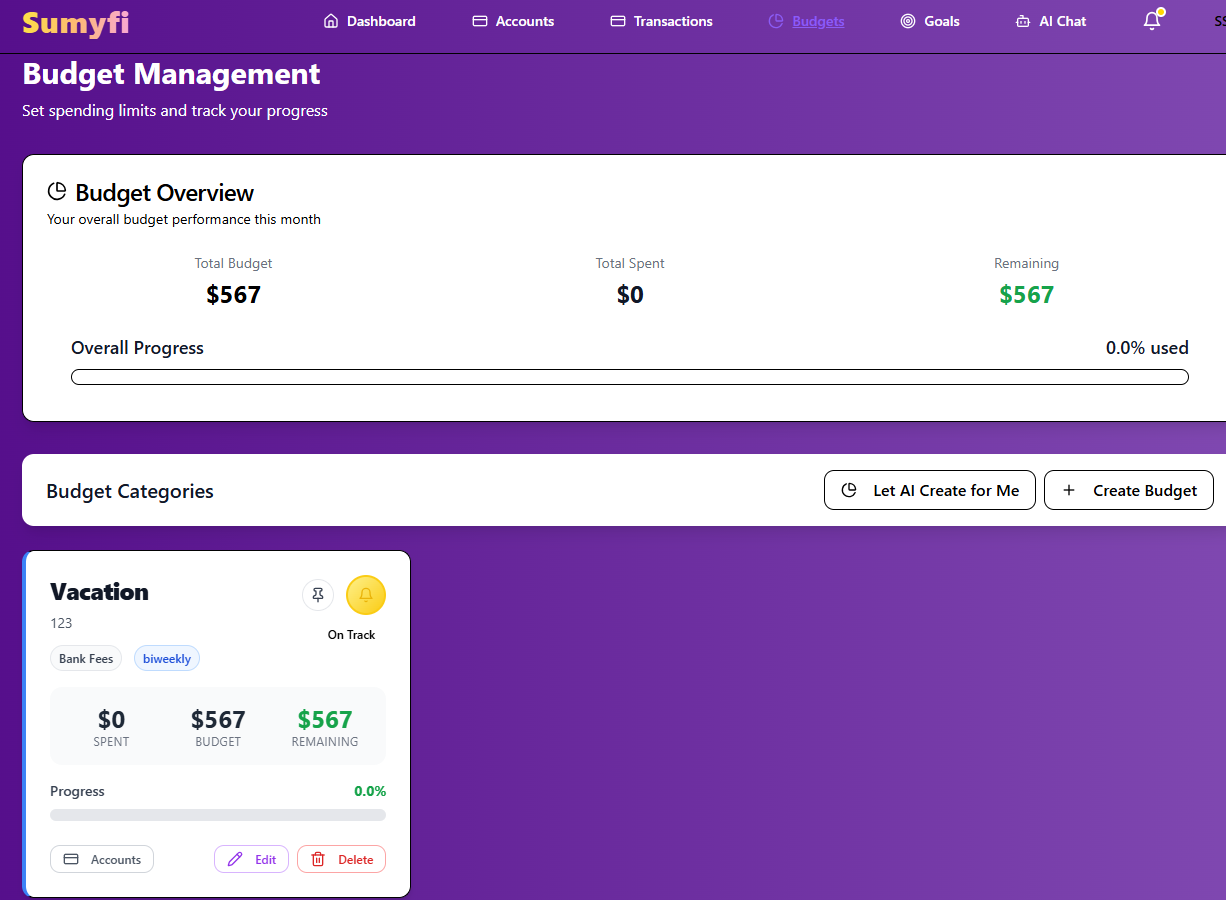
    Budgeting view for product comparisons

    Budgets, goals, and recurring review should be weighed as one system when you compare tools.

    Proof block

    What YNAB comparison buyers need before they choose sides

    What matters is whether whether the buyer wants a budgeting-first method or a broader money system that keeps planning in context.

    BD

    Broader dashboard vs budgeting-first method

    SV

    Structure vs flexibility

    WW

    Which workflow lasts in real life

    Main tension
    Method vs broader workflow
    Risk
    Budget structure feels too narrow
    Winning message
    Planning inside a fuller dashboard

    "I want budgeting to help my system, not become the only lens I ever use to manage money."

    YNAB comparison shopper
    Method-aware buyer

    "The better product is the one that helps me budget and still keeps the whole money picture easier to understand."

    Intent summary
    Practical planner

    What matters in practice

    What sumyfi vs ynab needs to solve in real life

    Sumyfi vs YNAB matters when the current setup still leaves too much guesswork. People may already have account access, a spreadsheet, a budgeting tool, or a subscription list, but they still do not feel clear on what changed, what is drifting, or what deserves attention first.

    The useful solution is the one that turns raw money data into orientation. Sumyfi fits that need by keeping accounts, recurring spending, goals, and planning close enough together that the next decision is easier to make. That also matters in a YNAB comparison, where the real choice is whether a narrower tool is enough or a broader system will hold up better over time.

    What to look for

    • Built around helping people compare an all-in-one finance dashboard with a budgeting-first workflow
    • Useful for everyday personal finance users
    • Designed to reduce fragmented weekly money review

    What to test first

    The workflow should answer a few important questions quickly

    A finance tool earns its place when it helps you answer practical questions without a lot of cleanup. Can you see what changed this week? Can you spot a recurring charge, a balance shift, or a category problem quickly enough to do something about it? Can you move from review into action without opening three more tools?

    That is where many products still fall short. They centralize information but leave interpretation scattered. Sumyfi works better when the goal is to keep balances, recurring charges, goals, and next actions close enough together that the review feels usable instead of performative.

    What to compare first

    How to judge sumyfi vs ynab without getting distracted by feature noise

    The comparison framework is usually simpler than buyers expect. Look at whether the product makes account visibility easier, whether it explains spending clearly, whether recurring costs and goals stay connected to the rest of the money picture, and whether the workflow still feels manageable after a busy month.

    That is where Sumyfi tends to stand out. It is built to help users see the broader financial picture quickly, interpret what changed, and keep planning visible without forcing a dozen separate tools or a heavy maintenance ritual.

    What to look for

    • Account visibility
    • Spending clarity
    • Goals and recurring-spend context
    • Low-friction repeat use
    • Trust and reliability

    Why Sumyfi fits

    Why Sumyfi makes more sense when the whole system matters

    Sumyfi helps with this problem because it is not limited to one narrow money use case. Users can connect accounts, review recurring costs, track goals, and understand changes inside one environment instead of solving one visible symptom while leaving the rest of the system fragmented.

    That broader fit matters for everyday personal finance users because the most useful finance app is usually the one that makes the next decision easier without demanding a complicated setup or a spreadsheet mindset. Sumyfi is most useful when the dashboard still helps after the first obvious problem has been handled.

    Comparison angle

    What matters most when choosing between Sumyfi and YNAB

    Buyers comparing Sumyfi with YNAB are usually not choosing between random apps. They are deciding whether a narrower workflow is enough or whether a broader money system will create more value over time. That matters because the better choice is often the product that stays useful after the first use case is solved.

    Sumyfi is strongest when the user wants accounts, spending visibility, goals, and recurring money decisions to reinforce one another instead of splitting across multiple tools. That broader fit is often what makes the difference in a serious comparison search.

    What buyers are choosing

    Why this comparison is about workflow philosophy, not just feature overlap

    Buyers comparing Sumyfi and YNAB are usually already serious about improving money management. The real decision is whether they want a budgeting-first system with more structure or a broader dashboard that keeps budgeting connected to the full account, spending, and planning picture.

    That difference matters because the better product is often the one the user can actually keep using during normal life pressure. A structured method can be powerful, but it can also feel rigid if the user wants more flexibility and a fuller financial view in one place.

    Sumyfi fits this need when the buyer wants budgeting to work alongside account visibility, recurring spending, goals, and easier interpretation instead of living at the center of a stricter method-based workflow.

    Where the broader dashboard wins

    The key question is whether budgeting should run the system or support it

    YNAB can be compelling for users who want budgeting discipline to define the experience. But many shoppers eventually want a system where budgeting supports a broader money review rather than controlling it. That is where the comparison shifts toward overall workflow fit instead of pure budgeting philosophy.

    Sumyfi is stronger when the goal is to make the whole financial picture easier to manage without losing the benefits of planning. Users can still budget and set goals, but the broader dashboard keeps the rest of the money system visible too.

    For many buyers, that balance is more sustainable. The product that fits more naturally into weekly life often beats the product with the stronger method identity.

    Bottom-funnel comparison

    The real difference is usually in the workflow, not the feature table

    High-intent comparison pages matter because the buyer is usually close to choosing. At that stage, the most useful page is the one that clarifies how each product feels in normal weekly use rather than drowning the user in a long list of loosely comparable features.

    The better product for comparing an all-in-one finance dashboard with a budgeting-first workflow is often the one that keeps more of the money picture connected after the first use case is solved. That is what determines whether the buyer still feels good about the choice a month later.

    What to look for

    • The strongest comparison clarifies product philosophy
    • Weekly usefulness matters more than isolated feature wins
    • The winning app should solve the next problem too

    Why buyers switch sides

    The decision usually turns on what the buyer wants the whole system to do

    A finance comparison rarely ends with one killer feature. Buyers usually change their minds when they see which product better fits the full workflow they want: more structure, more flexibility, broader context, or faster interpretation. The more clearly the comparison communicates that distinction, the more useful it becomes.

    That is why connected value often beats isolated polish. The tool that helps the user run the broader system more comfortably is usually the one that feels stronger in hindsight.

    Competitive angle

    What buyers often underestimate when comparing Sumyfi and YNAB

    Most buyers initially compare against YNAB at the feature level, but the more important difference is usually how the product frames the ongoing financial workflow. A tool can look close on paper and still feel very different once the buyer starts trying to use it weekly for review, planning, and recurring decisions.

    The more useful option is usually the one that keeps more of the user's money system coherent after the first immediate use case is handled.

    What matters after week one

    How to tell whether the workflow will still help after week one

    The best test is still a real weekly workflow. If the product makes balances, recurring activity, and next actions easier to review without a lot of cleanup, it is probably a good fit. If it still leaves you stitching the story together manually, the problem is not solved yet.

    Sumyfi is strongest when the dashboard, planning layer, and recurring money decisions stay connected. That makes it easier to decide whether the product genuinely improves how you handle comparing an all-in-one finance dashboard with a budgeting-first workflow.

    Why people hesitate

    The biggest buying risk is usually choosing a tool that looks clearer than it feels

    Finance buyers often know the category language well enough to compare features, but still struggle to picture what the product will feel like in ordinary use. That uncertainty is rational. A lot of apps sound complete during research and still create too much hidden work once the user tries to rely on them weekly.

    The better explanation lowers that uncertainty by showing how the workflow behaves under normal life pressure. That is usually more persuasive than adding another layer of generic claims.

    Decision speed

    What makes a tool easier to act on quickly

    People search these categories because they want relief from uncertainty, drift, or unnecessary effort. The product that wins is usually the one that makes the next decision easier once the user opens it. If the app still requires a lot of interpretation or a second system to translate the data, its value plateaus quickly.

    That is why connected design matters. When visibility, recurring patterns, and planning context stay close together, the app becomes easier to trust and easier to keep using.

    Search intent

    Why this is usually a serious search and not casual browsing

    Searches like sumyfi vs ynab usually come from users who already feel some friction in the current setup. They are not trying to learn whether finance apps exist. They are trying to decide which product will reduce confusion, lower maintenance, or create a better money habit quickly enough to justify the switch.

    That makes specificity important. A useful guide helps users see why Sumyfi is relevant to comparing an all-in-one finance dashboard with a budgeting-first workflow without pretending every buyer wants exactly the same kind of workflow.

    FAQs

    Frequently asked questions about sumyfi vs ynab

    Is Sumyfi really a strong option for sumyfi vs ynab?

    Yes, especially if the real goal behind the search is reducing fragmentation. Sumyfi is strongest for users who want connected accounts, clear budgeting, visible goals, recurring-spend awareness, and modern AI-assisted explanations in one place rather than separate disconnected tools.

    What matters most when comparing options for sumyfi vs ynab?

    Account connectivity, spending clarity, recurring-charge visibility, budgeting depth, goal support, trust posture, and ease of repeat use matter most. Those factors influence whether the tool becomes part of your real routine or remains a short-lived experiment.

    How does Sumyfi help people researching sumyfi vs ynab day to day?

    Sumyfi helps by keeping the wider money picture visible for people trying to compare an all-in-one finance dashboard with a budgeting-first workflow. That makes it easier to understand tradeoffs, track progress, and act on recurring patterns without rebuilding the context in separate tools.

    What makes a finance app easier to keep using over time?

    Low-friction review loops matter most. If the dashboard helps you connect accounts, understand patterns quickly, and take the next action without extensive manual cleanup, you are much more likely to stay engaged. That ongoing usability matters more than a long feature list.

    Who is Sumyfi vs YNAB usually best for?

    It is usually best for everyday personal finance users who want clearer financial visibility without building a heavy manual system. Sumyfi is strongest when the user wants practical weekly clarity more than niche complexity for its own sake.

    Topic cluster

    Keep exploring the same decision journey

    Guide hub

    Browse the full Sumyfi topic cluster

    Move from one question to the next through budgeting, dashboard, subscription, AI, and comparison guides that support the same decision journey.

    Budgeting and cash-flow guides
    Alternatives and competitor comparisons
    Net worth, dashboard, and AI finance guides