Sumyfi Editorial Team • Updated 2026-09-01
Sumyfi vs Monarch: Which Finance App Fits You Better?
People comparing Sumyfi and Monarch are deciding between two all-in-one finance apps, not just two sets of screenshots. The better choice depends on which product fits your weekly money routine best.
Both products are usually considered by people who want a serious personal-finance app. The practical differences show up in workflow: how easy it is to review recurring charges, stay on top of budgets, follow goals, and keep using the app regularly.
That is what
If you want the app that keeps more of your money routine in one place, Sumyfi is worth a close look.
At a glance
- Premium dashboard comparison
- Less fragmentation
- Built for practical weekly review
The better choice depends on which app handles your weekly money routine more naturally.
Strongest for people who want one dashboard to handle more of the money routine.
A finance app should still feel useful after setup week.
Decision lens
How to compare Sumyfi and Monarch in a useful way
Start with the jobs you actually need the app to do: account aggregation, budgeting, subscription review, goal tracking, and maybe AI help. Then compare how each app handles those jobs in normal use, not just on a feature checklist.
That approach usually reveals more than debating which product feels more premium.
Best-fit buyers
Who should choose Sumyfi and who may still prefer Monarch
Choose Sumyfi if you want one connected workflow for budgets, goals, subscriptions, balances, and AI-assisted questions about your finances. It is the better fit when you are trying to reduce tool switching.
A buyer who strongly prefers Monarch's style, planning approach, or overall feel may still choose it. The right answer depends on what helps you stay consistent.
Switching guidance
A practical way to test both apps before switching
Run the same review in each app: connect the main accounts, look at recurring charges, check a budget, and review a goal. The app that gives you clearer answers with less friction will usually be obvious.
That small test is often more valuable than reading ten pages of generic comparison copy.
- Compare the same accounts and categories in both apps
- Check budgets, goals, and recurring charges in the same session
- Choose the app you will actually keep using
Buyer checklist
What Monarch comparison buyers should decide first
- Do you want a broader financial operating system or mainly a premium-style dashboard feel?
- Will recurring bills, planning, and account review stay inside the same product?
- Which app is more likely to remain useful after the novelty of the UI fades?
- Do you need more action-oriented guidance from your dashboard, not just a cleaner overview?
Why Sumyfi
Why Sumyfi can win this comparison
Sumyfi is a strong fit when you want budgeting, subscriptions, goals, connected accounts, and AI help in one product instead of spreading those tasks across separate tools.
Implementation routine
How to run a fair product comparison
The goal is to compare how Monarch holds up in real weekly use instead of stopping at screenshots, pricing blurbs, or feature grids rather than producing one more superficial verdict.
Review the broader workflow
Begin with the strengths that make Monarch worth considering and then note what still feels fragmented around Sumyfi with Monarch for budgeting, subscriptions, goals, and overall day-to-day fit during a normal review.
Pressure-test the missing context
Compare what Monarch clarifies first by following one ordinary weekly review instead of a polished product demo before deciding which workflow stays easier to interpret.
Choose the better long-term fit
End by choosing whether Sumyfi or Monarch feels easiest to reopen next week once the setup tour is over and Sumyfi with Monarch for budgeting, subscriptions, goals, and overall day-to-day fit has to survive real use after the first week with Monarch.
Product screenshots
See the product behind the copy
Screenshots shown: Dashboard, Accounts, Budgets.
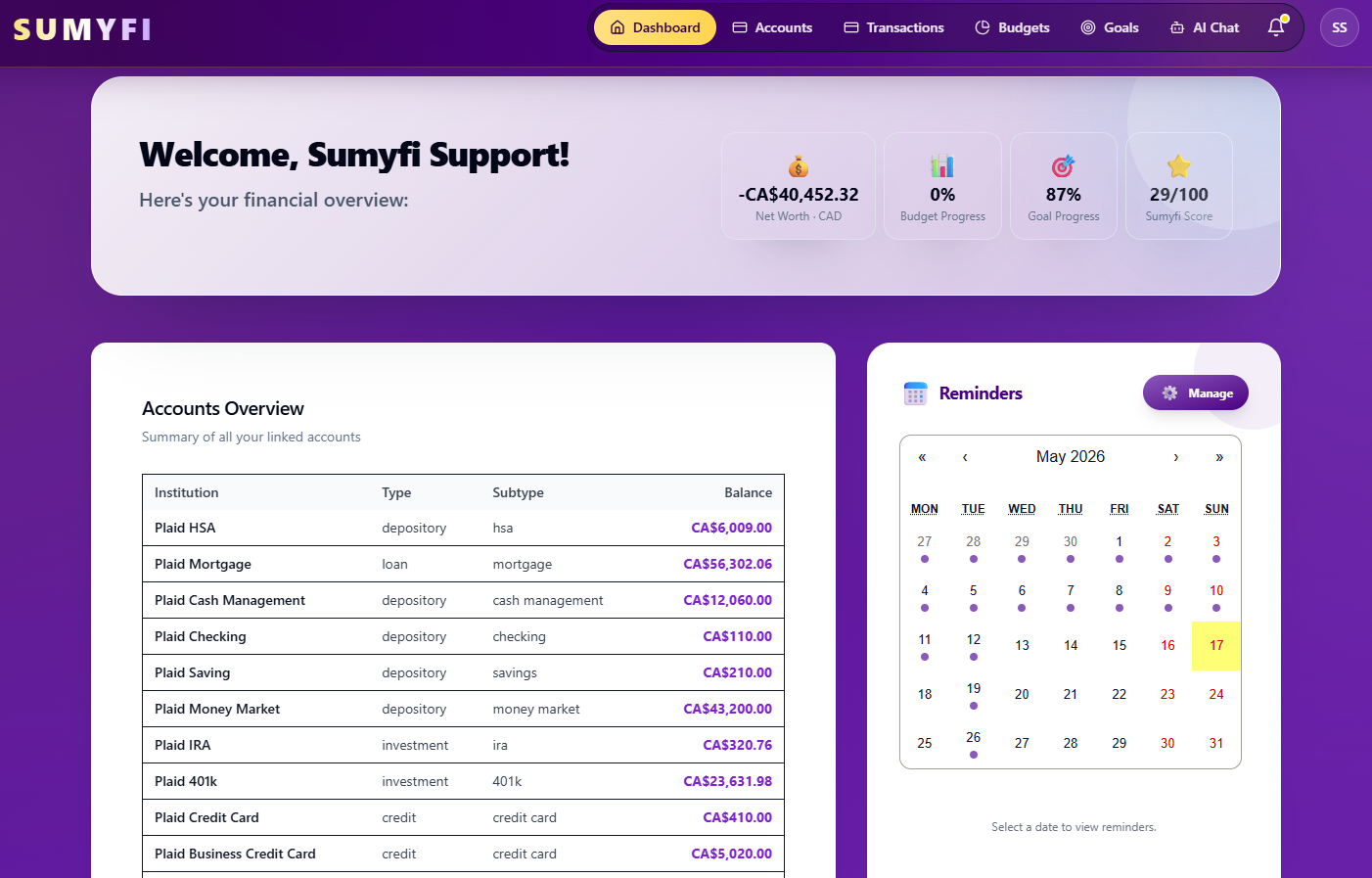
Dashboard shows the dashboard buyers would actually be switching into.
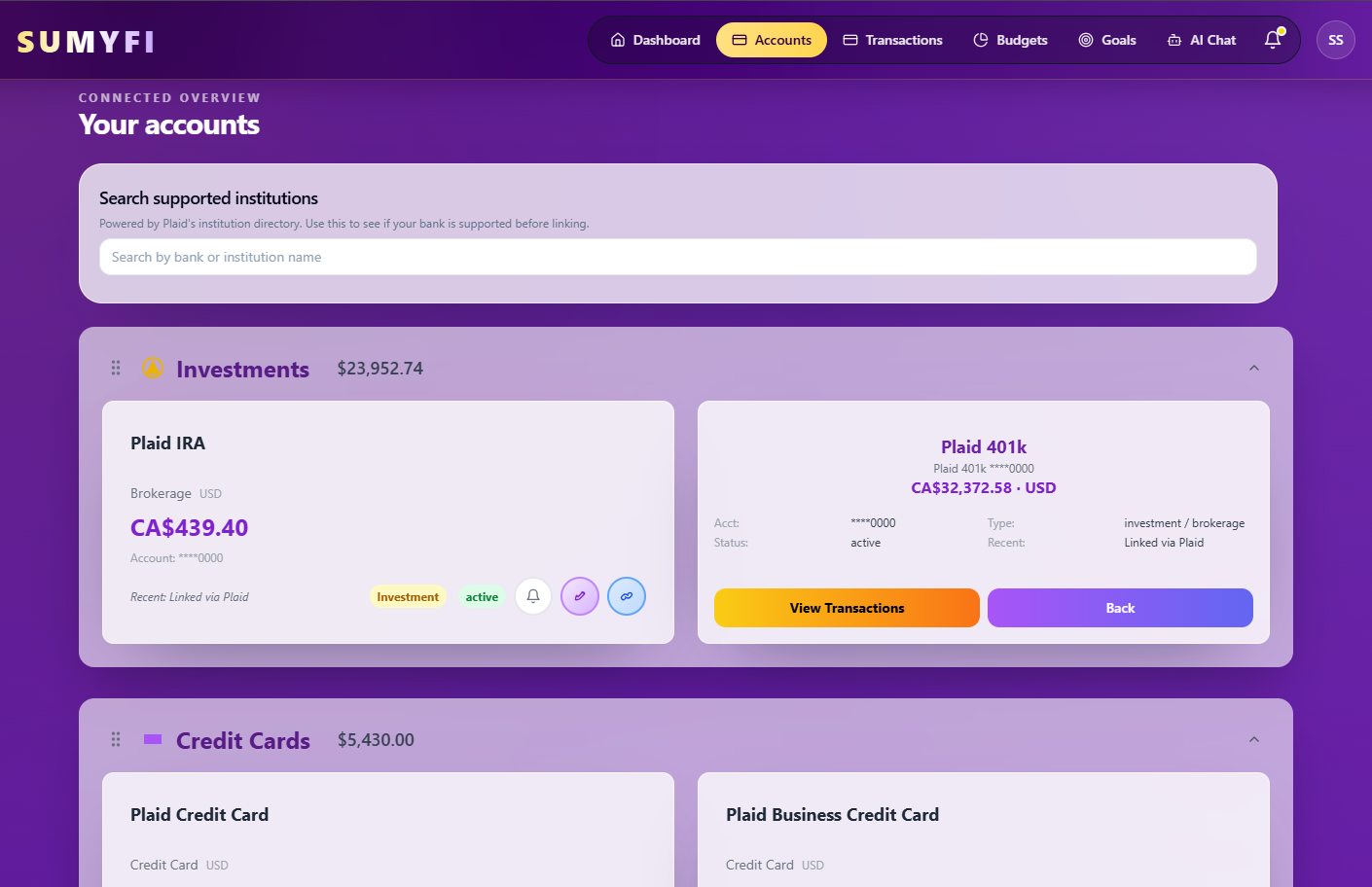
Accounts shows the account view buyers would actually use week to week.
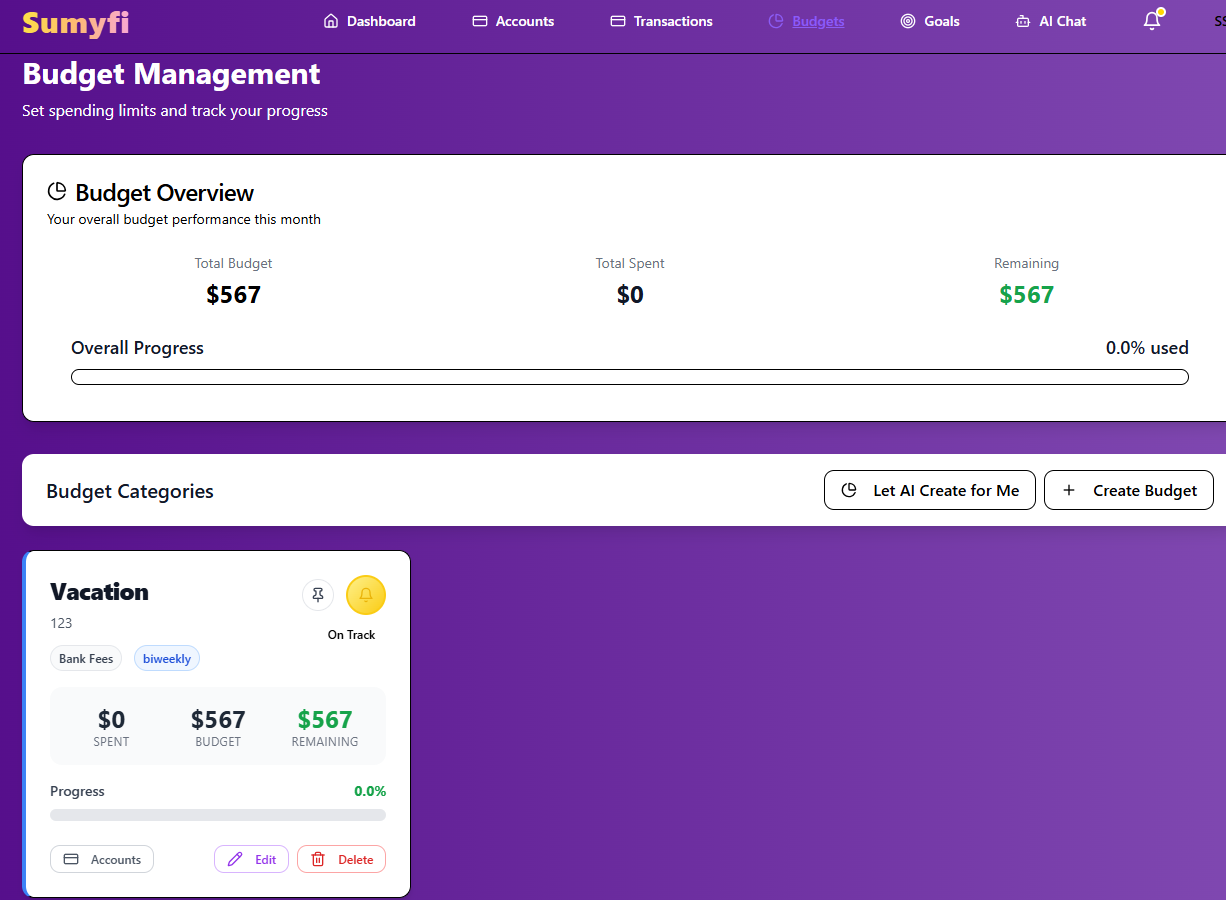
Budgets shows how budgets fit into the broader product workflow.
Comparison table
Sumyfi vs Monarch compared for practical weekly use
This table is built around the questions serious buyers ask before subscribing: what you pay for, what the dashboard actually helps with, and how well the product supports weekly review after the setup glow fades.
| Decision area | Sumyfi | Monarch |
|---|---|---|
| Pricing | Check live pricing and current offer details | Check live pricing and current plan structure |
| Key features | Budgets, goals, subscriptions, net worth, connected accounts, and AI context in one workflow | Premium-style dashboard, planning, and account visibility commonly evaluated together |
| Account syncing | Syncing is positioned as part of a broader operating system | Syncing supports a premium dashboard and planning experience |
| Subscription tracking | Recurring charges stay close to the broader weekly review workflow | Usually a helpful feature, but not always the primary purchase reason |
| Budgeting | Budgeting is tied to accounts, goals, and recurring expense context | Flexible budgeting within a premium dashboard experience |
| Net worth tracking | Included alongside the rest of the connected dashboard | Often part of the broader premium overview buyers evaluate |
| AI features | AI explanation and guidance are part of the product direction | Usually evaluated more for premium dashboard feel than AI-led help |
| Best for | Users who want one connected financial dashboard | Users who strongly prefer Monarch's overall product style and approach |
| Migration or switching | Best for consolidating more of the money routine into one operating system | Best for buyers who still anchor heavily on premium-feel dashboard preferences |
Recommended next reads
Read 5 related articles next
Related reading for the next question.
FAQs
Frequently asked questions
Is Sumyfi better than Monarch for practical weekly money review?
Sumyfi makes more sense if you care more about reducing fragmentation across budgeting, recurring bills, goals, account visibility, and AI-guided interpretation than about prioritizing a premium-style dashboard feel on its own.
What is the biggest difference between Sumyfi and Monarch?
The main difference is emphasis. Sumyfi is positioned around broader operating-system value and clearer next-step decision support, while Monarch is often evaluated through the lens of a premium dashboard experience.
Which app is better for subscriptions, budgeting, and net worth together?
If your goal is to keep subscriptions, budgets, goals, and net worth close together in one weekly workflow, Sumyfi is the more practical fit for that all-in-one use case.
Should AI features matter in Sumyfi vs Monarch?
They matter if you want the dashboard to explain and prioritize what deserves attention next rather than simply present a cleaner overview. Buyers who value more interpretation should weigh that directly in the decision.
Who should still consider Monarch first?
A buyer who strongly prioritizes a premium-style dashboard feel as the central purchase criterion may still compare Monarch closely. The better choice depends on whether polish or broader workflow usefulness matters more after the first week.
Keep exploring
Next reads for premium-dashboard buyers
These guides help the visitor move from the Monarch comparison into adjacent questions around budgeting, all-account visibility, AI guidance, and broader alternatives.