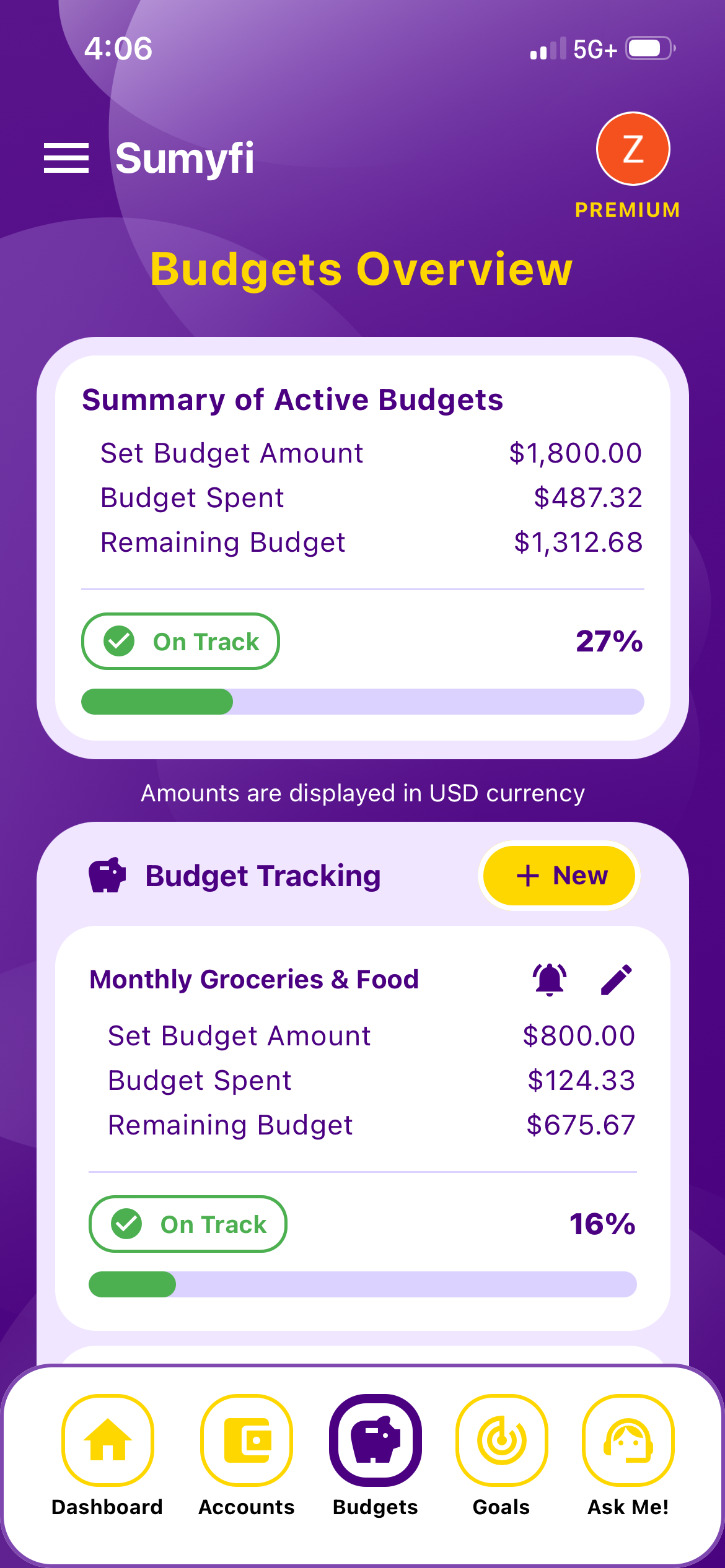
Use one clear workflow for AI to explain and reduce recurring subscription waste with practical comparisons, concrete product details, and fewer disconnected money tools.
Enter the AI subscription tracker - a groundbreaking innovation poised to redefine personal finance management. No longer are individuals left to grapple with forgotten free trials, unexpected renewals, or the sheer volume of recurring charges scattered across multiple bank statements.
This comprehensive guide will delve deep into the world of AI-powered subscription management, exploring its necessity, its intricate workings, and how Sumyfi leverages cutting-edge artificial intelligence to empower you, the modern consumer, to reclaim control over your money. Prepare to discover how an AI subscription tracker is not just a convenience, but an indispensable tool for achieving true financial mastery.
The Silent Drain: Why Subscription Overload is a Modern Financial Crisis
The allure of the subscription model is undeniable. For businesses, it guarantees recurring revenue and fosters customer loyalty. For consumers, it offers immediate access, flexibility, and often a lower upfront cost than outright ownership. This symbiotic relationship has fueled an explosion of subscription-based services across every conceivable industry.
Each of these, individually, might seem like a small, manageable expense. However, their cumulative effect can be staggering. A recent study found that consumers consistently underestimate their monthly subscription spending by a significant margin, sometimes by hundreds of dollars. This "subscription creep" is a stealthy budget killer, eroding savings, hindering financial goals, and causing unnecessary stress.
The Psychology of Subscription Blind Spots
Why do we fall into this trap? Several psychological factors contribute:
- Small Incremental Payments: A $9.99 or $19.99 monthly charge often feels insignificant in isolation. We swipe, we sign up, and the immediate gratification outweighs the long-term financial impact.
- Set-It-and-Forget-It Mentality: Once subscribed, the service often integrates seamlessly into our routines. We rarely think about the recurring payment until it hits our statement - and even then, it might just blend in with other automatic bills.
- Hassle of Cancellation: Companies often make signing up incredibly easy, but cancelling can be a multi-step process involving phone calls, navigating confusing menus, or even "retention offers" designed to keep you subscribed. The friction often discourages follow-through.
- Free Trial Forgetting: The "free trial" is a powerful marketing tool. We sign up with good intentions to cancel before the charge kicks in, but life happens, and that reminder often slips through the cracks.
- Information Overload: With multiple bank accounts, credit cards, and digital wallets, keeping track of every single recurring charge manually becomes an arduous, error-prone task.
The result? Unused gym memberships, forgotten streaming services, software trials that turned into full subscriptions, and a general lack of visibility into where our hard-earned money is truly going. This is where the necessity of a sophisticated AI subscription tracker becomes not just evident, but paramount.
Entertainment: Netflix, Disney+, Spotify, Apple Music, Hulu, YouTube Premium.
Productivity & Software: Microsoft 365, Adobe Creative Cloud, Evernote, Zoom, Dropbox.
Wellness & Lifestyle
Peloton, Headspace, Calm, ClassPass, various meal kit services.
Gaming
Xbox Game Pass, PlayStation Plus, Nintendo Switch Online.
News & Information
New York Times Digital, The Economist, various niche newsletters.
E-commerce
Amazon Prime, Stitch Fix, Dollar Shave Club.
What Exactly is an AI Subscription Tracker? Unpacking the Technology
At its core, an AI subscription tracker is a sophisticated personal finance tool designed to automatically identify, categorize, and monitor all your recurring payments. But unlike a simple spreadsheet or a basic transaction filter, an AI-powered solution leverages advanced computational intelligence to provide a level of insight and automation that was previously impossible.
Beyond Simple Tracking: The Power of Intelligent Automation
A true AI subscription tracker goes far beyond merely listing your subscriptions. It transforms raw data into actionable intelligence:
In essence, an AI subscription tracker acts as your personal financial detective and assistant, tirelessly working in the background to bring order, transparency, and control to one of the most complex and often overlooked aspects of modern personal finance.
The Transformative Benefits of an AI-Powered Subscription Tracker
The shift from manual tracking to an AI subscription tracker is not just an incremental improvement; it's a paradigm shift in how individuals can manage their recurring expenses. The benefits extend far beyond simply knowing what you pay for.
Imagine a single, crystal-clear dashboard that displays every single recurring payment you make, regardless of which bank account or credit card it originates from. This is the core promise of an AI subscription tracker.
Significant Cost Savings: Uncover and Eliminate Waste
This is arguably the most tangible benefit. An AI subscription tracker directly impacts your bottom line.
*Example:* Sarah discovered she was paying for three different music streaming services and a gym membership she hadn't used in six months. Her AI subscription tracker from Sumyfi highlighted these, prompting her to cancel two music services and the gym, saving her over $60 a month - nearly $720 a year!
Enhanced Budgeting Accuracy: No More Surprises
Subscriptions are predictable expenses, yet they often cause budget havoc due to their sheer number and the ease with which they're forgotten.
Proactive Financial Management: Stay Ahead of the Curve
An AI subscription tracker empowers you to be proactive rather than reactive with your finances.
Time Efficiency: Automate a Tedious Task
Manually tracking subscriptions across multiple accounts, checking statements, and setting calendar reminders is incredibly time-consuming and prone to human error.
Enhanced Security and Fraud Detection: Your Digital Watchdog
While primarily focused on subscriptions, the continuous monitoring of transactions by an AI subscription tracker also offers a layer of security.
By harnessing the power of an AI subscription tracker, individuals can transform a source of financial anxiety into an area of empowered control, leading to significant savings, clearer financial pictures, and a greater sense of peace.
Smart Alerts: Notifies you of upcoming payments, price changes, or expiring free trials.
Spending Trends: Visualizes your subscription spending over time, helping you spot patterns and identify areas for optimization.
Cancellation Facilitation: While not all AI trackers directly cancel for you, many provide direct links, instructions, or even templated emails to simplify the cancellation process.
Budget Integration
Seamlessly feeds subscription data into your overall budget, ensuring accuracy and preventing surprises.
Holistic Overview
Gain a complete picture of your subscription landscape, eliminating blind spots and forgotten services.
Instant Identification
No more sifting through bank statements trying to decipher cryptic merchant names. The AI identifies and labels them clearly.
Categorized Spending
Understand where your subscription money is truly going - how much on entertainment, how much on productivity, etc. This categorization is crucial for informed decision-making.
Identify Unused Services
The first step to saving money is knowing what you have. The tracker will highlight subscriptions you might have forgotten about or no longer use.
Facilitate Cancellations
With all information centralized, you can easily review each subscription and decide if it still provides value. Many trackers offer direct links or guidance to simplify the cancellation process, overcoming the "hassle factor."
Prevent Unintended Renewals
Timely alerts before a free trial converts to a paid subscription or an annual plan renews can save you hundreds of dollars by allowing you to cancel proactively.
Spot Overlapping Services
Realize you're paying for two streaming services that offer similar content, or multiple cloud storage solutions when one would suffice.
Accurate Forecasting
Know exactly how much you're committed to spending on subscriptions each month, allowing for more precise budget planning.
Prevent Overdrafts
With predictive alerts for upcoming payments, you can ensure sufficient funds are available, avoiding overdraft fees or credit card interest.
Integrate Seamlessly
A robust AI subscription tracker like Sumyfi integrates this data directly into your overall budgeting framework, providing a holistic view of your income and outflow.
Timely Alerts
Receive notifications for upcoming renewals, price increases, and expiring trials. This puts you in the driver's seat.
Optimize Spending
Use the insights to make informed decisions - perhaps downgrade a premium service to a basic one, or negotiate a better deal with a provider.
Review Usage
Some advanced trackers might even integrate with usage data (where available and permissioned) to show you how much you're actually using a service, helping you decide if it's worth the cost.
Automation
The AI does the heavy lifting, continuously scanning and updating your subscription list.
Centralized Information
All the data you need is in one place, saving you hours of searching and compiling.
Focus on What Matters
Free up mental energy and time to focus on higher-value financial activities like investing, saving, or planning for major purchases.
Spot Unauthorized Charges
The AI's ability to identify unusual recurring patterns can help you detect fraudulent subscriptions or unauthorized charges much faster than manual review.
Monitor for Identity Theft
Early detection of suspicious recurring payments can be an indicator of identity theft, allowing you to take swift action.
Sumyfi: The Apex Predator in AI Subscription Tracking
In a crowded market of personal finance tools, Sumyfi emerges as the definitive solution, engineered from the ground up to address the complexities of modern financial life with unmatched precision, speed, and elegance. Our AI subscription tracker isn't just a feature; it's a cornerstone of our holistic financial management platform, designed to empower you with ultimate control.
Sumyfi understands that today's financial landscape demands more than just basic tracking. It requires intelligent automation, seamless integration, and an intuitive user experience that makes managing your money a pleasure, not a chore.
Seamless Connectivity Across Thousands of Institutions (US & Canada)
One of Sumyfi's foundational strengths is its robust connectivity. Our platform links effortlessly with thousands of financial institutions across both the United States and Canada. This means whether your subscriptions are tied to a major bank, a local credit union, or a niche digital payment provider, Sumyfi's AI subscription tracker can connect, analyze, and consolidate your data. This broad reach ensures a truly comprehensive view, leaving no recurring payment untracked.
Intelligent Transaction Categorization and Automation
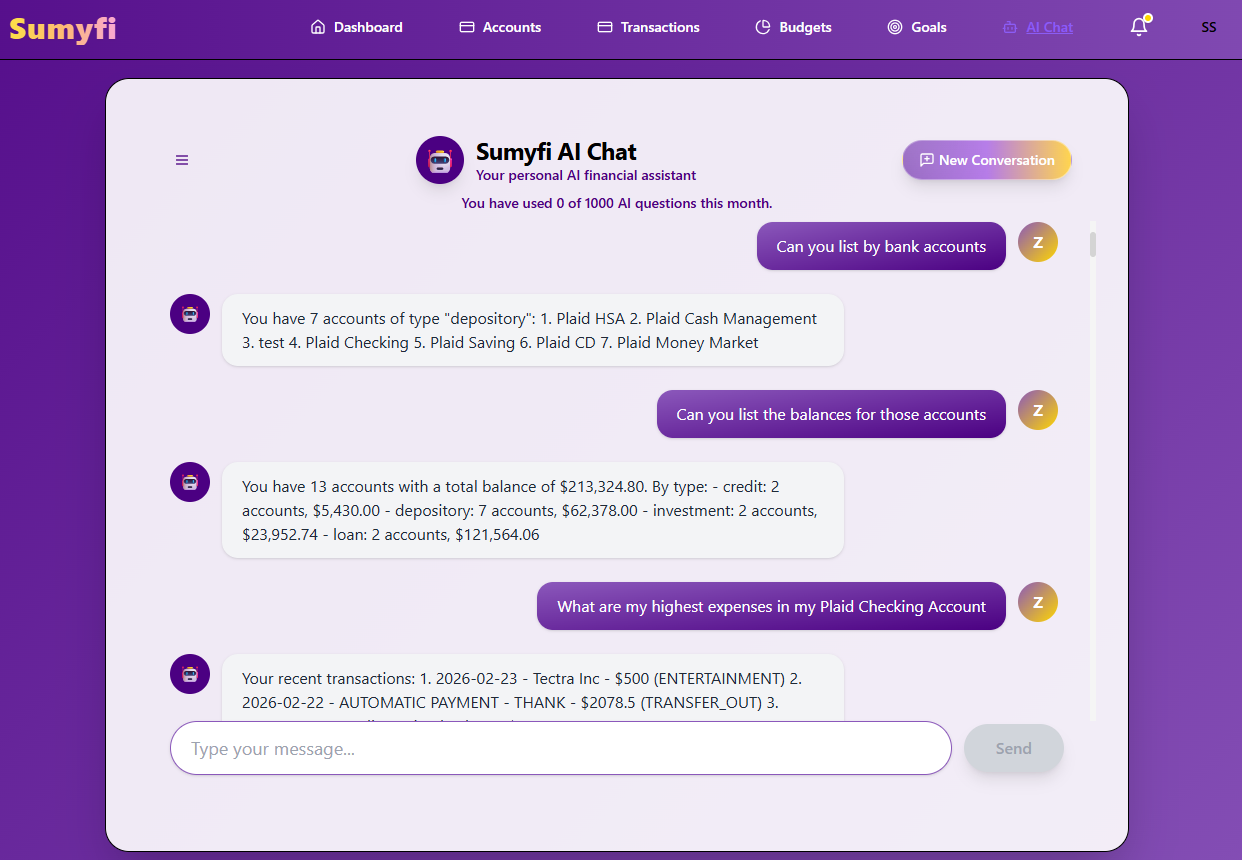
The magic behind Sumyfi's AI subscription tracker lies in its sophisticated machine learning algorithms.
Intuitive Dashboard & Real-time Insights
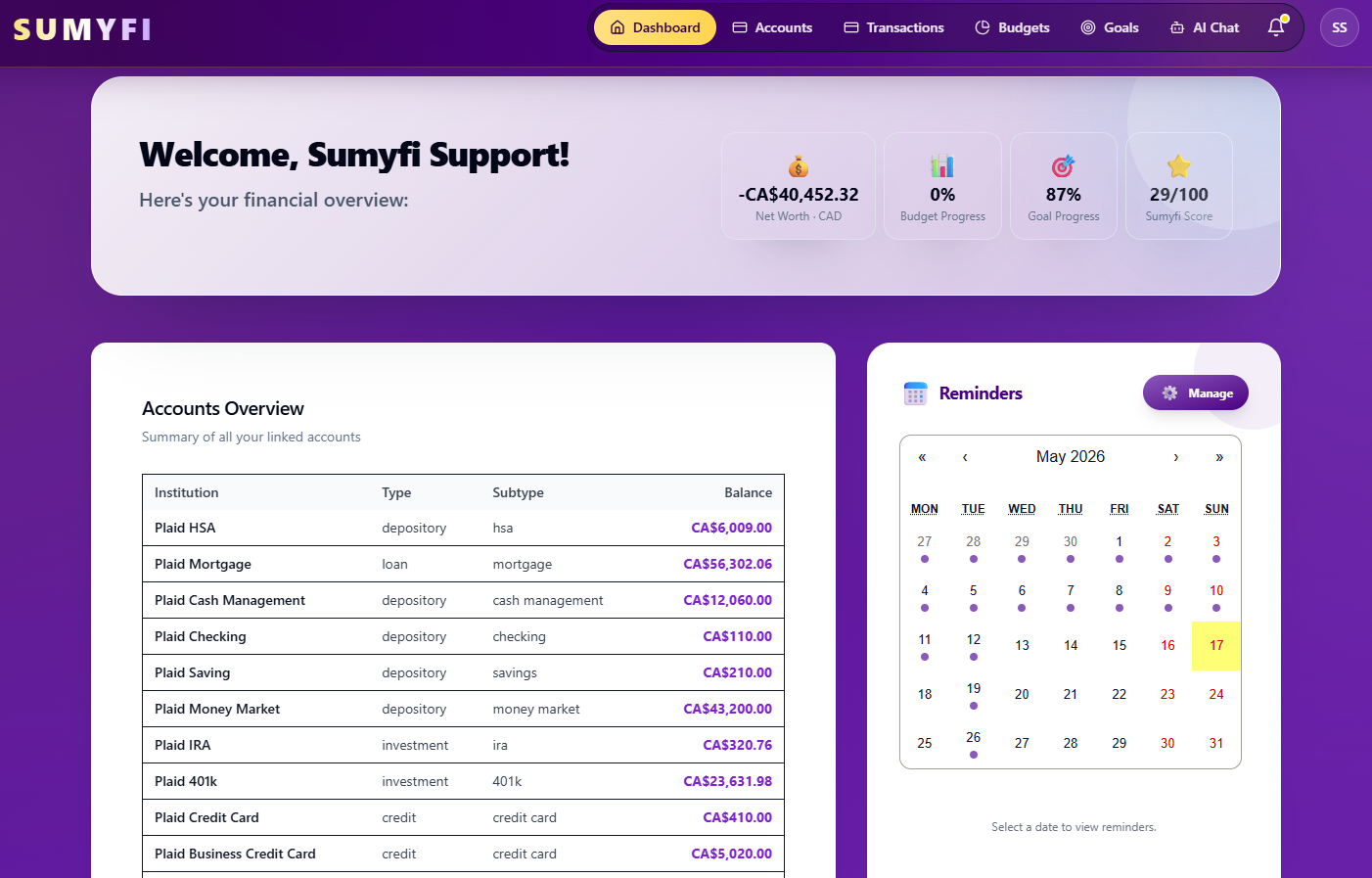
Sumyfi's user interface is designed for clarity and action. Our slick dashboard presents your subscription data in an easily digestible format, transforming complex financial information into actionable insights.
Proactive Alerts & Smart Reminders
Never be caught off guard by an unexpected renewal or a forgotten free trial again. Sumyfi's AI subscription tracker acts as your vigilant financial guardian.
Beyond Subscriptions: A Holistic Financial Hub
What truly sets Sumyfi apart is its integrated approach. Our AI subscription tracker is not a standalone tool; it's a seamlessly integrated component of a comprehensive personal finance ecosystem.
Sumyfi's agile engineering ensures lightning-fast setup - you can connect your accounts and start seeing your subscription landscape in minutes. Our slick dashboard interface is designed for intuitive navigation, making complex financial management feel effortless. We believe personal finance should be empowering and accessible, not intimidating.
[Discover Sumyfi's AI Subscription Tracker today and transform your financial future!](https://www.sumyfi.com/ai-subscription-tracker)
Automated Identification: As soon as you connect your accounts, Sumyfi's AI immediately begins scanning your transaction history to identify recurring payments. It doesn't just look for keywords; it analyzes payment frequency, merchant consistency, and transaction patterns to accurately pinpoint subscriptions.
Smart Categorization: Once identified, each subscription is automatically categorized (e.g., streaming, software, fitness, food delivery) within your Sumyfi dashboard. This provides instant clarity on where your money is going, without any manual input required from you.
Self-Learning System: Sumyfi's AI continuously learns from your financial activity. The more you use it, the smarter and more accurate it becomes at recognizing and managing your unique spending habits.
Visual Overview
See all your subscriptions at a glance, complete with their monthly or annual cost, next billing date, and categorization.
Spending Trends
Visualize your subscription spending over time with interactive charts, helping you identify trends and potential areas for reduction.
Drill-Down Capability
Click on any subscription for detailed information, including its history, associated account, and direct links to manage or cancel.
Upcoming Payment Alerts
Receive timely notifications before a subscription payment is due, allowing you to ensure sufficient funds or make a decision to cancel.
Free Trial Expiration Reminders
Sumyfi intelligently detects free trials and reminds you before they convert to paid subscriptions, giving you the power to cancel before being charged.
Price Change Notifications
Our system is designed to detect and alert you to any increases in your subscription costs, empowering you to either budget for the change or seek alternatives.
Net Worth Tracking
Subscription data feeds directly into your overall net worth calculation, providing a more accurate picture of your financial health.
Automated Budgeting
Recurring subscription expenses are automatically factored into your budget, ensuring greater accuracy and eliminating manual entry. [Budgeting Made Easy: Discover the Best Budgeting App Canada](https://www.sumyfi.com/best-budgeting-app-canada)
Bill Tracking
Beyond subscriptions, Sumyfi tracks all your bills, ensuring you never miss a payment. [Simplify Your Finances: The Best Bill Tracker for Modern Living](https://www.sumyfi.com/bill-tracker)
Transaction Automation
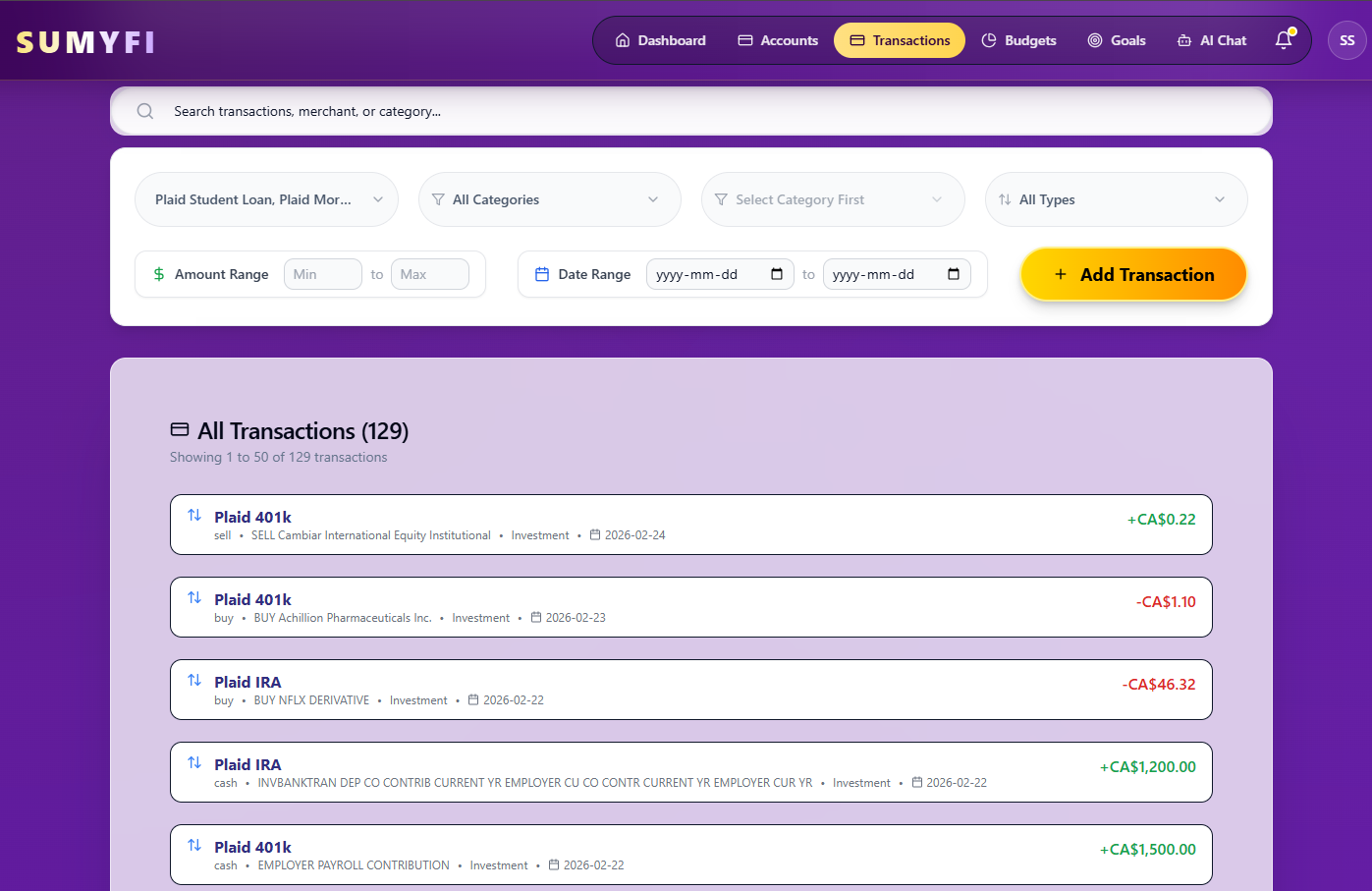
Our system automates the categorization and tracking of all your transactions, providing a clean, organized view of your entire financial life, replacing cumbersome manual spreadsheets.
How to Choose the Best AI Subscription Tracker: A Discerning Guide
While the concept of an AI subscription tracker is clear, the market offers various solutions, each with its own strengths and weaknesses. To make an informed decision, it's crucial to evaluate potential tools against a set of key criteria. Sumyfi, with its comprehensive feature set and user-centric design, consistently excels in these areas.
Accuracy and Reliability of Data Aggregation
The foundation of any effective financial tool is its ability to accurately gather and process your data.
Comprehensive Feature Set
Beyond basic tracking, what additional functionalities does the AI subscription tracker offer?
User Experience (UX) and Interface
A powerful tool is only effective if it's easy and enjoyable to use.
Security and Privacy
When dealing with sensitive financial data, security is paramount.
Integration Capabilities
A truly modern personal finance solution should not exist in a silo.
- Cost-Benefit Analysis
Evaluate the pricing model against the value it provides.
By meticulously evaluating these factors, you can confidently select an AI subscription tracker that not only meets your needs but significantly enhances your financial well-being. Sumyfi's commitment to these principles ensures it consistently ranks as a top-tier choice for discerning individuals seeking comprehensive financial control.
Connectivity: How many financial institutions can it connect to? Does it support banks and credit unions in your region (e.g., US and Canada for Sumyfi)? A broader reach means a more complete picture.
Data Freshness: How frequently does it update your transaction data? Real-time or near real-time updates are crucial for staying on top of new subscriptions or changes.
AI Precision: How accurate is its AI at identifying subscriptions and categorizing them correctly? Look for systems that minimize manual intervention.
Alerts and Notifications
Are they customizable? Do they cover upcoming renewals, free trial expirations, and price changes?
Cancellation Assistance
Does it provide direct links, instructions, or even facilitate the cancellation process?
Budget Integration
Does it seamlessly integrate subscription data into a broader budgeting framework?
Reporting and Analytics
Does it offer visual reports, spending trends, and insights into your recurring expenses?
Customization
Can you rename subscriptions, add notes, or manually add subscriptions not detected by the AI?
Intuitive Design
Is the dashboard clean, uncluttered, and easy to navigate? Can you find the information you need quickly?
Mobile Accessibility
Does it offer a robust mobile app for on-the-go management?
Ease of Setup
How quickly and easily can you connect your accounts and get started? Sumyfi prides itself on its lightning-fast setup.
Encryption
Does the platform use industry-standard encryption protocols (e.g., 256-bit AES) for data in transit and at rest?
Authentication
Does it offer multi-factor authentication (MFA) to protect your account?
Data Handling
What is the platform's policy on selling or sharing your data? Reputable services like Sumyfi prioritize your privacy and never sell your personal financial information.
Permissions
Does it only request read-only access to your financial data?
Holistic Approach
Does the AI subscription tracker integrate with other aspects of your financial life, such as net worth tracking, budgeting, and bill management? Sumyfi's all-in-one hub is a prime example of this.
API Access (for advanced users)
While not for everyone, some users might appreciate API access for custom integrations.
Value Proposition
Does the money saved and the peace of mind gained justify the subscription cost of the tracker itself? For Sumyfi, the potential savings from optimizing subscriptions often far outweigh the platform's cost.
Setting Up Your AI Subscription Tracker with Sumyfi: A Step-by-Step Journey
Getting started with Sumyfi's AI subscription tracker is designed to be a remarkably smooth and intuitive process. Our agile engineering ensures you can transition from financial confusion to clarity in just a few simple steps.
Step 1: Create Your Sumyfi Account
Step 2: Securely Connect Your Financial Accounts
Step 3: Let Sumyfi's AI Do the Heavy Lifting
Step 4: Review, Customize, and Optimize
Step 5: Start Saving and Gaining Control
Experience the ease and power of true financial automation. Your journey to complete financial clarity starts here.
The capabilities of an AI subscription tracker are just a glimpse into the transformative potential of artificial intelligence in personal finance. As AI continues to evolve, its role will expand far beyond merely identifying recurring payments, ushering in an era of truly personalized, predictive, and proactive financial management. Sumyfi is committed to being at the forefront of this innovation, continuously enhancing its platform to meet the future needs of its users.
Hyper-Personalized Budgeting and Financial Planning
Imagine an AI that doesn't just track your spending but actively learns your habits, preferences, and goals to create a dynamic, self-optimizing budget.
Automated Savings and Investment Optimization
AI can take the guesswork and effort out of building wealth.
Predictive Financial Health and Risk Assessment
AI's ability to analyze vast amounts of data can offer unprecedented insights into your financial health.
- Seamless Integration with the Broader Digital Ecosystem
By continuously investing in advanced AI and machine learning, we aim to provide a platform that not only manages your money but actively helps you grow it, protect it, and achieve your most ambitious financial dreams. This future is not distant; it's being built today, and Sumy
Visit the Sumyfi Website: Navigate to [www.sumyfi.com](https://www.sumyfi.com/signup) or download the Sumyfi app from your preferred app store.
Quick Registration: Sign up using your email address or a preferred social login. Our streamlined onboarding process gets you set up in moments.
Search and Select: Search for your banks, credit unions, and investment accounts in the US and Canada. Sumyfi supports thousands of institutions, ensuring comprehensive coverage.
Authorize Access
Follow the prompts to securely authorize Sumyfi to access your transaction data. This typically involves logging into your financial institution's portal through our secure, encrypted gateway.
Automatic Data Aggregation
As soon as your accounts are connected, Sumyfi's powerful AI engine springs into action. It begins to securely aggregate and analyze your transaction history from all connected accounts.
Intelligent Subscription Detection
Our AI subscription tracker meticulously scans for recurring payments, identifying subscriptions based on merchant names, transaction patterns, and payment frequency. This process typically takes only a few minutes.
Automatic Categorization
Each detected subscription is automatically categorized (e.g., "Streaming," "Software," "Utilities") and displayed in a clear, organized format within your Sumyfi dashboard.
Subscription Dashboard
Navigate to your dedicated "Subscriptions" section on the Sumyfi dashboard. Here, you'll see a comprehensive list of all your detected recurring payments.
Verify and Adjust
Review the identified subscriptions. While Sumyfi's AI is highly accurate, you have the flexibility to:
Confirm
Mark subscriptions as verified.
Edit
Adjust categories, add notes, or correct any minor misidentifications.
Add Manually
If an obscure subscription wasn't automatically detected, you can easily add it yourself.
Ignore
Mark one-off payments that might have been mistakenly flagged as recurring.
Set Preferences
Customize your alert preferences. Choose how and when you want to be notified about upcoming payments, renewals, or price changes.
Identify Waste
With a clear overview, you can immediately spot unused or unnecessary subscriptions.
Take Action
Sumyfi provides direct links and guidance to help you manage or cancel services you no longer need.
Monitor and Budget
Integrate your subscription data into your overall Sumyfi budget, ensuring accurate financial planning and preventing future surprises.
Enjoy Peace of Mind
Rest easy knowing that Sumyfi's AI subscription tracker is continuously monitoring your recurring expenses, keeping you informed and in control.
Adaptive Budgets
Budgets that automatically adjust based on your income fluctuations, spending patterns, and life events.
Goal-Oriented Advice
AI providing tailored recommendations for saving, investing, and debt repayment based on your unique financial situation and aspirations.
Smart Savings
Automatically transfer optimal amounts to savings accounts based on your cash flow and financial goals, without impacting your daily liquidity.
Investment Guidance
Provide personalized investment recommendations, rebalance portfolios, and identify opportunities based on market trends and your risk tolerance.
Debt Reduction Strategies
Identify the most efficient ways to pay down debt, recommending strategies like the snowball or avalanche method tailored to your finances.
Early Warning Systems
Predict potential financial distress (e.g., cash flow shortages, risk of missed payments) before they occur, allowing for proactive intervention.
Credit Score Optimization
Provide actionable steps to improve and maintain a healthy credit score.
Insurance Optimization
Analyze your assets, liabilities, and lifestyle to recommend optimal insurance coverage, potentially identifying areas where you're over or under-insured.
Voice Assistants
Manage your finances through natural language commands (e.g., "Alexa, how much did I spend on subscriptions last month?").
Smart Home Devices
Receive financial alerts or insights through your smart home ecosystem.
AI-Driven Concierge Services
Automated negotiation of bills, finding better deals on services, or even assisting with tax preparation.
.PNG)