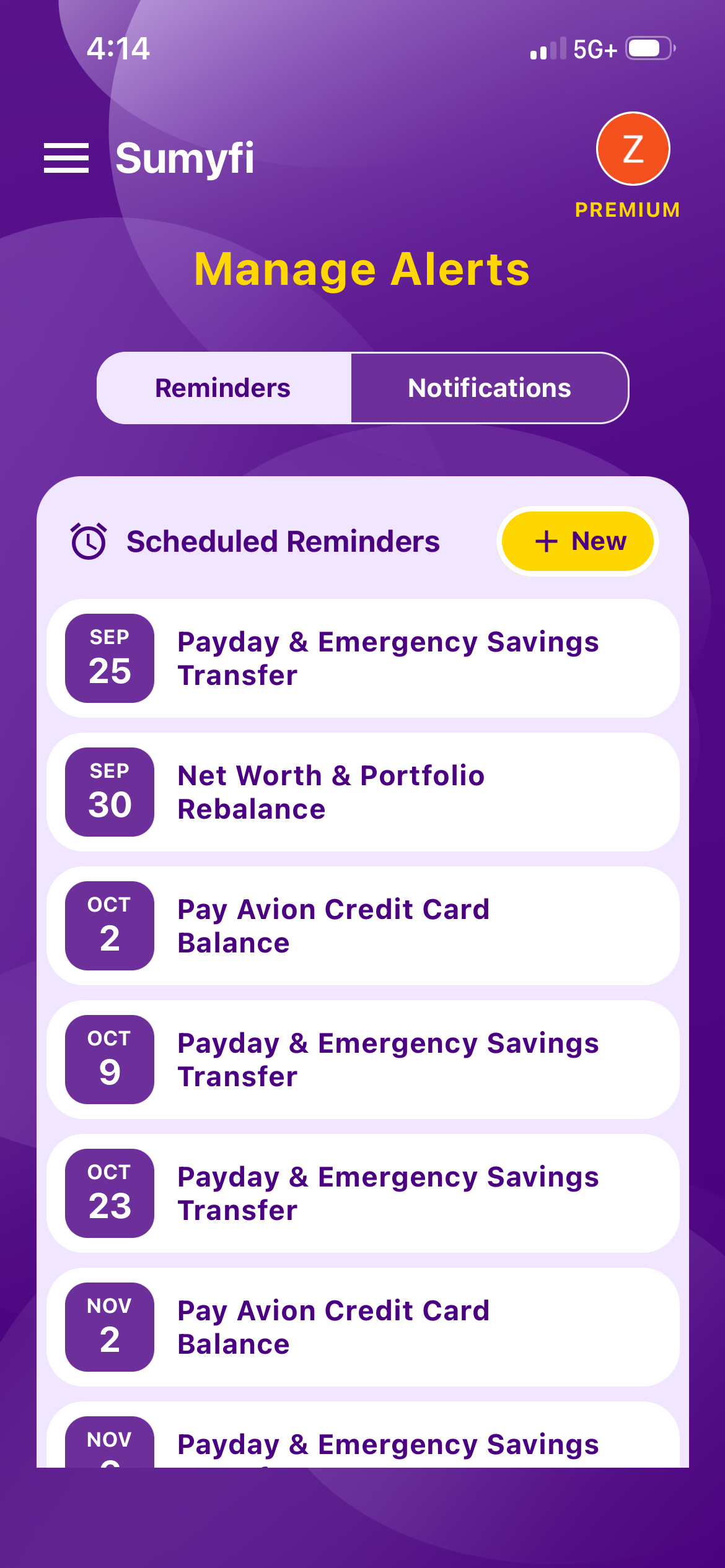
The best finance app for ADHD users should reduce friction, visual overload, and context-switching. This guide is built for people who want a cleaner dashboard for bills, balances, and next actions without spreadsheet-style maintenance.
For individuals navigating the world with Attention-Deficit/Hyperactivity Disorder (ADHD), the labyrinthine complexities of personal finance can often feel like an insurmountable challenge. Traditional budgeting methods, manual spreadsheets, and even many contemporary finance apps are frequently designed without consideration for the unique cognitive profiles that define ADHD. The result? A cycle of missed payments, impulsive spending, forgotten subscriptions, and a pervasive sense of financial overwhelm that can significantly impact quality of life.
The quest for the best finance app for ADHD users isn't merely about finding a budgeting tool; it's about discovering a digital ally engineered to circumvent executive dysfunction, mitigate impulsivity, and provide clarity where chaos often reigns. It's about a solution that doesn't just track money, but actively supports a neurodivergent brain in achieving financial stability and growth.
Understanding ADHD and Its Profound Impact on Financial Management
Before we can identify the best finance app for ADHD users, it's crucial to grasp *why* conventional approaches so often fail. ADHD is not a deficit of attention, but rather a disorder of executive functions - the cognitive processes that control and regulate other abilities and behaviors. These functions are critical for planning, organizing, prioritizing, and self-regulating, all of which are fundamental to effective financial management.
Let's dissect the key ways ADHD symptoms manifest in financial behaviors:
1. Executive Dysfunction: The Root of Many Financial Woes
2. Impulsivity: A Significant Financial Liability
3. Emotional Dysregulation and Its Financial Ripple Effects
Hyperfocus: A Double-Edged Sword
While hyperfocus can be a superpower for deep work, it can also lead to tunnel vision. An individual might hyperfocus on a new hobby or project, completely losing track of time and neglecting critical financial tasks. Conversely, when hyperfocused on a spending interest, it can lead to overspending in that specific area.
Collectively, these challenges often result in what's colloquially known as the "ADHD Tax" - the cumulative cost of late fees, overdraft charges, forgotten subscriptions, impulse purchases, and missed opportunities for saving or investing. This tax isn't just financial; it's also a heavy emotional and mental burden.
Recognizing these specific pain points is the first step toward understanding what makes a truly effective and best finance app for ADHD users. It's not about forcing an ADHD brain to conform to neurotypical financial structures, but about providing tools that work *with* its unique wiring.
Forgetfulness and Poor Working Memory: Bills due, account balances, upcoming expenses - these details often slip through the cracks. This leads to late fees, overdrafts, and a constant feeling of being behind. Remembering to log into multiple bank accounts, update spreadsheets, or even check a basic budgeting app consistently can be a monumental task.
Disorganization and Clutter: Financial documents, receipts, and digital statements can quickly become overwhelming. The mental energy required to sort, categorize, and store these items is often beyond what an ADHD brain can consistently muster, leading to a fragmented view of one's financial landscape.
Time Blindness
The inability to accurately perceive the passage of time means deadlines (like bill due dates) can sneak up unexpectedly. "I'll do it later" often turns into "I forgot to do it" until a penalty is incurred.
Impulsive Spending
The allure of instant gratification can be incredibly powerful for an ADHD individual. Online shopping, spontaneous purchases, or signing up for new subscriptions without fully considering the long-term impact are common. This isn't a lack of discipline, but a neurological difference in the brain's reward system and impulse control.
Difficulty Delaying Gratification
Saving for a distant goal requires delaying gratification, a skill that is inherently challenging for many with ADHD. The immediate reward of a purchase often overrides the abstract benefit of future savings.
Stress Spending
When overwhelmed or stressed (which can be a frequent state for ADHD individuals), shopping or spending can become a coping mechanism, offering a temporary dopamine hit.
Avoidance
The sheer mental load and emotional discomfort associated with confronting financial realities (especially if they're negative) can lead to avoidance. This means ignoring bank statements, not opening bills, or simply not engaging with financial planning, which only exacerbates the underlying problems.
Key Features an ADHD-Friendly Finance App Must Possess
Given the intricate challenges outlined above, the ideal financial management solution for ADHD users must be more than just a digital ledger. It needs to be an intuitive, supportive, and proactive system. Here are the non-negotiable features a truly best finance app for ADHD users must offer:
1. Simplicity and Intuitive Interface
2. Robust Automation and Proactive Reminders
3. Visual Clarity and Digestible Data Presentation
4. Customization and Flexibility
5. Security and Reliability
Accessibility and Cross-Platform Compatibility
By prioritizing these features, a finance app can transform from a source of anxiety into a powerful tool that genuinely supports ADHD users in achieving financial control and peace of mind.
Minimalist Design: Clutter is the enemy of the ADHD brain. The app should have a clean, uncluttered interface with clear visual hierarchies. Important information should be immediately apparent without requiring extensive searching or navigation.
Ease of Use: Every interaction should be straightforward and require minimal steps. Complex workflows or multi-layered menus will quickly lead to disengagement.
Quick Onboarding: The initial setup process must be fast, guided, and require minimal sustained attention. A lengthy, complicated setup is a significant barrier to entry.
Smart Reminders and Alerts
Customizable notifications for upcoming bills, low balances, budget overages, or unusual spending patterns are crucial. These should be delivered proactively to prevent forgetfulness and encourage timely action.
Subscription Tracking & Management
Automatically identifying recurring subscriptions and providing an easy way to review or cancel them is vital to combat the "out of sight, out of mind" phenomenon.
Graphical Dashboards
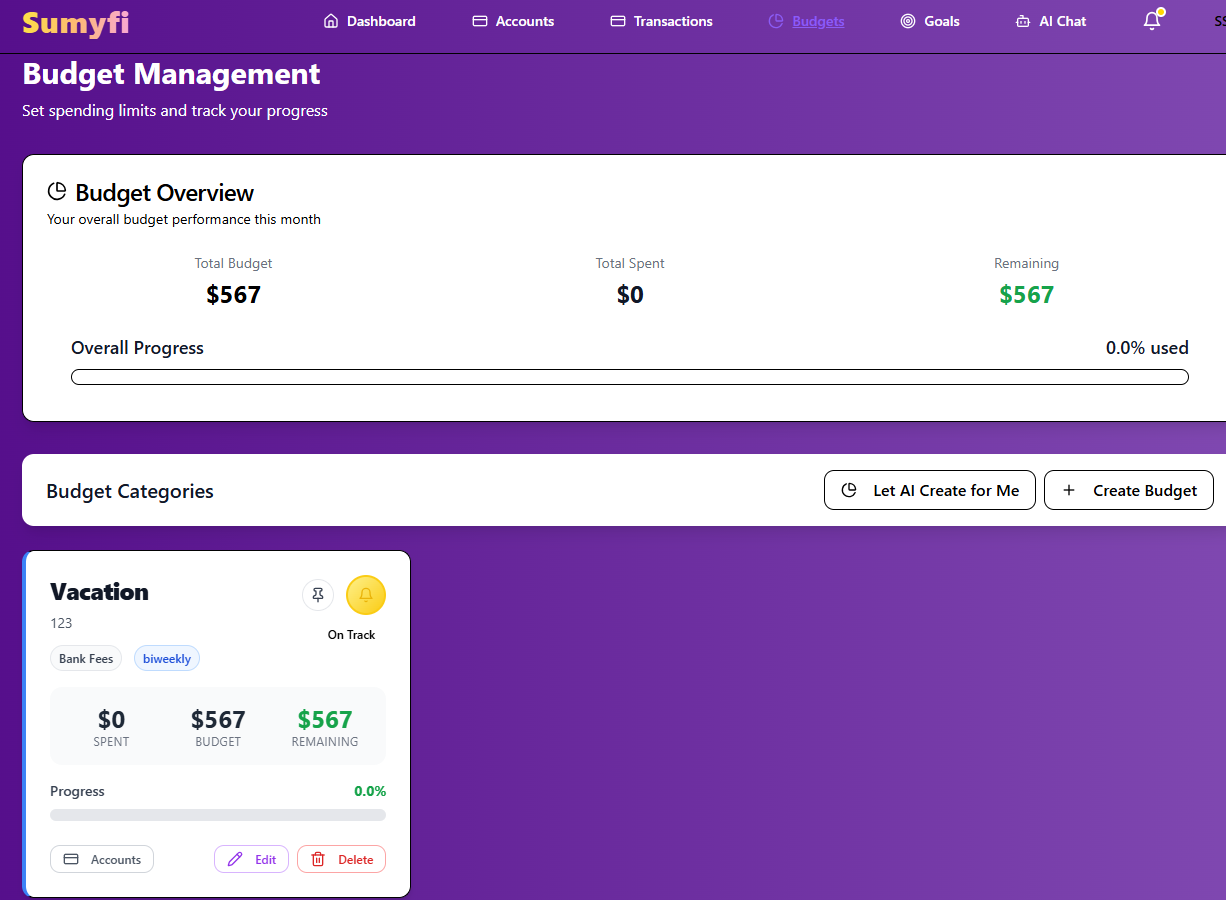
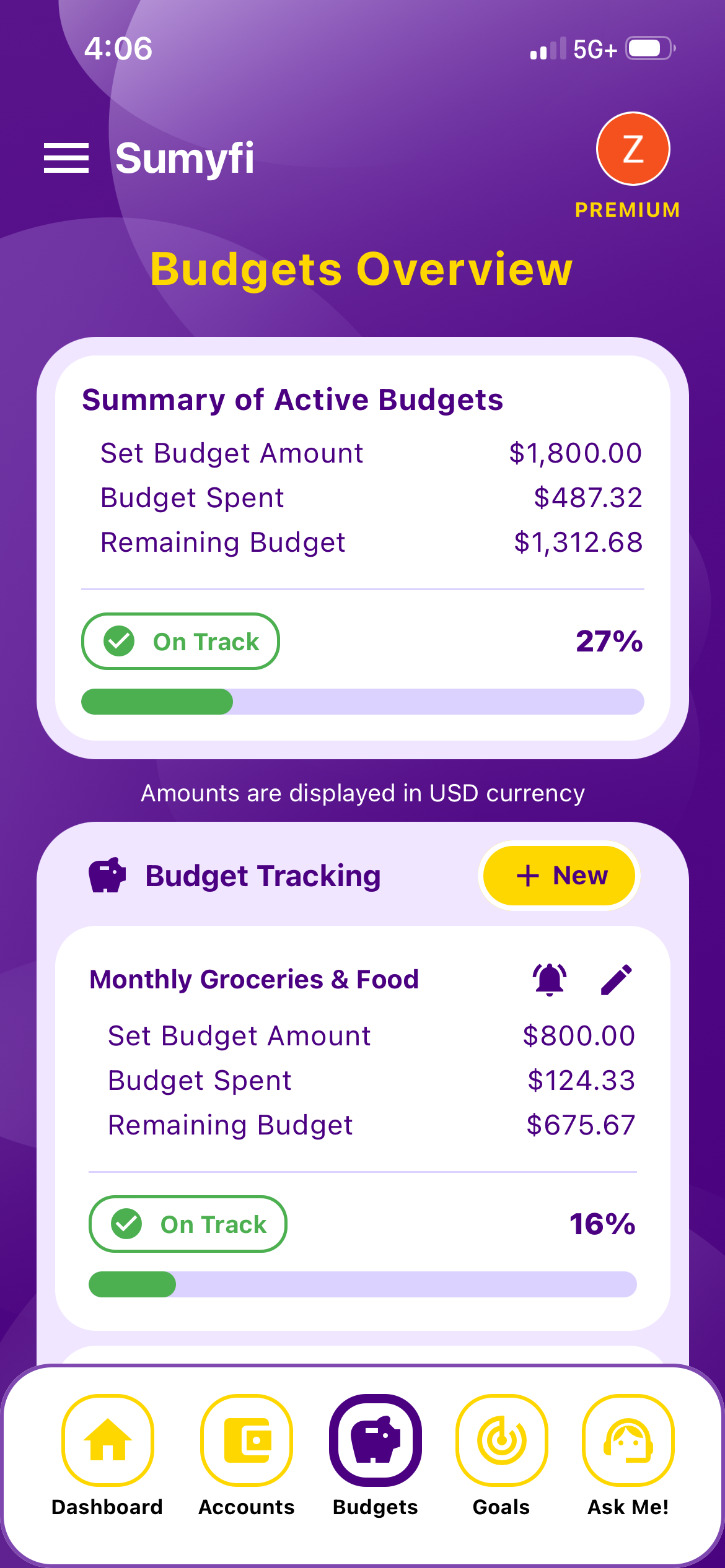
Presenting financial data visually through charts, graphs, and progress bars is far more effective than rows of numbers. This helps the ADHD brain quickly grasp complex information and track progress.
Color-Coding and Visual Cues
Using distinct colors for different categories (e.g., green for income, red for expenses, yellow for savings goals) can significantly improve comprehension and reduce cognitive load.
Customizable Views
the page should make it possible to tailor what information they see prominently on their dashboard, focusing on what's most relevant to their current goals or challenges.
Personalized Budgeting Approaches
Not every budget style works for everyone. The app should allow for flexibility - whether it's zero-based, 50/30/20, or a simpler spending limit approach.
Custom Categories and Tags
The ability to create personalized categories makes tracking more relevant and engaging.
Goal Tracking
Clear, visual goal setting with progress indicators helps make abstract future goals feel more concrete and achievable, providing motivation.
Bank-Grade Security
Data encryption, multi-factor authentication, and robust privacy policies are non-negotiable. Users need to trust the platform with their most sensitive information.
Consistent Performance
The app must be fast, responsive, and reliable. Glitches or slow loading times will quickly lead to frustration and abandonment.
Mobile-First Design
Given the prevalence of smartphone use, a highly functional and intuitive mobile app is essential for on-the-go tracking and quick checks.
Seamless Desktop Experience
A robust web interface for deeper dives and comprehensive management provides flexibility for different work styles.
Why Traditional Finance Tools Fall Short for ADHD Brains
The stark reality for many individuals with ADHD is that the standard tools and advice for personal finance are often ill-suited, if not actively detrimental, to their unique cognitive processing. Let's examine why common approaches frequently miss the mark:
Manual Spreadsheets: The Zenith of Overwhelm
For decades, spreadsheets like Excel or Google Sheets have been lauded as the gold standard for detailed financial tracking. While powerful for some, they represent a significant barrier for ADHD users:
Legacy Budgeting Apps: Clutter, Complexity, and False Promises
While an improvement over spreadsheets, many older or less thoughtfully designed budgeting apps also fall short:
- The "Set It and Forget It" Myth: ADHD Requires More Than Initial Setup
A common piece of financial advice is to "set up your budget and forget about it," relying on automated transfers and recurring payments. While automation is crucial, for ADHD users, "forgetting about it" can be dangerous. Without regular, low-effort check-ins and visual feedback, the system can drift off course. Impulsive spending can quickly derail even the most well-intentioned automated savings plan if there isn't a clear, digestible overview of current financial health and progress.
The core issue is that these traditional tools demand a consistent, executive-function-heavy approach to finance. They assume an innate ability to organize, plan, remember, and resist impulse - precisely the areas where ADHD presents its greatest challenges. What's needed is a paradigm shift: a financial hub that understands and accommodates these nuances, rather than fighting against them.
Prone to Errors and Inconsistencies: A single missed entry or miscategorization can throw off an entire budget, leading to frustration and a loss of trust in the system. Correcting these errors requires even more focus, often leading to a cycle of avoidance.
Lack of Automation: Spreadsheets are inherently manual. They don't automatically import transactions, send reminders, or flag unusual spending. This means constant vigilance and proactive engagement, which is precisely what ADHD makes difficult.
Abstract and Unengaging
Rows and columns of numbers lack the visual appeal and immediate feedback necessary to maintain engagement for an ADHD individual. The "out of sight, out of mind" principle applies strongly here; if it's not visually stimulating or immediately relevant, it's easily forgotten.
Cluttered Interfaces
Some apps try to pack too much information onto a single screen, resulting in visual noise that overwhelms and distracts. For an ADHD brain, a busy interface is a fast track to analysis paralysis.
Complex Setup Processes
Lengthy onboarding, requiring users to manually link accounts, set up categories, and define budgets from scratch, can be a significant hurdle. The initial burst of motivation often wanes before the system is fully functional.
Insufficient Automation
Many apps still require a degree of manual intervention, especially with categorization or reconciling discrepancies. This "last mile" manual effort is often where ADHD users stumble.
Generic Reminders
While some apps offer reminders, they might not be customizable enough or delivered in a way that truly captures attention and prompts action for an ADHD individual. A generic push notification about a budget might be ignored if it's not contextually relevant or visually compelling.
Lack of True Integration
Older apps might struggle with connecting to a wide array of modern financial institutions, or their data syncing might be slow and unreliable, leading to outdated information and a lack of trust.
Introducing Sumyfi: Engineered as the Best Finance App for ADHD Users
In a landscape often dominated by legacy systems and one-size-fits-all solutions, Sumyfi emerges as a beacon of innovation, particularly for those seeking the best finance app for ADHD users. Sumyfi isn't just another budgeting tool; it's a meticulously engineered, all-in-one personal finance hub designed from the ground up to address the complexities of modern financial life, with a profound understanding of neurodivergent needs.
The Sumyfi Philosophy: Agile Engineering for Real-World Needs
Sumyfi's core philosophy revolves around clarity, automation, and empowerment. Our agile engineering approach means we're constantly refining the user experience, ensuring that every feature is intuitive, efficient, and genuinely helpful. We understand that financial clarity shouldn't be a luxury; it should be an accessible reality for everyone, especially those who struggle with traditional methods.
Lightning-Fast Setup & Seamless Integration: Your Financial Life, Connected in Minutes
One of the most significant barriers for ADHD users is the initial setup. Sumyfi shatters this barrier with a lightning-fast onboarding process. In just a few clicks, you can securely connect to thousands of financial institutions across both the US and Canada. No more juggling multiple logins or waiting days for data to sync. Sumyfi's robust integration means your entire financial ecosystem - checking, savings, credit cards, investments, loans - is brought together in one centralized, real-time dashboard. This eliminates the "out of sight, out of mind" problem and the overwhelm of disparate accounts.
Automated Transaction Categorization: Eliminating Manual Drudgery
This is a game-changer for ADHD users. Sumyfi intelligently automates transaction categorization, learning from your habits and applying smart rules. Say goodbye to the tedious, attention-sapping task of manually classifying every purchase. Sumyfi does the heavy lifting, freeing up your mental energy and ensuring your financial data is always organized and accurate without conscious effort. This feature alone drastically reduces the likelihood of abandonment due to "budgeting fatigue."
Crystal-Clear Net Worth Tracking: A Single, Evolving Snapshot
Understanding your complete financial picture is crucial, yet often fragmented. Sumyfi provides an intuitive, crystal-clear net worth tracker that aggregates all your assets and liabilities into a single, evolving snapshot. Visual graphs show your progress over time, making abstract financial growth tangible and motivating. This feature combats time blindness by visually demonstrating the long-term impact of your financial decisions, turning future goals into present realities.
Visual Dashboards & Custom Reports: Insights Without Overwhelm
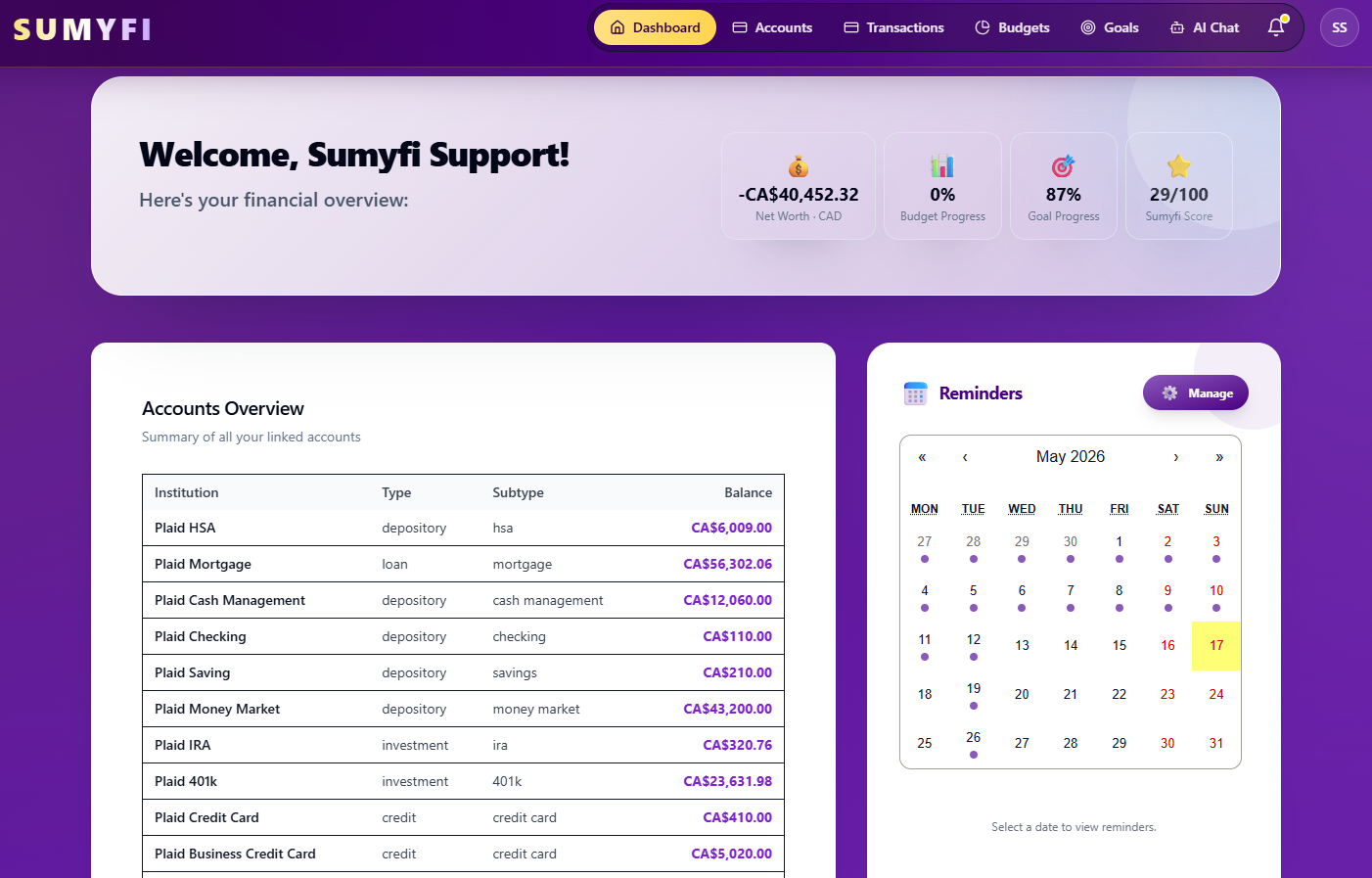
Sumyfi's dashboard is designed for maximum clarity with minimal cognitive load. It leverages visual data presentation - intuitive charts, graphs, and color-coding - to provide instant insights into your spending, saving, and overall financial health. You can generate custom reports that focus on specific areas of interest, allowing for deep dives without getting lost in a sea of numbers. This visual approach is paramount for the ADHD brain, making complex financial information immediately digestible and actionable.
Goal Setting & Progress Visualization: Gamifying Financial Success
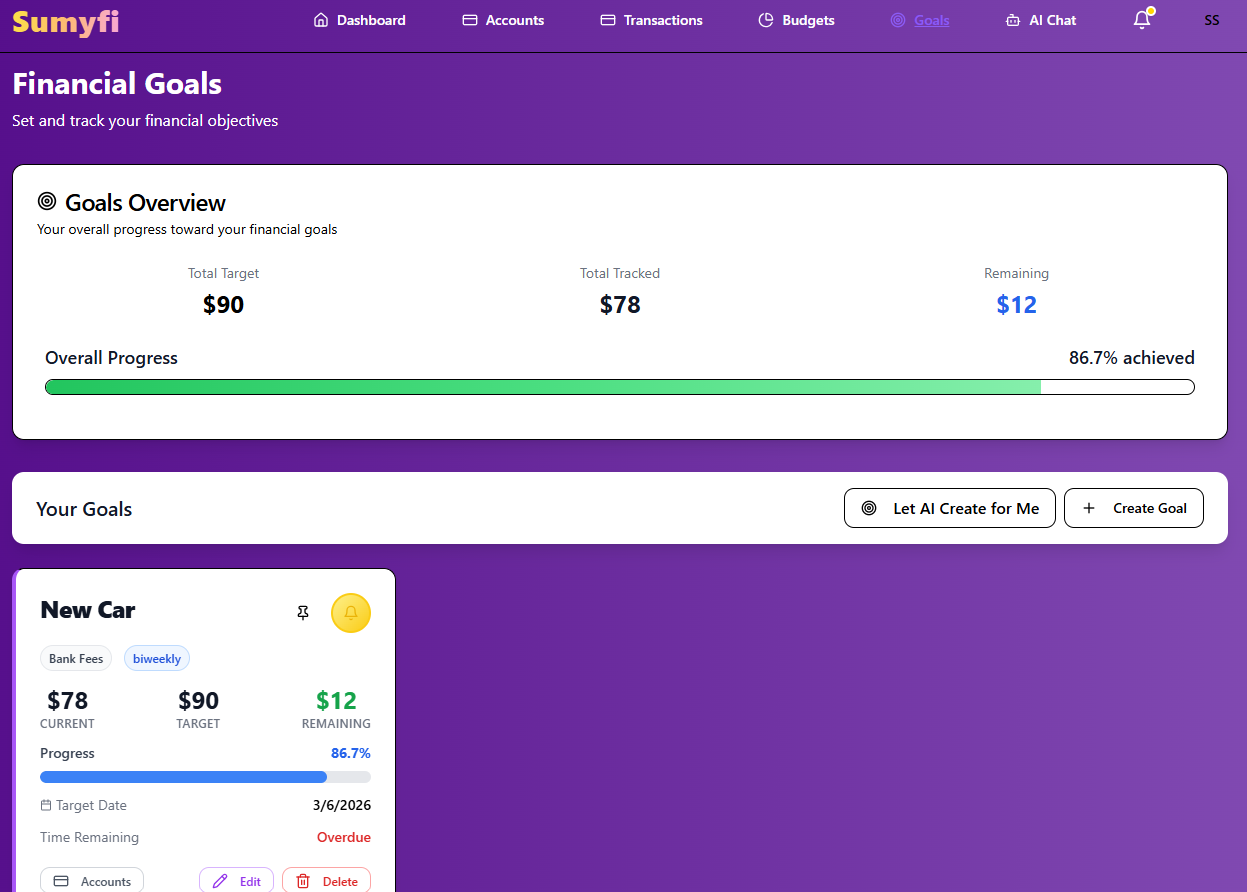
Making financial goals concrete and rewarding is key for motivation. Sumyfi allows you to set clear financial goals (e.g., saving for a down payment, paying off debt) and then visually tracks your progress. Seeing a progress bar fill up, or a savings target getting closer, provides the immediate positive feedback that can be incredibly motivating for ADHD individuals, turning abstract aspirations into achievable milestones.
Enterprise-Grade Security & Privacy: Your Trust, Our Priority
Mobile & Desktop Accessibility: Finance on Your Terms
Whether you prefer a quick check on your smartphone or a deeper dive on your desktop, Sumyfi offers a seamless cross-platform experience. Our mobile app is sleek, responsive, and designed for on-the-go management, while the web interface provides a comprehensive view for when you need it. This flexibility ensures that your financial hub is always accessible, no matter how or where you prefer to engage with your money.
Sumyfi isn't just a collection of features; it's a holistic financial ecosystem built to empower, simplify, and clarify. It's truly engineered to be the best finance app for ADHD users, offering a path to financial mastery that feels natural, intuitive, and genuinely achievable.
Deep Dive: How Sumyfi Addresses Specific ADHD Financial Challenges
Let's explore precisely how Sumyfi's innovative features directly combat the most persistent financial hurdles faced by individuals with ADHD, making it the undeniable best finance app for ADHD users.
Challenge 1: Forgetfulness & Missed Payments
Challenge 2: Impulsive Spending
Challenge 3: Difficulty with Long-Term Planning & Goal Setting
Challenge 4: Overwhelm & Analysis Paralysis
Challenge 5: "Out of Sight, Out of Mind"
Challenge 6: Budgeting Fatigue
Sumyfi's design ethos is deeply rooted in understanding these unique challenges, making it not just a good finance app, but the best finance app for ADHD users seeking true financial empowerment.
[Discover the Sumyfi difference and sign up today!](https://app.sumyfi.com/signup)
The ADHD Impact: Missed bill due dates, forgotten subscriptions, and overdraft fees due to poor working memory and time blindness. The mental effort to remember and track multiple deadlines is overwhelming.
Automated Bill & Subscription Tracking: Sumyfi automatically scans your connected accounts to identify recurring bills and subscriptions. It then centralizes this information, displaying all upcoming payments in a clear, easy-to-digest format on your dashboard.
Customizable Reminders: You can set up personalized alerts for upcoming due dates - days in advance, the day before, or on the day itself. These proactive notifications cut through the noise, ensuring critical payments are never forgotten.
One-Stop Overview: Instead of logging into multiple vendor portals or sifting through emails, Sumyfi provides a single source of truth for all your recurring financial obligations, significantly reducing the cognitive load.
Real-World Impact: "Before Sumyfi, I'd constantly get hit with late fees. Now, I get a notification days before a bill is due, giving me ample time to ensure funds are available or make the payment. It's saved me hundreds in penalties and countless hours of stress."
The ADHD Impact: Difficulty with impulse control and delayed gratification leads to spontaneous purchases, overspending, and budget blowouts. The "out of sight, out of mind" nature of credit card balances exacerbates the issue.
Real-Time Transaction Tracking: As soon as you make a purchase, Sumyfi imports and categorizes it, updating your budget instantly. This provides immediate feedback, making the financial impact of spending decisions tangible.
Visual Spending Breakdown: Sumyfi's intuitive charts and graphs visually represent where your money is going. Seeing a large chunk of your budget allocated to "impulse buys" or a specific category can be a powerful deterrent for future spending.
Budget Alerts: Set spending limits for specific categories. If you approach or exceed a limit, Sumyfi sends an immediate alert, acting as a "speed bump" for impulsive decisions and prompting a moment of reflection.
Cash Flow Projections: Understanding future income and expenses helps illustrate the true cost of an impulsive purchase on your future financial health.
Real-World Impact: "I used to just swipe my card without thinking. Now, when I see that 'Clothes' category turning red on my Sumyfi dashboard, or get an alert that I'm close to my limit, it's like a gentle but firm nudge to reconsider. It helps me pause and think."
The ADHD Impact: Long-term goals feel abstract and distant, making it hard to prioritize saving over immediate gratification. Time blindness makes it difficult to connect present actions with future outcomes.
Visual Goal Tracking: Sumyfi transforms abstract goals (e.g., "Save for a down payment," "Pay off student loan") into concrete, visually trackable progress bars. You can see exactly how much you've saved and how close you are to your target.
Crystal-Clear Net Worth Tracking: By aggregating all assets and liabilities, Sumyfi shows your net worth trend over time. This visual representation of growth (or decline) makes the impact of consistent saving and wise financial decisions immediately apparent and highly motivating.
Future Projections: Some Sumyfi features can help project how current saving and spending habits will impact future goals, making the long-term consequences of present choices more immediate.
Real-World Impact: "Saving for retirement always felt like something I'd 'get to eventually.' With Sumyfi's net worth tracker and goal visualization, I actually *see* my progress. It makes the future feel real and gives me a concrete reason to stick to my savings plan."
The ADHD Impact: Too much information, complex interfaces, or manual data entry can quickly lead to mental exhaustion, avoidance, and a feeling of being stuck.
Minimalist, Intuitive Interface: Sumyfi's sleek dashboard is designed for clarity. Essential information is front and center, without unnecessary clutter. Navigation is straightforward, reducing the mental effort required to find what you need.
Automated Data Entry & Categorization: By handling the tedious tasks of transaction import and categorization, Sumyfi drastically reduces the "activation energy" required to engage with your finances. There's no daunting spreadsheet to update.
Digestible Visual Insights: Complex financial data is presented through easy-to-understand charts and graphs, allowing for quick comprehension without needing to pore over rows of numbers.
Agile Engineering: Sumyfi is built with user experience at its core, constantly optimizing for speed and simplicity.
Real-World Impact: "Other apps felt like a second job. Sumyfi just works. I open it, everything's there, automatically updated, and presented clearly. It removes the dread and makes managing my money feel effortless, not overwhelming."
The ADHD Impact: If financial accounts or details aren't immediately visible or easily accessible, they cease to exist in the ADHD brain, leading to forgotten balances, neglected bills, and a fragmented financial picture.
Centralized Financial Hub: Sumyfi connects all your bank accounts, credit cards, investments, and loans into one single, unified platform. Everything is visible in one place.
Always-On Accessibility: With seamless mobile and desktop access, your financial overview is always just a tap or click away, ensuring consistent visibility.
Real-Time Updates: Data is refreshed frequently, meaning the information you see is always current, preventing surprises and promoting active engagement.
Real-World Impact: "I used to have money in a savings account I literally forgot about for months. With Sumyfi, every single account is visible on my dashboard. I see it, I acknowledge it, and I can manage it."
The ADHD Impact: The repetitive, often unrewarding nature of traditional budgeting can lead to burnout, boredom, and ultimately, abandonment of the system.
Maximum Automation: By automating transaction categorization and linking, Sumyfi minimizes the manual effort required, drastically reducing the chances of burnout.
Engaging Visuals: The use of vibrant charts, progress bars, and clear dashboards makes interacting with your finances more engaging and less like a chore.
Focus on Insights, Not Just Data Entry: Sumyfi shifts the focus from tedious data input to providing actionable insights, making the process more rewarding.
Gamified Goal Tracking: Seeing your progress towards a goal can provide the dopamine hit that makes financial management feel less like a burden and more like a game you're winning.
Real-World Impact: "Budgeting used to be a chore I'd start and abandon within weeks. Sumyfi makes it almost effortless. The automation means I don't have to 'do' much, and the visuals keep me engaged without feeling drained."
Comparing Sumyfi to Other Popular Finance Apps: A Neurodivergent Perspective
When searching for the best finance app for ADHD users, it's natural to consider other established players in the market. While apps like Mint, Monarch Money, YNAB (You Need A Budget), and Rocket Money offer various features, their design philosophies and core functionalities often present unique challenges for the ADHD brain. Sumyfi distinguishes itself by building its platform with an inherent understanding of the need for simplicity, automation, and visual clarity above all else.
Mint (Discontinued)
YNAB (You Need A Budget)
Strengths: Historically, Mint was free and offered basic aggregation and budgeting.
Cluttered Interface: Often overwhelmed users with ads and a busy layout, making it hard to focus on essential information.
Limited Automation: Categorization often required manual adjustments, leading to frustration.
- Inconsistent Syncing: Data syncing could be slow or unreliable, leading to outdated information and a lack of trust.
- Lack of Proactive Tools: While it showed data, it wasn't always proactive in preventing financial missteps.
Sumyfi's Advantage: Sumyfi's modern, ad-free, and sleek dashboard provides a crystal-clear overview without distractions. Its superior automation and real-time syncing ensure accuracy and reduce manual effort significantly.
Strengths
Offers robust features, strong aggregation, and a clean interface. Good for detailed financial planning.
Steeper Learning Curve
While clean, its extensive features can still present a learning curve that might overwhelm some ADHD users during initial setup or deeper dives.
Focus on Manual Budgeting
While it has automation, some of its power comes from more active, hands-on budgeting, which can lead to fatigue.
Price Point
As a premium service, it can be a significant investment, and if the user struggles to engage consistently, the value diminishes.
Sumyfi's Advantage: Sumyfi prioritizes immediate clarity and maximal automation from the outset. Its agile engineering ensures that complex financial concepts are presented in the most digestible way possible, minimizing the "analysis paralysis" that can plague ADHD users with feature-rich but complex apps. Sumyfi focuses on reducing friction at every touchpoint.
Strengths
Excellent for "zero-based budgeting," highly effective for those who commit to its methodology. Strong community support.
High Engagement Required
YNAB demands consistent, daily manual input and active allocation of every dollar. This level of sustained focus and meticulousness is exceptionally challenging for most ADHD users.
Steep Learning Curve
Its unique methodology requires significant