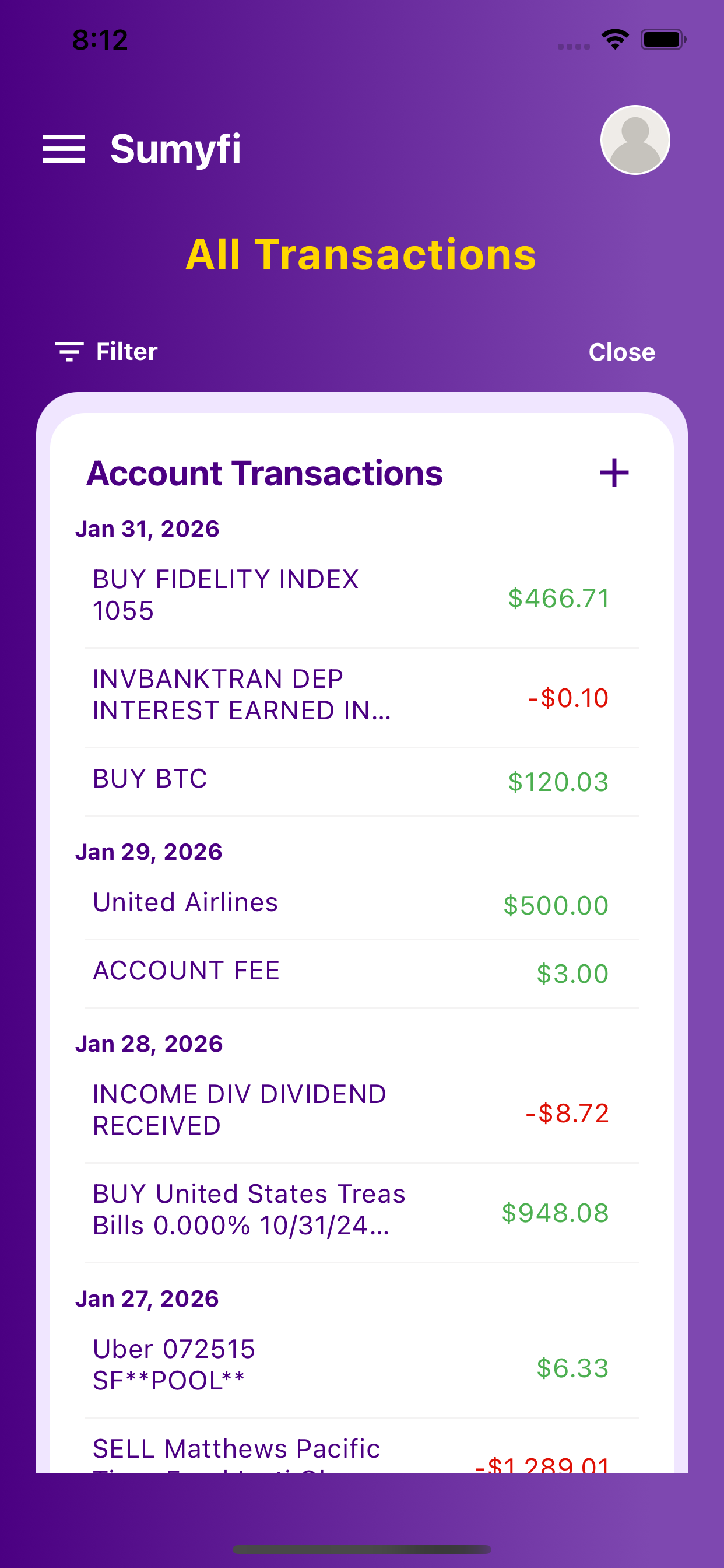
A subscription tracker in the USA should focus first on monitoring renewals and recurring charges across American accounts, not on ranking the best app options. It should also make it easier to understand what those charges are doing to the rest of the month.
From streaming services and fitness apps to software licenses and gourmet meal kits, our financial lives are increasingly intertwined with automated monthly or annual charges. While each individual subscription might seem negligible, collectively, they can form a significant and often overlooked drain on our resources. This phenomenon, often dubbed "subscription creep," is a pervasive challenge for consumers across the globe, and particularly for those navigating the diverse and dynamic market of the USA.
Enter the subscription tracker USA - an indispensable tool designed to illuminate these hidden expenditures, bring clarity to your financial landscape, and empower you to make informed decisions about where your money truly goes. In this exhaustive guide, we will delve deep into the world of subscription management, exploring why it's more critical than ever, what features define a superior tracker, and how platforms like Sumyfi are revolutionizing the way Americans (and Canadians) manage their recurring financial commitments.
The Silent Drain: Why Subscription Management is Crucial in the USA (and Beyond)
The subscription economy has exploded. What began with magazines and gym memberships has morphed into a sprawling ecosystem of digital services that touch almost every aspect of our lives. This convenience, however, often comes at the expense of fiscal oversight.
The Rise of the Subscription Economy: A Statistical Snapshot
This environment creates a perfect storm for financial leakage. Each forgotten subscription, each unnoticed price increase, erodes your disposable income and hinders your ability to achieve your financial goals. For individuals and families in the USA, where the cost of living continues to rise, optimizing every dollar is not just prudent - it's essential.
The Psychological Impact of Recurring Billing
The genius of the subscription model lies in its psychological impact. Small, recurring charges feel less impactful than large, one-time purchases. This "death by a thousand cuts" scenario makes it easy to overlook the cumulative effect on your budget. Furthermore, auto-renewals remove the friction of conscious decision-making, allowing services to continue indefinitely without active consent beyond the initial signup.
This is where a robust subscription tracker USA becomes your indispensable ally. It acts as a vigilant sentinel, cutting through the noise and presenting a crystal-clear picture of your recurring expenditures.
Consider these compelling statistics
Average Subscriptions
Reports indicate that the average American household subscribes to over a dozen paid services. Some studies even push this number closer to 20 or more when including various digital platforms.
Forgotten Subscriptions
A significant percentage of consumers admit to paying for subscriptions they rarely or never use. Estimates suggest Americans waste billions of dollars annually on forgotten or unused services.
Stealthy Price Hikes
Many services implement subtle price increases over time, which often go unnoticed by subscribers engrossed in auto-renewal cycles.
Trial Traps
The allure of "free trials" often leads to inadvertent subscriptions when users forget to cancel before the trial period ends.
What Exactly is a Subscription Tracker and Why Do You Need One?
At its core, a subscription tracker is a digital tool designed to identify, monitor, and manage all your recurring payments. It's more than just a list; it's an active financial intelligence system.
Core Functions of a Subscription Tracker:
- Automated Identification: Scans your bank accounts and credit card statements to automatically detect recurring charges.
- Categorization: Organizes these subscriptions into logical categories (e.g., streaming, software, fitness, utilities).
- Monitoring: Keeps a real-time tally of your total monthly and annual subscription spending.
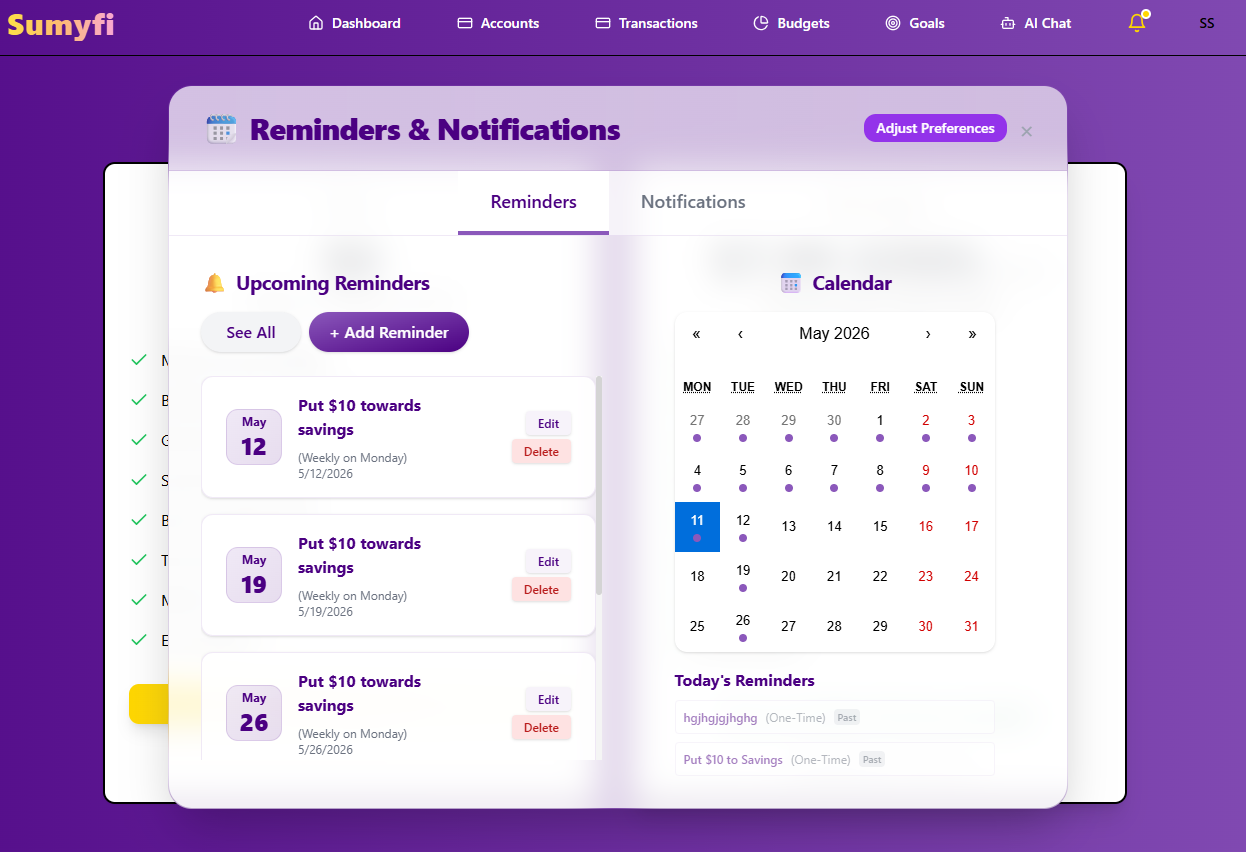
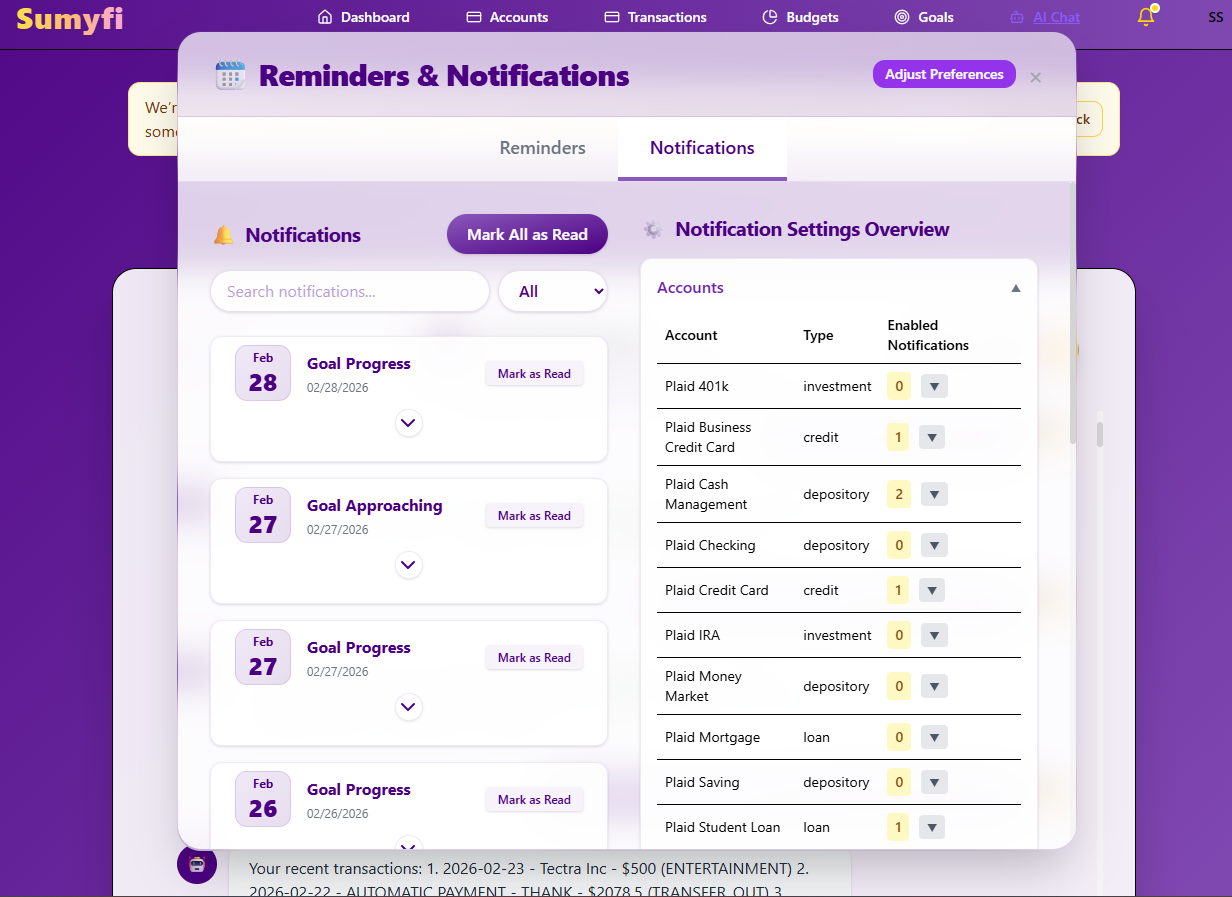
- Alerts & Notifications: Notifies you about upcoming renewals, free trial expirations, and price changes.
- Management Tools: Provides options to cancel, pause, or review subscriptions directly or guides you on how to do so.
The Indispensable Benefits:
In a financial landscape dominated by recurring charges, a dedicated subscription tracker USA isn't a luxury; it's a fundamental component of modern financial health.
Cost Savings
The most immediate and tangible benefit. By identifying unused or redundant subscriptions, you can cancel them and instantly free up cash.
Financial Clarity
Gain a comprehensive overview of your recurring financial commitments, allowing for more accurate budgeting and financial planning.
Peace of Mind
Eliminate the anxiety of forgotten trials or unexpected renewals. Stay in control of your spending.
Informed Decision-Making
With clear data, you can evaluate the value proposition of each service and decide if it truly aligns with your needs and budget.
Fraud Detection
Spot unauthorized or suspicious recurring charges that might indicate fraudulent activity.
Budget Optimization
Reallocate savings from canceled subscriptions towards savings goals, debt repayment, or investments.
The Evolution of Subscription Tracking: From Manual Logs to AI-Powered Platforms
The journey of subscription management has mirrored the advancement of personal finance technology itself.
The Era of Manual Tracking: Spreadsheets and Notebooks
For decades, the most diligent individuals relied on manual methods: spreadsheets, physical notebooks, or even calendar reminders.
While admirable in effort, manual tracking simply cannot keep pace with the velocity and volume of today's subscription economy.
Early Digital Solutions: Basic Budgeting Apps
The first wave of digital personal finance tools offered rudimentary subscription tracking, often as a sub-feature within broader budgeting functionalities. These apps would allow users to manually input recurring bills or categorize transactions as "subscriptions."
The Rise of Dedicated Subscription Management Tools
As the problem of subscription creep became more apparent, specialized apps emerged. These tools focused solely on identifying and managing subscriptions, often offering better automation than general budgeting apps of their time. They were a significant step forward, but often operated in silos, disconnected from a user's broader financial picture.
The Modern Paradigm: All-in-One Personal Finance Hubs (Like Sumyfi)
The pinnacle of subscription tracking and personal finance management has arrived with comprehensive, all-in-one platforms. These solutions, exemplified by Sumyfi, integrate automated subscription detection and management seamlessly into a holistic financial ecosystem.
This evolution signifies a shift from mere data logging to intelligent financial stewardship, empowering users to not just track, but truly *master* their financial lives.
Pros: Complete control over data entry, no reliance on third-party software.
Time-Consuming: Requires constant manual updates, especially with new subscriptions or price changes.
Error-Prone: Human error in transcription or calculation is common.
Static & Reactive
Offers no real-time insights or proactive alerts.
Limited Scope
Difficult to integrate with overall budgeting or net worth tracking.
Security Risks
Storing sensitive information in unsecured documents.
Improvements
Centralized data, some basic reporting.
Limitations
Still heavily reliant on manual input, lacked automated detection, limited actionable insights, often struggled with nuanced categorization of diverse US-based services.
Automated & Intelligent
Leverages advanced algorithms and AI to automatically identify, categorize, and track subscriptions across all connected accounts.
Real-time & Proactive
Provides live updates, predictive analytics, and timely alerts for renewals and price changes.
Integrated & Holistic
Connects subscription data with budgeting, net worth tracking, bill management, and overall spending analysis.
User-Centric Design
Focuses on intuitive interfaces, lightning-fast setup, and actionable insights.
Cross-Border Capabilities
Crucial for the interconnected North American economy, seamlessly supporting thousands of financial institutions in both the USA and Canada.
Key Features to Look for in a Top-Tier Subscription Tracker USA
When evaluating a subscription tracker USA, discerning users should prioritize a suite of features that offer both comprehensive functionality and an intuitive user experience.
Automated Detection and Identification
This is the cornerstone. A superior tracker should:
Comprehensive Categorization and Tagging
Once identified, subscriptions need to be organized. Look for:
Proactive Alerts and Notifications
Prevention is better than cure. A great tracker will offer:
Effortless Cancellation Assistance
While few apps can directly cancel every subscription due to merchant policies, a top-tier tracker should:
Robust Spending Analytics and Reports
Beyond just listing subscriptions, a powerful tracker should provide insights:
Seamless Integration with Thousands of Financial Institutions
For a subscription tracker USA (and Canada), broad connectivity is paramount:
Unwavering Security and Privacy
Your financial data is sensitive. A reputable tracker must prioritize:
Intuitive User Interface and Experience (UI/UX)
A powerful tool is only effective if it's easy to use:
- Cross-Border Capability (USA & Canada)
For many North Americans, financial lives span borders.
By prioritizing these features, you can ensure that your chosen subscription tracker USA provides not just a service, but a true partnership in your financial journey.
Scan All Connected Accounts: Automatically analyze transactions across all your bank accounts, credit cards, and even investment accounts (where applicable) to find recurring charges.
Intelligent Pattern Recognition: Go beyond simple keyword matching to identify recurring payments even if the merchant name varies slightly or the payment frequency isn't perfectly regular.
Historical Data Analysis: Be able to parse historical transactions to identify long-standing subscriptions you might have forgotten.
Automatic Categorization
The app should intelligently suggest or assign categories (e.g., "Streaming," "Software," "Utilities," "Health & Wellness").
Custom Tags
The ability to create your own tags (e.g., "Work-related," "Family," "Trial") for granular organization.
Detailed Views
Clear breakdowns of spending by category, frequency (monthly/annually), and total cost.
Upcoming Renewal Reminders
Timely alerts before a subscription is due for renewal, giving you time to decide whether to continue or cancel.
Free Trial Expiration Warnings
Crucial for avoiding unwanted charges after a trial period.
Price Change Notifications
Inform you if a service has increased its monthly or annual fee.
Unusual Activity Alerts
Flagging new or unexpected recurring charges.
Provide Direct Links
Offer direct links to the cancellation pages or contact information for specific services.
Step-by-Step Guides
Offer clear instructions on how to cancel common subscriptions.
Cancellation Tracking
Allow you to mark subscriptions as "canceled" and track the status.
Visual Dashboards
Clear, intuitive graphs and charts showing your total subscription spend, trends over time, and breakdown by category.
Historical Data Comparison
See how your subscription spending has changed month-over-month or year-over-year.
Projected Spending
Forecast your future recurring expenses.
Wide Bank & Credit Union Support
Connects with virtually all major banks, credit unions, and financial service providers across both countries.
Secure Data Aggregation
Utilizes bank-grade security protocols (e.g., 256-bit encryption, read-only access) to safely connect and synchronize your financial data.
Reliable Data Sync
Ensures your transaction data is always up-to-date and accurate.
Bank-Grade Encryption
Data encryption both in transit and at rest.
Clean and Modern Design
A visually appealing and uncluttered interface.
Mobile-Friendly
A robust mobile app for on-the-go management.
Fast Setup
Quick and straightforward onboarding process.
Responsive Support
Accessible customer service for any questions or issues.
Sumyfi: The Definitive Subscription Tracker USA Solution
In a crowded market of financial apps, Sumyfi stands out as the ultimate modern solution for personal finance management, with its subscription tracking capabilities being a cornerstone of its comprehensive offering. Engineered for agility, speed, and clarity, Sumyfi redefines what a subscription tracker USA should be.
Automated Discovery & Intelligent Categorization
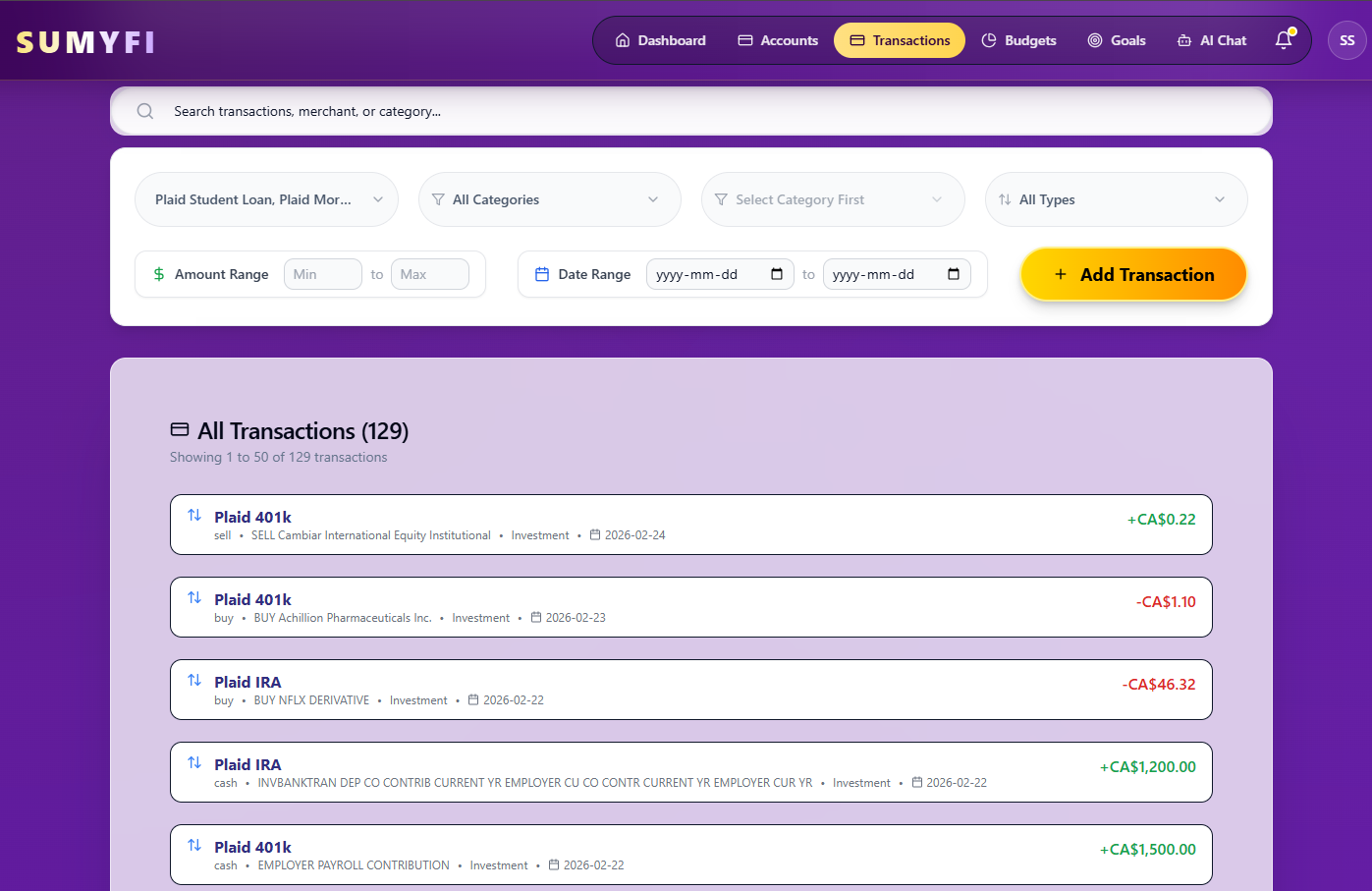
Sumyfi's core strength lies in its sophisticated transaction analysis engine. Upon connecting your financial accounts (from thousands of institutions across the US and Canada), Sumyfi automatically scans your transaction history. It doesn't just look for keywords; it employs advanced algorithms to identify recurring payments, even those disguised by vague merchant descriptions or irregular billing cycles.
Real-time Insights on a Slick Dashboard
Sumyfi's intuitive dashboard presents a crystal-clear overview of your recurring expenses.
Proactive Alerts: Never Miss a Beat (or a Bill)
Sumyfi acts as your vigilant financial guardian, ensuring you're always ahead of the curve.
Effortless Management & Cancellation Guidance
While Sumyfi prioritizes automation, it also empowers you with control.
A Holistic Financial Hub: Beyond Just Subscriptions
What truly sets Sumyfi apart is its integration of subscription tracking into a comprehensive personal finance ecosystem.
Unrivaled Connectivity Across the USA & Canada
Sumyfi's agile engineering ensures lightning-fast, secure connections with thousands of financial institutions across both the United States and Canada. This cross-border capability is a significant differentiator, especially for individuals with financial ties in both nations.
Security First, Always
Designed for the Modern User: Slick, Intuitive, Fast
Sumyfi's user experience is crafted for clarity and efficiency. The interface is clean, modern, and incredibly intuitive, making financial management a pleasure, not a chore. From lightning-fast account setup to crystal-clear dashboards, Sumyfi is built to empower you without overwhelming you.
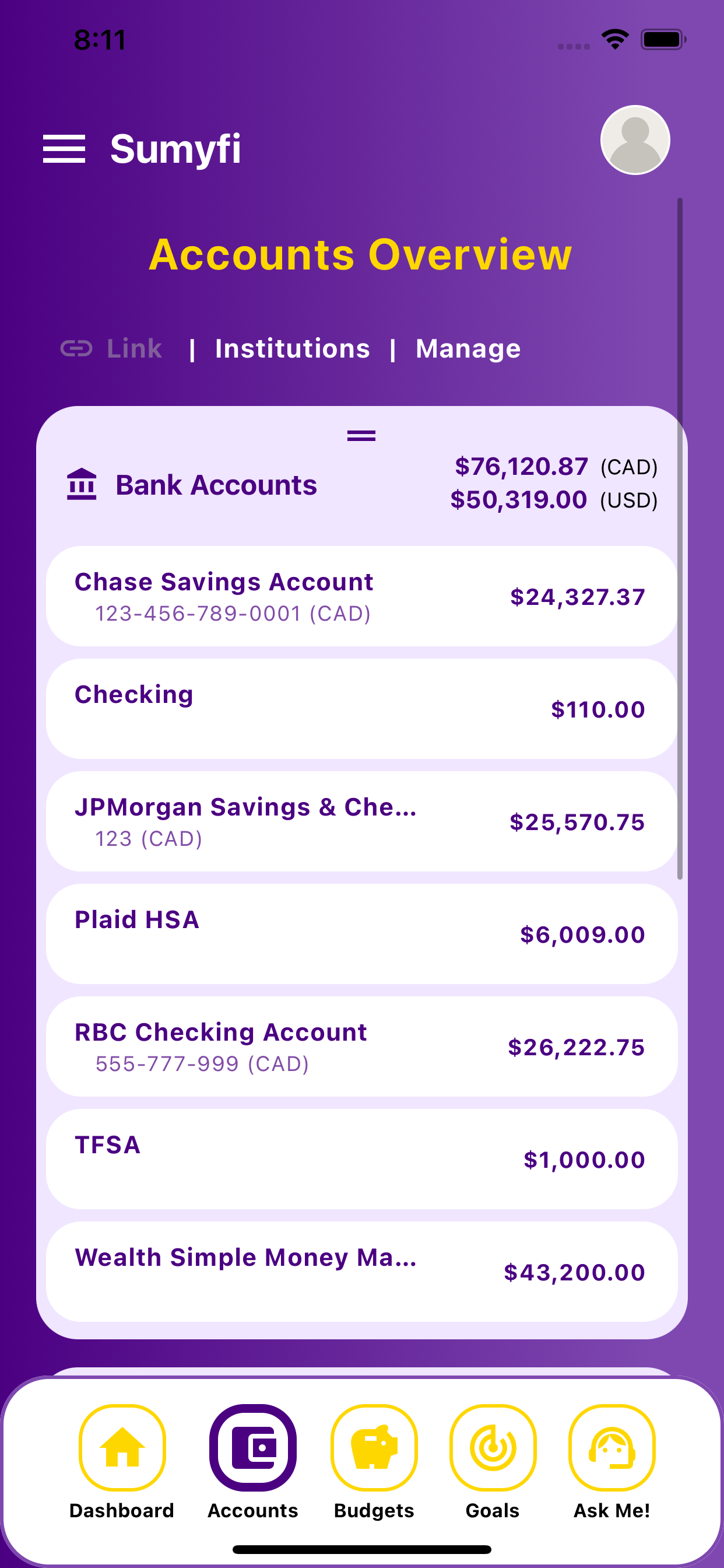
Effortless Setup: Connect all your bank accounts, credit cards, and even investment accounts in minutes.
AI-Powered Detection: Sumyfi's intelligent system accurately identifies subscriptions, distinguishing them from one-time purchases.
Smart Categorization: Each identified subscription is automatically categorized (e.g., "Streaming," "Productivity Software," "Online Services"), providing immediate clarity. You can also customize categories and add tags for hyper-personal organization.
Unified View
See all your subscriptions, their costs, and renewal dates in one central location.
Total Spend at a Glance
Instantly understand your total monthly and annual subscription outflow.
Visual Breakdown
Interactive charts and graphs illustrate your spending by category, allowing you to pinpoint where your money is going.
Timely Renewal Reminders
Receive alerts well in advance of upcoming subscription renewals, giving you ample time to decide whether to continue or cancel.
Free Trial Expiration Warnings
Avoid unwanted charges by getting notified before a free trial converts to a paid subscription.
Price Change Notifications
Be informed immediately if a service you subscribe to increases its price, allowing you to evaluate its continued value.
Unusual Activity Detection
Sumyfi flags any new or unexpected recurring charges, helping you detect potential fraud or forgotten sign-ups.
Direct Access
For many popular services, Sumyfi provides direct links to cancellation pages or customer support, streamlining the process.
Step-by-Step Instructions
For more complex cancellations, Sumyfi offers clear guidance.
Track Your Decisions
Mark subscriptions as "canceled," "paused," or "under review" to maintain an accurate record of your actions.
Net Worth Tracking
Understand how your subscription spending impacts your overall net worth.
Automated Budgeting
Incorporate your recurring expenses seamlessly into your budget, making it more accurate and actionable.
Bill Tracking
Manage all your recurring bills alongside subscriptions, ensuring nothing is missed.
Transaction Categorization
Benefit from Sumyfi's intelligent categorization for all your spending, not just subscriptions.
Bank-Grade Encryption
Sumyfi uses 256-bit encryption, the same level of security employed by leading financial institutions, to protect your data.
Robust Privacy Policies
Your data is protected and never sold to third parties.
Beyond Tracking: Leveraging Your Subscription Data for Financial Empowerment
A powerful subscription tracker USA like Sumyfi doesn't just list your expenses; it provides the intelligence needed to transform your financial habits and accelerate your goals.
Budget Optimization and Reallocation
Once you have a clear picture of your subscription spend, you can actively optimize your budget.
Negotiating Better Deals
Knowledge is power. Armed with data from your subscription tracker, you can:
Mindful Consumption and Spending Habits
The act of tracking itself fosters greater financial mindfulness.
Enhanced Fraud Detection
Unauthorized recurring charges can be difficult to spot amidst a flurry of daily transactions.
- Impact on Net Worth and Long-Term Wealth
Every dollar spent on subscriptions is a dollar that isn't contributing to your savings or investments.
Identify Redundancies: Do you have multiple streaming services you rarely watch? Are you paying for two cloud storage solutions when one suffices?
Evaluate Value: Is that premium app subscription truly enhancing your life enough to justify its cost?
Reallocate Savings
Every dollar saved from canceled subscriptions can be redirected towards high-impact financial goals - whether it's building an emergency fund, paying down high-interest debt, or investing for the future.
Challenge Price Hikes
If a service increases its price, your tracker will alert you. You can then contact the provider, referencing their competitors' rates or your usage patterns, to negotiate a better deal or threaten to cancel.
Leverage Bundles
Sometimes, combining services (e.g., internet and streaming) can offer savings. Your tracker helps you see your current individual costs to compare effectively.
Conscious Sign-ups
Knowing that every new subscription will appear on your Sumyfi dashboard encourages you to think twice before signing up for another "free trial."
Behavioral Change
Over time, you'll develop a more disciplined approach to recurring expenses, aligning your spending with your values and financial priorities.
Early Warning System
Sumyfi's ability to flag new or unusual recurring payments acts as an early warning system for potential fraud or billing errors.
Quick Resolution
Prompt detection allows for faster action, minimizing financial damage and simplifying the dispute process with your bank or credit card company.
Compounding Effect
Over time, even small monthly savings from optimized subscriptions can compound into significant amounts. Sumyfi helps you visualize this impact.
Strategic Allocation
By integrating subscription tracking with broader net worth tracking, Sumyfi helps you see how current spending choices affect your long-term financial health, encouraging a more strategic approach to wealth building.
Common Pitfalls and How to Avoid Them with a Smart Subscription Tracker
Even with the best intentions, managing subscriptions can be tricky. A robust subscription tracker USA helps you sidestep these common traps.
Pitfall 1: Forgetting Free Trials
The "free trial" is a double-edged sword. It offers a taste of a service but often converts to a paid subscription if not canceled in time.
Pitfall 2: Ignoring Subtle Price Increases
Many services gradually increase their fees, hoping users won't notice.
Pitfall 3: Signing Up for Redundant Services
It's easy to end up paying for multiple services that offer similar functionality (e.g., two news subscriptions, multiple music streaming platforms).
Pitfall 4: Neglecting Annual Subscriptions
Monthly subscriptions are top-of-mind, but annual ones can hit hard and are often forgotten until the charge appears.
Pitfall 5: The "Set It and Forget It" Trap
The convenience of auto-renewals can lead to complacency, where subscriptions continue indefinitely without periodic review.
Choosing the Right Subscription Tracker for Your Needs (A Comparative Look)
The market for personal finance tools is diverse. While many apps offer some form of subscription tracking, their capabilities and overall approach can vary significantly.
Basic Expense Trackers: These often require manual input or only categorize transactions after the fact, lacking the proactive detection and alert features essential for true subscription management.
Dedicated Subscription Management Apps: These tools focus solely on subscriptions but often operate in isolation, providing limited context within your broader financial picture. They might track, but they don't help you budget, track net worth, or manage other bills.
Comprehensive Personal Finance Apps (e.g., Mint, Monarch, YNAB, Rocket Money): These platforms offer a wider array of features, often including budgeting and net worth tracking. However, they can differ in their:
Sumyfi is engineered from the ground up to be a modern, agile, and comprehensive personal finance hub that *excels* at subscription tracking.
While other apps might offer pieces of the puzzle, Sumyfi delivers the complete, integrated picture with a focus on modern technology and user empowerment.
Getting Started with Your Sumyfi Subscription Tracker
Embarking on your journey to financial clarity with Sumyfi is remarkably straightforward. Our platform is designed for lightning-fast setup, getting you from signup to insights in minutes.
- Sign Up for Free: Visit [sumyfi.com](https://www.sumyfi.com/signup) and create your secure account. The process is quick and hassle-free.
- Connect Your Accounts: Securely link your bank accounts, credit cards, and investment accounts. Sumyfi uses bank-grade encryption and read-only access to ensure your data is always protected. Our robust connectivity supports thousands of financial institutions across the USA and Canada.
- Discover Your Subscriptions: Sumyfi's intelligent engine immediately begins scanning your transaction history to identify all your recurring charges. Watch as your hidden subscriptions come to light.
- Review and Optimize: Explore your personalized subscription dashboard. See your total monthly and annual spend, identify unused services, and receive alerts for upcoming renewals.
- Take Action: Use Sumyfi's insights and guidance to cancel unwanted subscriptions, reallocate savings, and take full control of your recurring expenses.
The Future of Subscription Management: AI, Personalization, and Beyond
The evolution of the subscription tracker USA is far from over. As technology advances, we can expect even more sophisticated and personalized solutions. Sumyfi is at the forefront of this innovation, continually developing features that anticipate user needs.
Sumyfi is committed to leading this charge, ensuring its users always have access to the most advanced, secure, and user-friendly tools for financial empowerment. We believe that managing your money should be intuitive, insightful, and empowering, not a chore.
Conclusion: Empower Your Finances with the Right Subscription Tracker USA
The proliferation of subscriptions is an undeniable reality of modern life. While convenient, these recurring charges can silently erode your financial stability if left unchecked. A dedicated and intelligent subscription tracker USA is no longer a niche tool; it's a fundamental requirement for anyone seeking true financial clarity and control.
By automatically identifying, monitoring, and managing your recurring expenses, a top-tier tracker empowers you to cut wasteful spending, optimize your budget, and redirect funds towards your most important financial goals. It transforms the daunting task of financial oversight into an effortless, insightful process.
Sumyfi stands as the preeminent solution in this landscape. It's not just a subscription tracker; it's your partner in building lasting financial health and freedom.
Don't let hidden subscriptions dictate your financial future. Take the proactive step towards mastering your money.
Discover the power of Sumyfi and transform your financial life today.
[Get Started with Sumyfi Now!](https://www.sumyfi.com/signup)
Sumyfi Solution: Proactive alerts notify you days before a free trial expires, giving you ample opportunity to cancel or commit.
Sumyfi Solution: Automatic notifications inform you immediately of any price changes, allowing you to re-evaluate the service's value at its new cost.
Sumyfi Solution: The centralized dashboard provides a clear overview, making it easy to spot and eliminate redundant services.
Sumyfi Solution
Tracks both monthly and annual subscriptions with equal vigilance, providing timely reminders for all renewal types.
Sumyfi Solution
By providing regular insights and prompts for review, Sumyfi encourages active financial stewardship, transforming "set it and forget it" into "set it and *periodically review* it."
Modernity of Technology
Some legacy platforms struggle with outdated interfaces, slower data synchronization, or less agile development cycles.
User Experience
Cluttered interfaces, complex setup processes, or a lack of intuitive design can hinder adoption and consistent use.
Specific Focus
While they track subscriptions, it might not be their primary strength, and the depth of automation or proactive alerts can vary.
Cross-Border Support
Many popular US-centric apps lack robust support for Canadian financial institutions, creating a fragmented experience for North American users.
Sumyfi's Differentiating Edge
Superior Automation
Sumyfi's AI-driven detection and categorization are best-in-class, minimizing manual effort.
Holistic Integration
Subscriptions are not just tracked; they are seamlessly integrated into your budgeting, net worth, and overall spending analysis, providing a truly unified financial view.
Slick UI/UX
Designed for today's user, Sumyfi boasts a clean, intuitive interface that makes managing finances a positive experience.
Proactive & Actionable
Sumyfi doesn't just show you data; it empowers you with timely alerts and actionable insights to save money and improve financial health.
Predictive Analytics
Imagine a tracker that not only identifies current subscriptions but also predicts potential future recurring expenses based on your spending patterns.
Hyper-Personalized Recommendations
AI could suggest alternative, more cost-effective services based on your usage habits or even negotiate better deals on your behalf.
Integrated Lifestyle Management
Future trackers might integrate with smart home devices or digital assistants to provide even more seamless management and alerts.
Blockchain Integration
While nascent, blockchain technology could offer new avenues for secure, transparent, and user-controlled subscription management.